At the end of October, Alejandra and I returned to Oslo after nearly four weeks in Iceland. We had a wonderful residency with Skaftfell Art Center, and my thanks go out to director Celia Harrison and residency coordinator Kamilla Gylfadóttir, as well as workshop technician Linus Lohmann of Prentwerk Seyðisfjörður and Arts Council Norway for supporting our stay. I wish I could have spent at least another two weeks in Iceland, as a four-week residency is really not enough time to really get yourself immersed in a new place and studio. However, although I feel as if I was just getting into a creative flow that is currently somewhat unresolved, I returned home to Oslo with enormous gratitude, and will try to marinade my ideas further throughout the upcoming dark season.
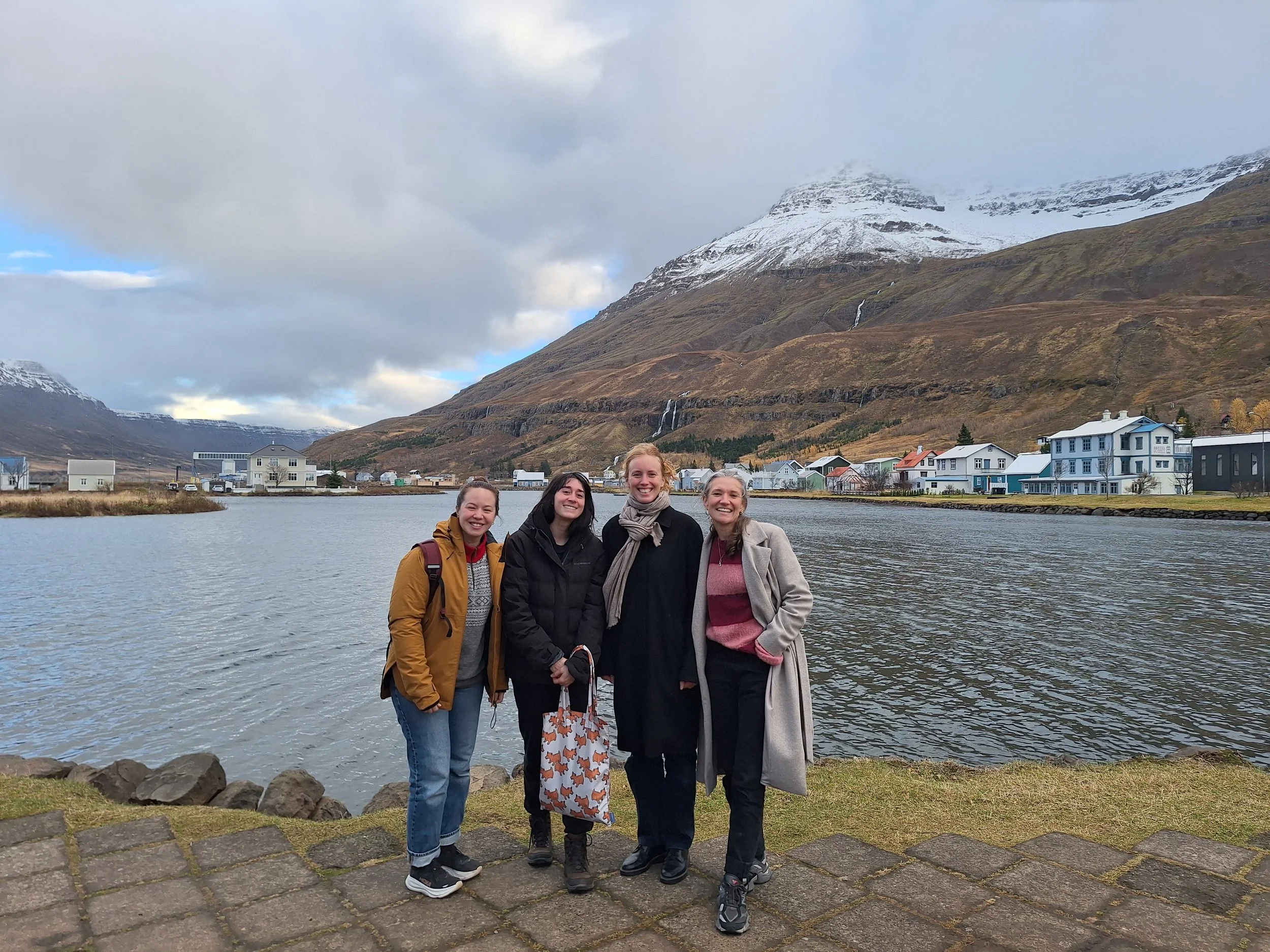
From the left: Me and Alejandra with residency-coordinator Kamilla and director Celia!
Throughout this residency, I have been experimenting with non-toxic printmaking methods, such as the Lascaux Acrylic Resist Etching System (ARE), as well as using water-based printing inks and learning about electrolyte etching. While I wasn’t able to produce technically successful prints during my residency, finding these new methods and materials challenging to use, I still had an incredibly educational three weeks. I am still not a convert to non-toxic Lascaux grounds and water-based inks - however electrolyte etching is something that I would love to pursue further, and perhaps set up in my own studio space.
In terms of conceptual research, I was particularly interested in the Norwegian kit form houses that were shipped to Seyðisfjörður in the late 19th and early 20th centuries by Norwegian fishermen. These made me reflect upon how not only we humans migrate, but also our houses and our surroundings – whether we quite literally bring them with us or try to recreate them in a new space, inserting a familar cultural landscape onto a completely different backdrop. As I mentioned in a previous post, the houses in Seyðisfjörður reminded me of late 19th century houses I frequented in my childhood, such as the generational family farm of Skanshagen near the forests of Hedemark. My thoughts drifted immediately to the paintings of Norwegian artist Leonard Rickhard (1945-2024), who somehow managed to capture the quietness and familiarity, but also the nostalgia and slight sense of uncanny that I was experiencing. Below are a couple of sketches I made during the residency:
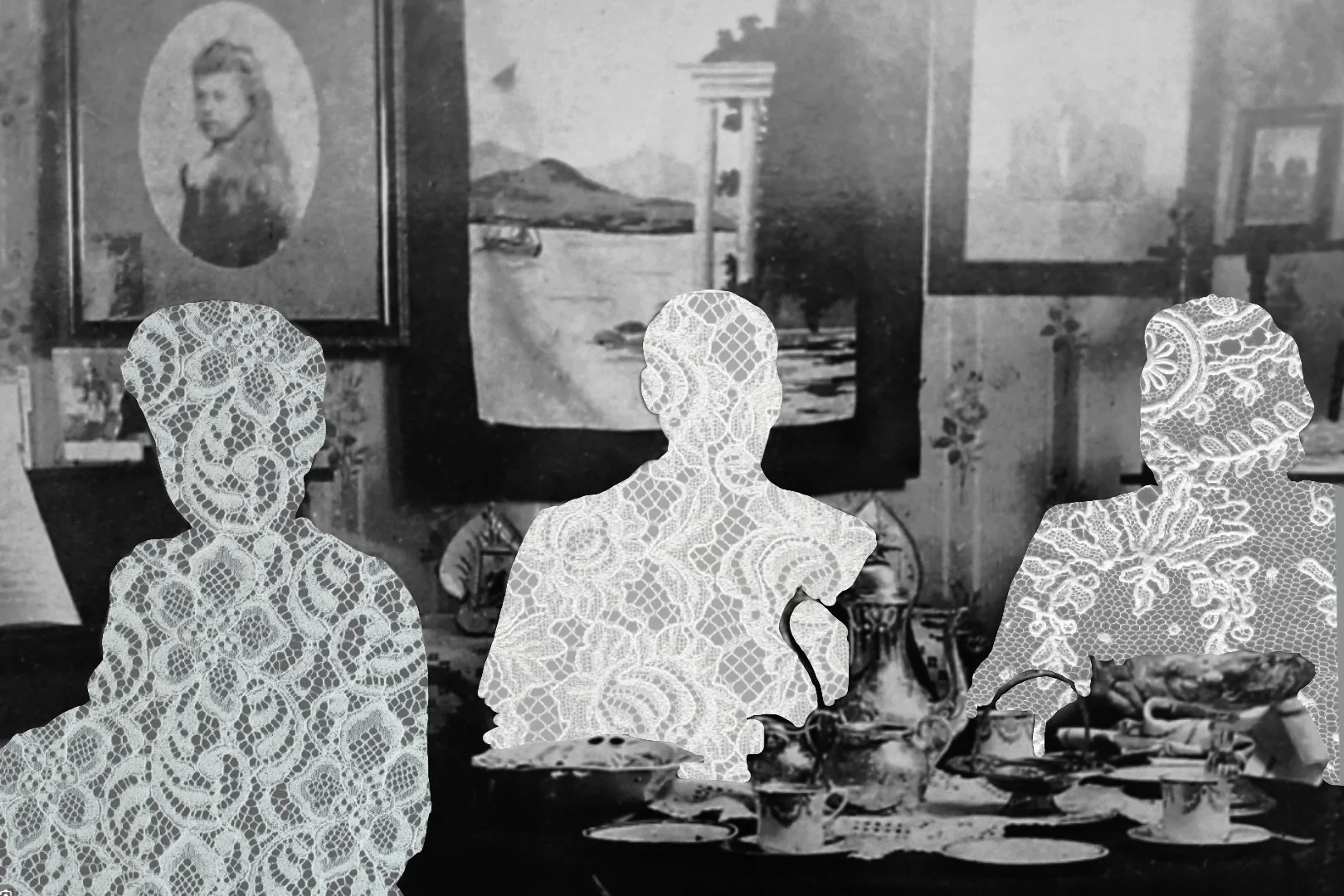
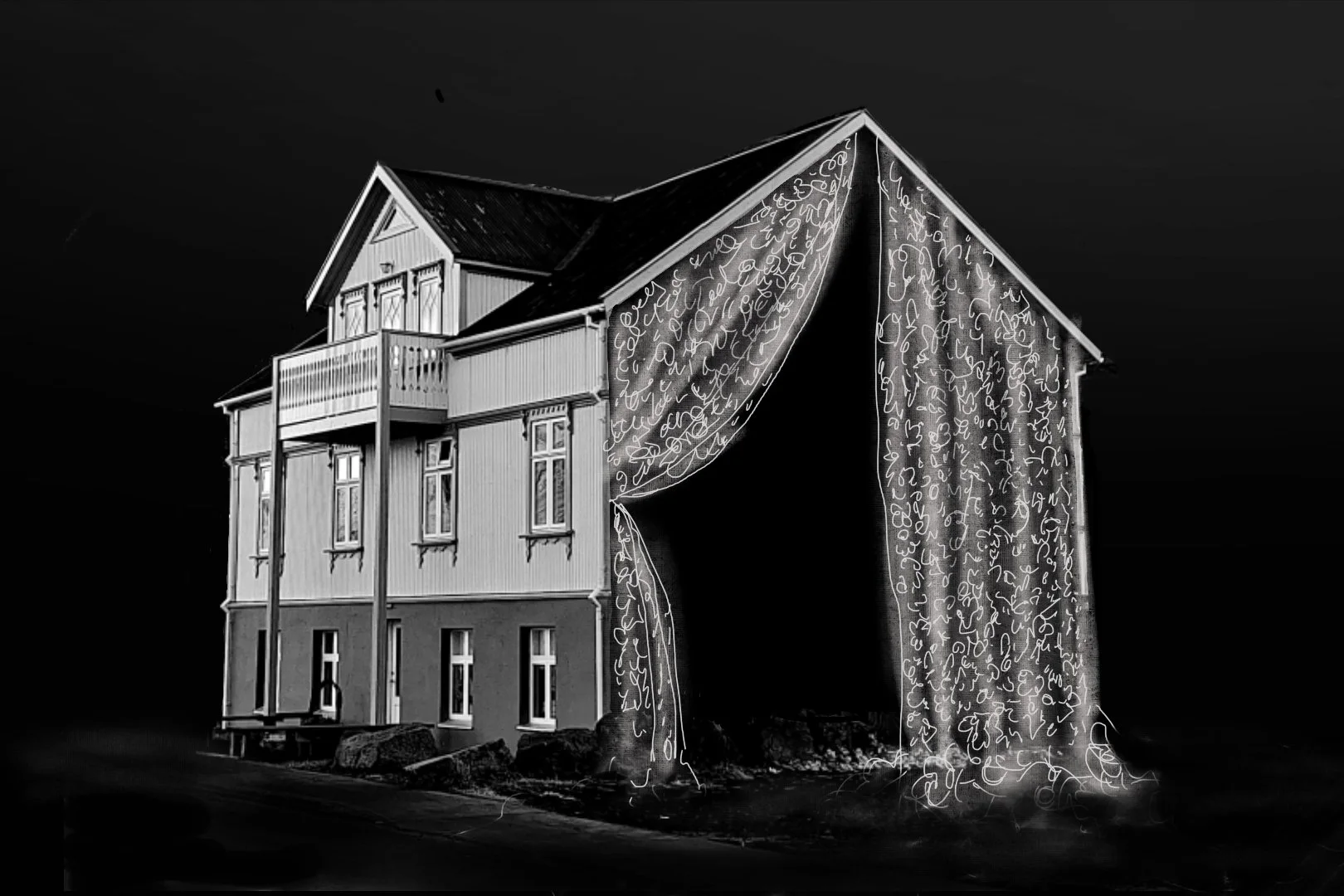
During the last week of our residency, I realised that Seyðisfjörður’s migration history is not only about those who came and the culture that they brought with them. It is also about those who left. On one of my final walks around town, I accidentally stumbled upon this plaque dedicated to the Icelanders who left for America during the great Icelandic emigration wave. Between 1870 and the onset of WWI in 1914, roughly 15,000-20,000 Icelanders, about a quarter of the population, emigrated. In September 2023, a group of Icelandic Roots-volunteers travelled from North America to Iceland to erect four plaques in four significant emigration ports - this one in Seyðisfjörður being one of them:
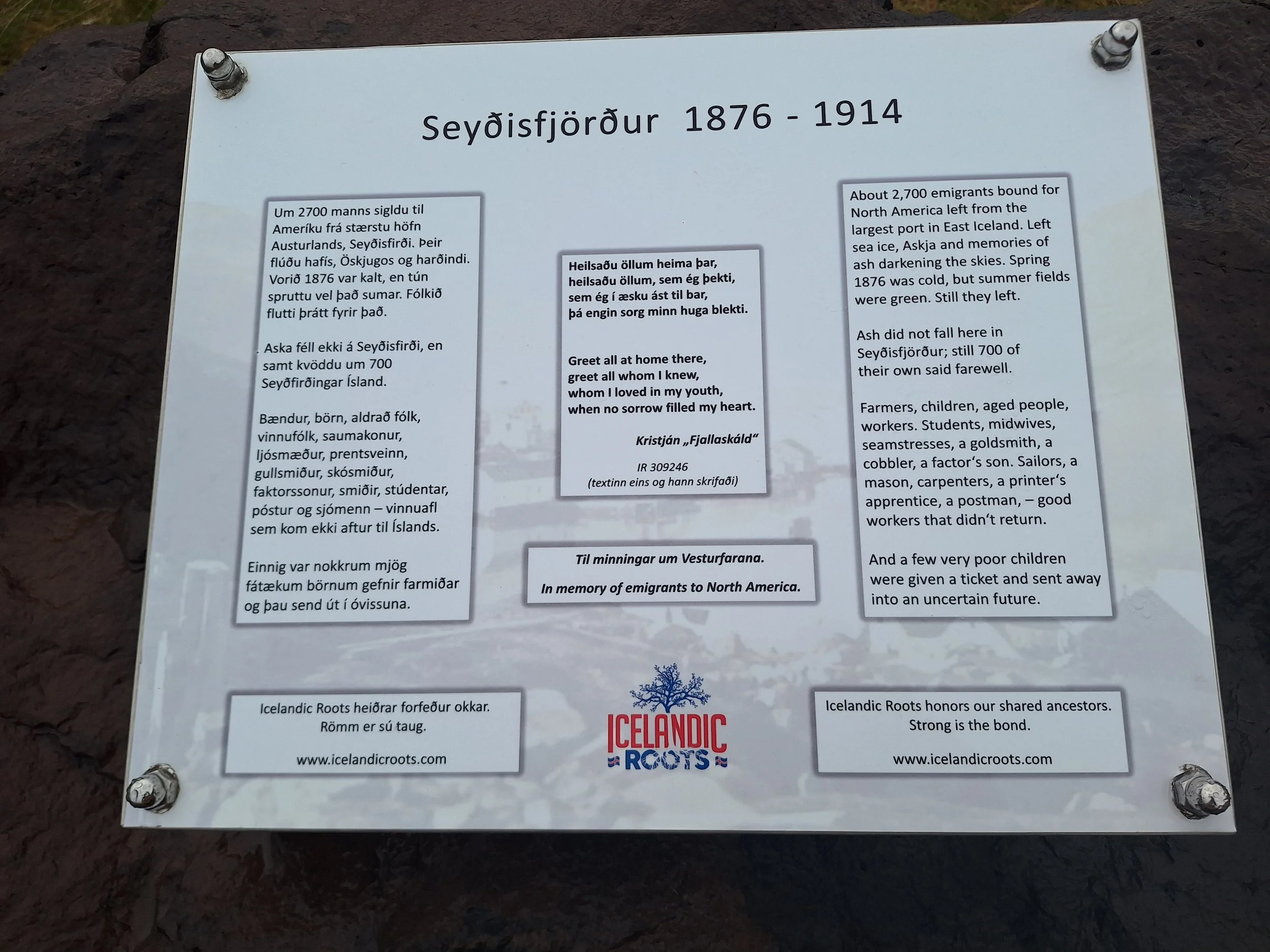
According to the Icelandic Roots website, their volunteer Cathy Josephson spent six months finding suitable locations for the monuments, as well as researching each port and the circumstances that caused the people of that area to emigrate. According to the website, “Cathy also found poets from each region, living during these migration years, and incorporated their poems into the monuments. One who witnessed the departures from the seashore with immense sadness and heartache. Another who booked passage to America and years later realized that fateful decision left them with an unending sorrow for their homeland and friends. And yet another who saw Iceland as a false home, to be replaced by a better home to come.”
Having a parent, a grandparent and a great-grandparent who emigrated across continents, and hearing about and witnessing first-hand the emotions felt in the aftermath and how it affected subsequent generations, I found these poems to be incredibly moving and close to home:
Poem on the Seyðisfjörður Plaque:
“Greet all at home there,
greet all whom I knew,
whom I loved in my youth,
when no sorrow filled my heart.”- Kristján „Fjallaskáld“
Poem on the Vopnafjörður Plaque:“I stand on a fateful strand
staring at the vessel floating,
taking you away from me
into the hidden mist...
Desolate, I stare at the sea.”-“Erla” ( Guðfinna Þorsteinsdóttir)
Poem on the Sauðárkrókur Plaque:“I set to sea from home,
for home I will go.
With fatherland before me
I leave fosterland behind...”- Stephan G. Stephansson
Poem on the Borðeyri Plaque:“Whether your journey lies
on land or sea,
may you have always summer
and sunshine as gifts.”- Þorsteinn Þ. Þorsteinsson
Each plaque concludes with these short sentences: In memory of emigrants to North America. Icelandic Roots honors our shared ancestors. Strong is the bond.
While I do not yet know where these observations will take me in terms of my art, I keep them in my memory bank. Seyðisfjörður is definitely a place that awakens emotions and sensations in me - in a positive and exciting sense. At this stage I am still figuring out how to visualise these in a way that is not too literal, or in a way that does not refer too spesifically to Seyðisfjörður itself. Some projects belong further into the future, and I think this might be one of them. However, that is also the beauty of some residencies. You might feel that you are not productive enough there and then, but often they are simply meant to take you away from your beaten track, and the artistic results are only evident later. Anyhow, I have a feeling I will be back in Seyðisfjörður some day, either as an artist or as a tourist. A ferry trip with friends and a 4-wheel drive from Hirsthals (DK) to Seyðisfjörður, via the Faroe Islands, is definitely on my bucket list!
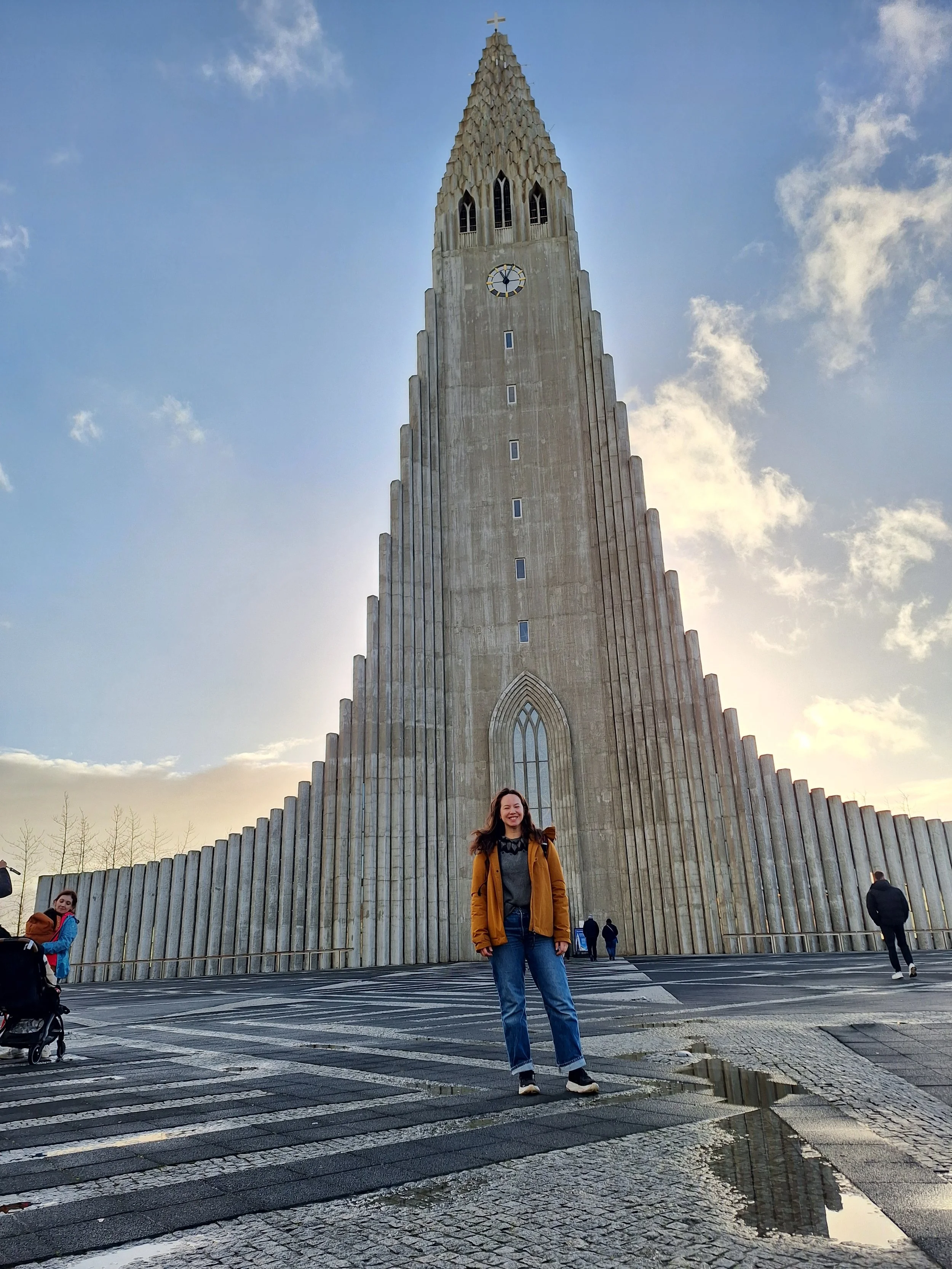
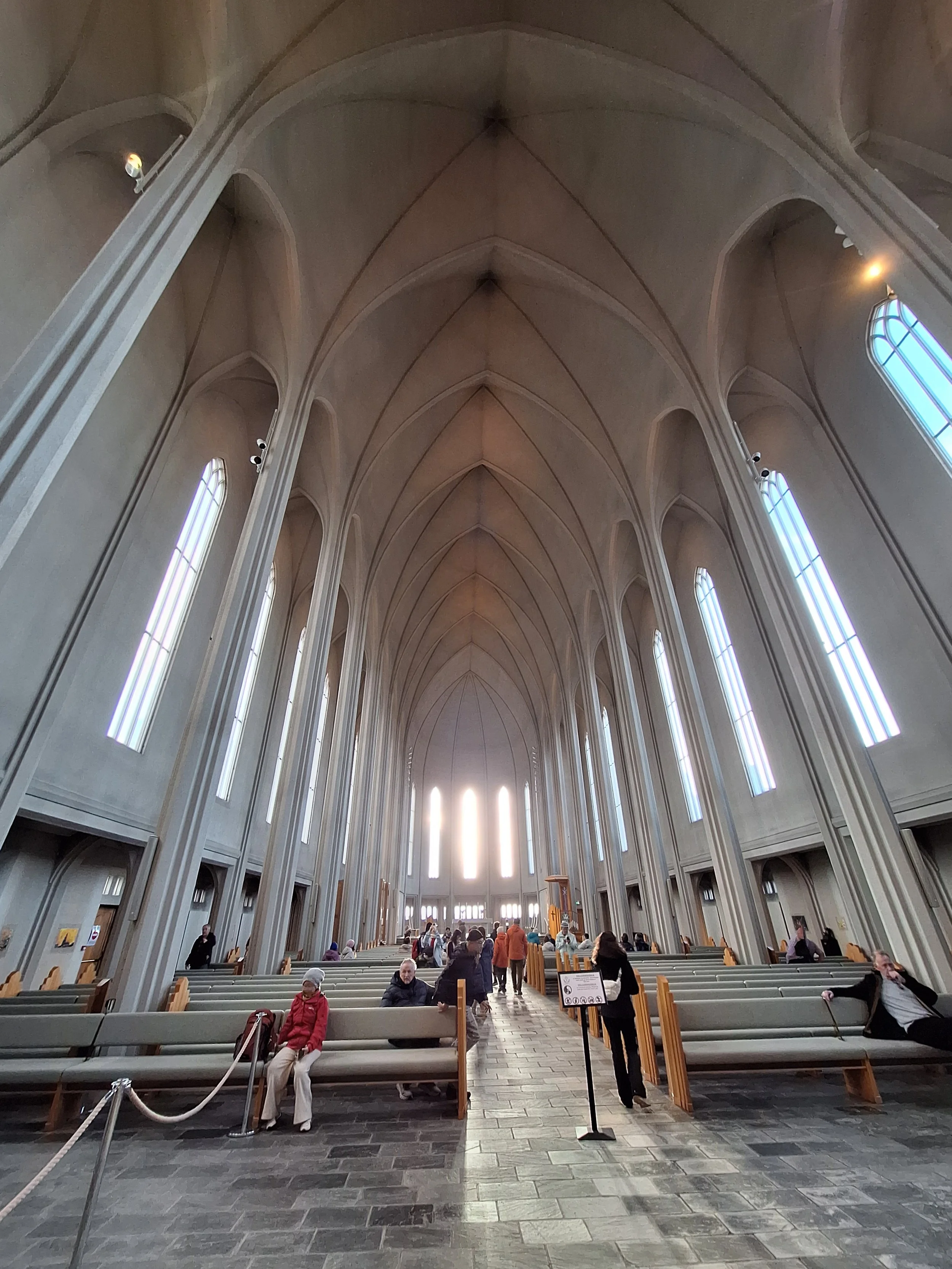
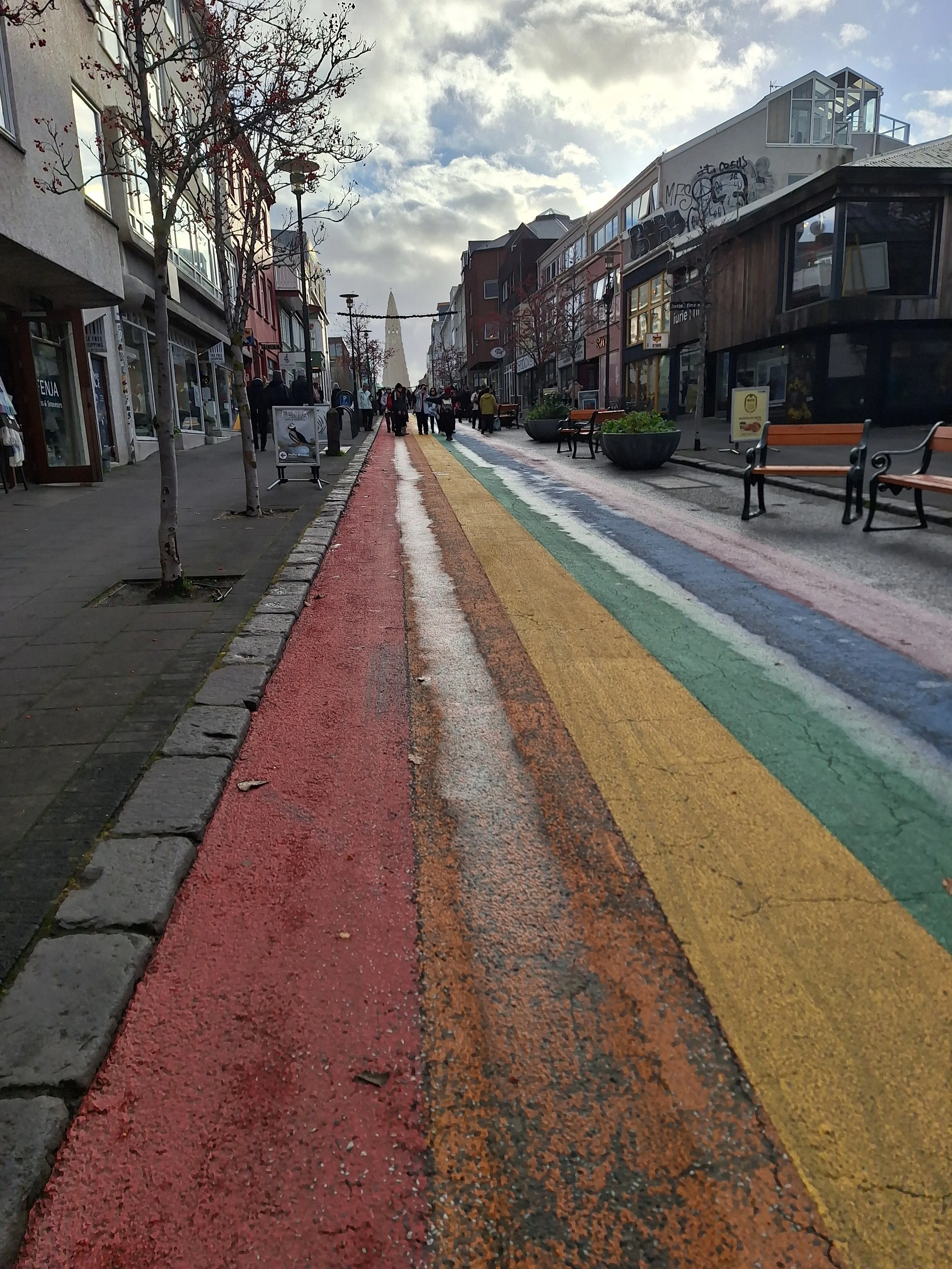
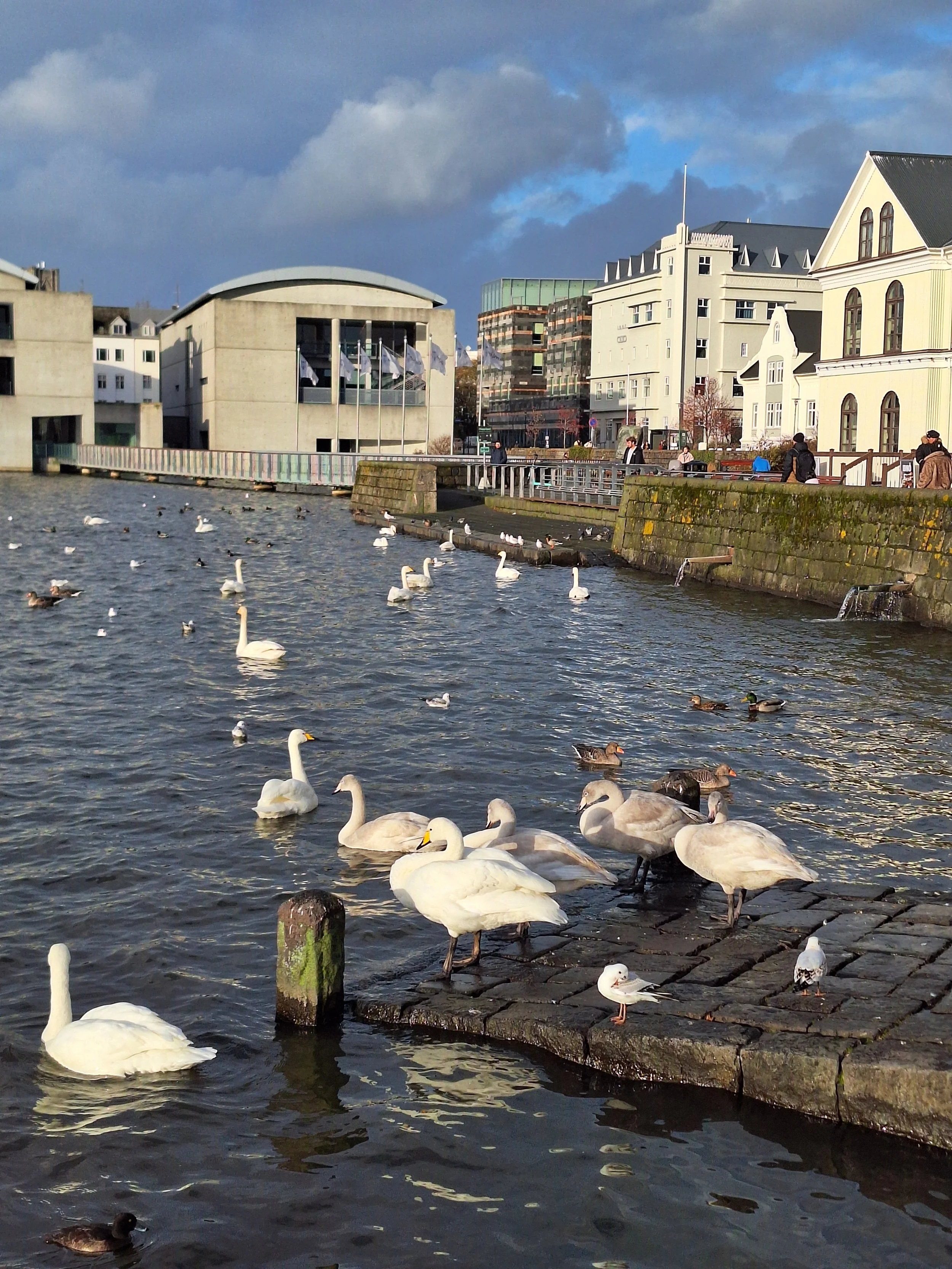
On our last day in Iceland, Alejandra and I found time for a little bit of sightseeing in the capital of Reykjavik! Although not a big city, it felt huge after nearly four weeks in Seyðisfjörður. My last visit was in winter of 2012, so it felt very nice to experience it again, this time in milder, brighter weather.