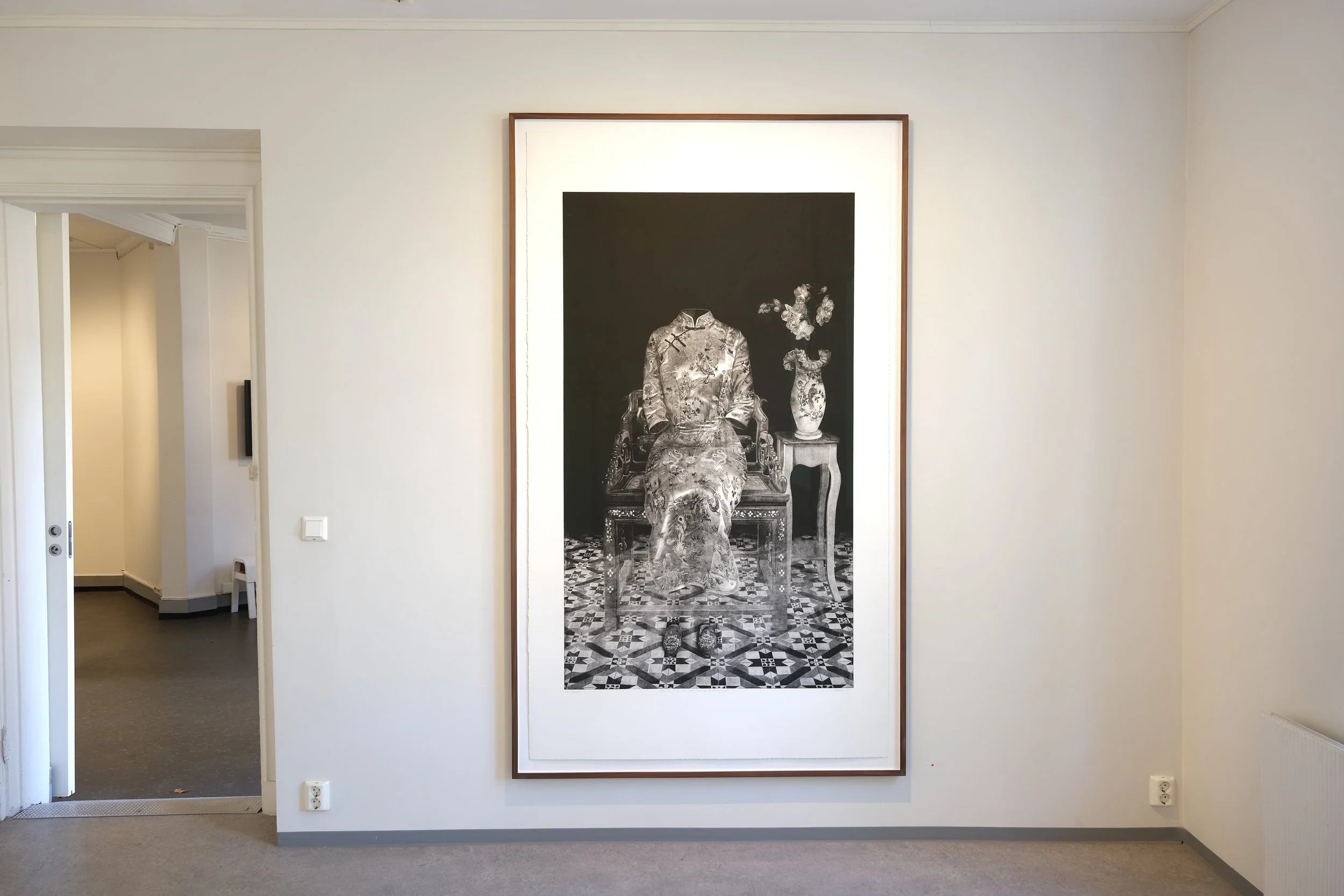
Skaftfell Art Center Residency | Week 3

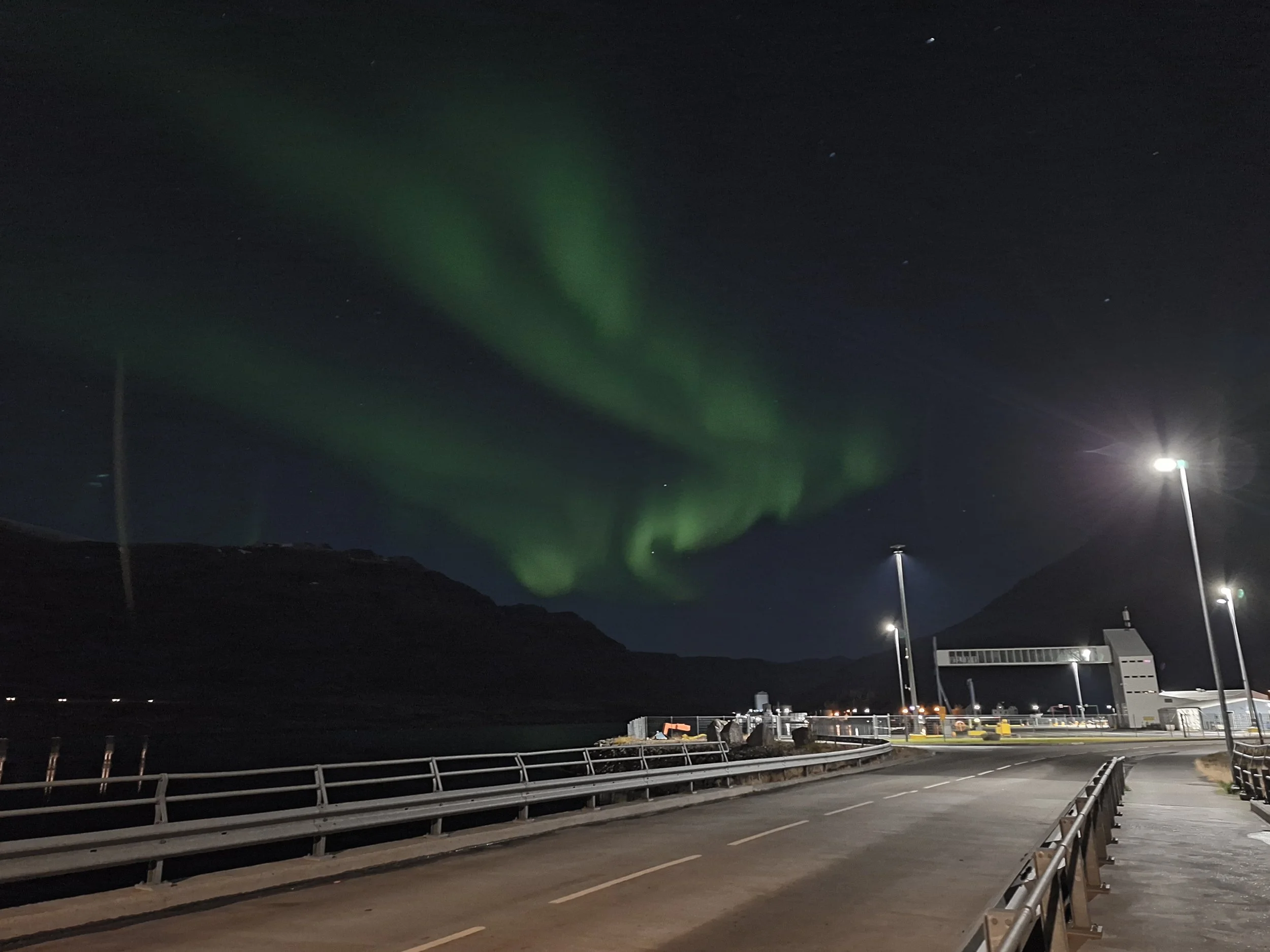
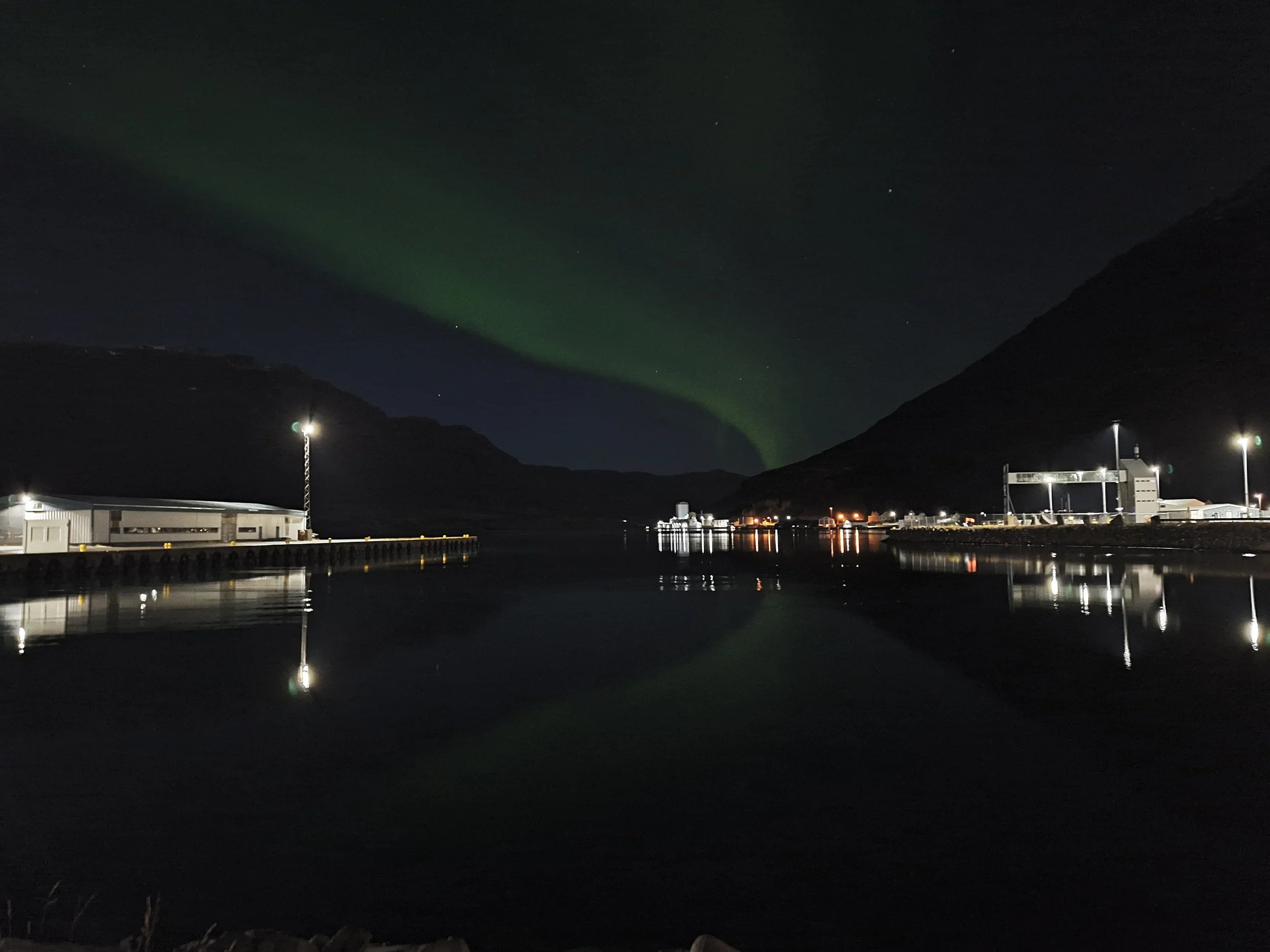
This week offered up an absolute treat! On the final clear night for the foreseeable future, we finally got to see the northern lights! For me it was a first time experience, so it was very special. Turns out that the aurora are a lot brighter in photos than what you see with the naked eye, so I tried to turn down the saturation in these images a notch. Still, they were magical in real life, and yes - they actually do dance!
Alejandra and I have been spending many afternoons and evenings in the print studio this week, experimenting with non-toxic printmaking and taking plenty of notes. Alejandra has been making monotypes and reduction linocuts with different brands of safe-wash and water-based inks, and I have been trying out the Lascaux Acrylic Resist Etching (ARE) system, which was developed as an alternative to the old traditional grounds for metal plate etching such as bitumen, asphaltum and rosin. Many workshops seek to introduce these newer solutions, as they do not require the same amount of health and safety precautions as the traditional methods. Being a traditionalist, I will admit it has been a very challenging process so far, as I am struggling to get good, pristine results with the Lascaux-system. (Let’s face it, I am a very meticulous kind of printmaker - not fast and furious). I find that the hard resist gets too brittle when dry, flaking off every time I try to cross-hatch fine lines into it. It also has a tendency to dissolve during the plate etching process - and that kind of defeats its purpose.
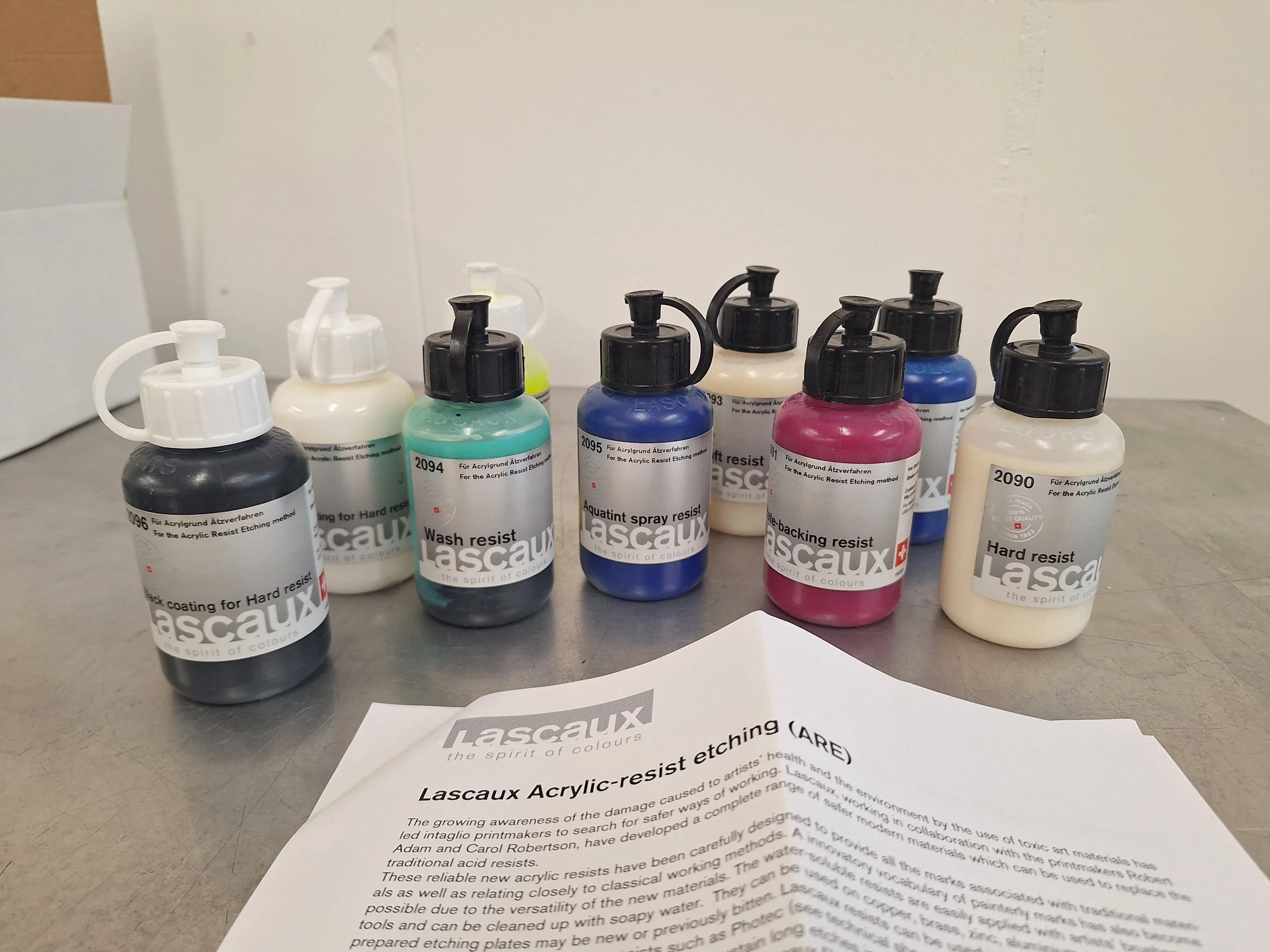
Trying to understand what bottle to use for what purpose - there are so many!
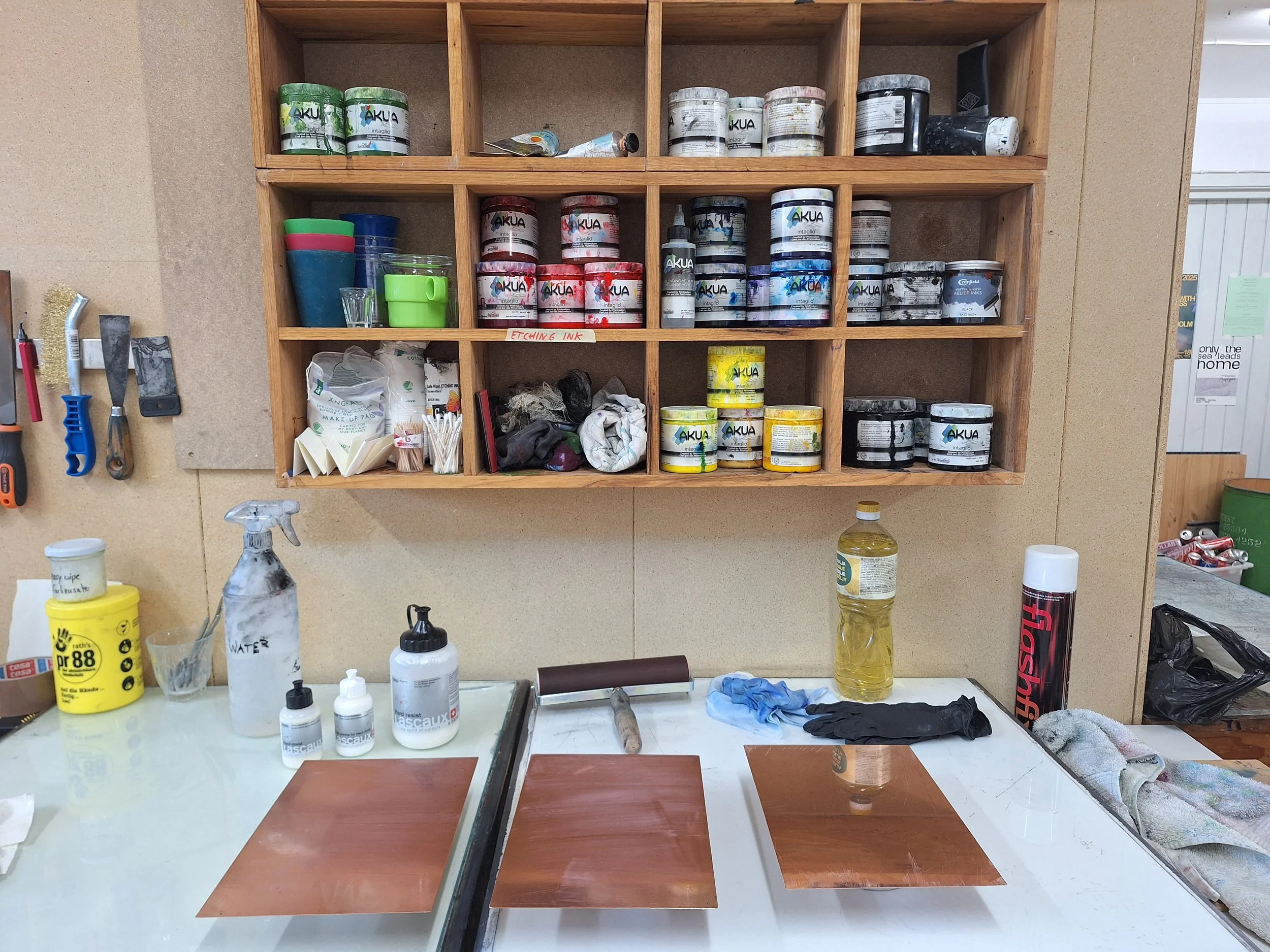
Degreasing copper plates and applying Lascaux hard resist with a brush.
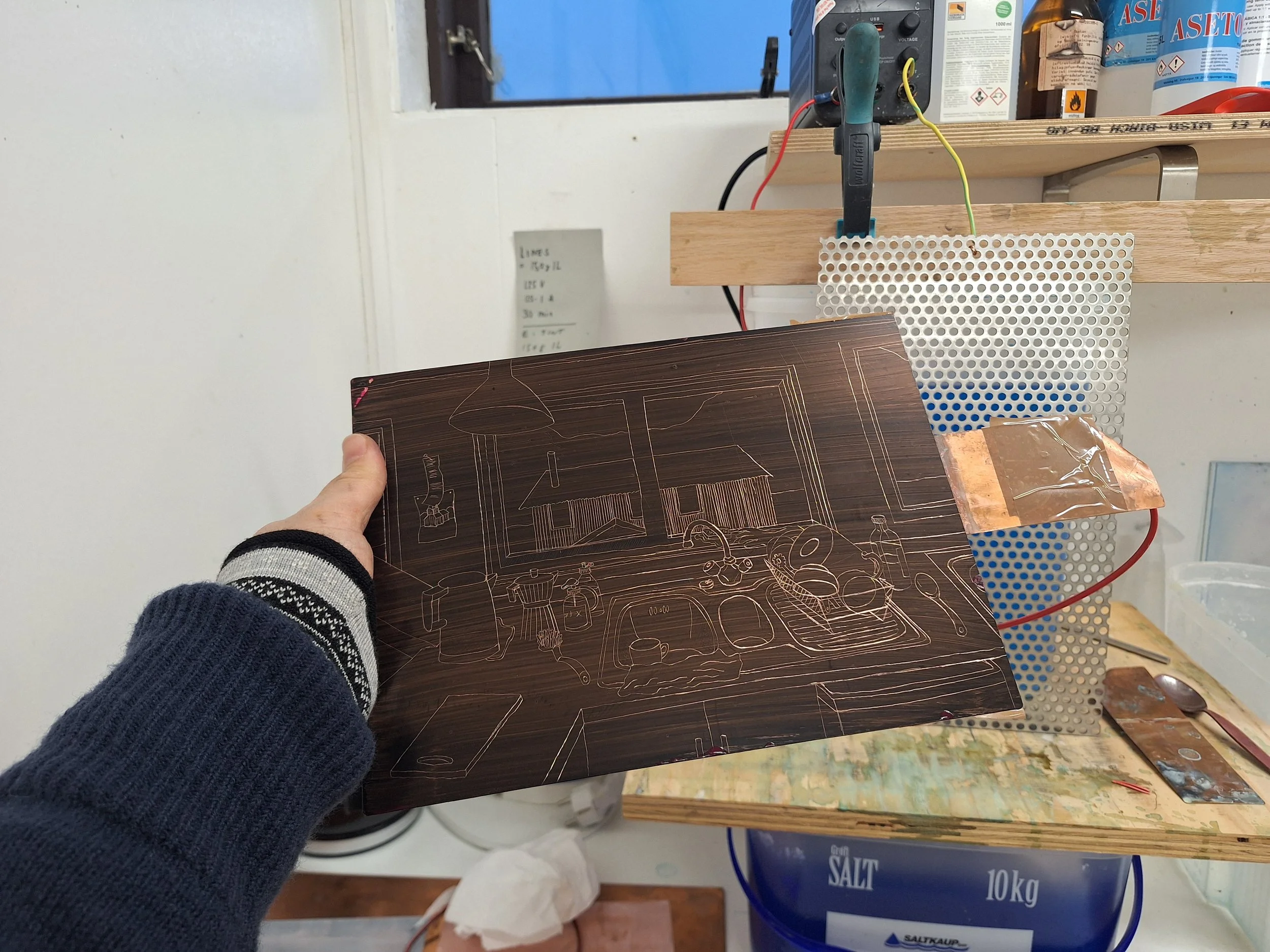
A drawing of our kitchen scratched into a Lascaux hard resist mixed with Indian ink. As the Lascaux hard resist is transparent, thus making it near impossible to tell where you have scratched your image, we read that adding Indian ink was a possible solution.
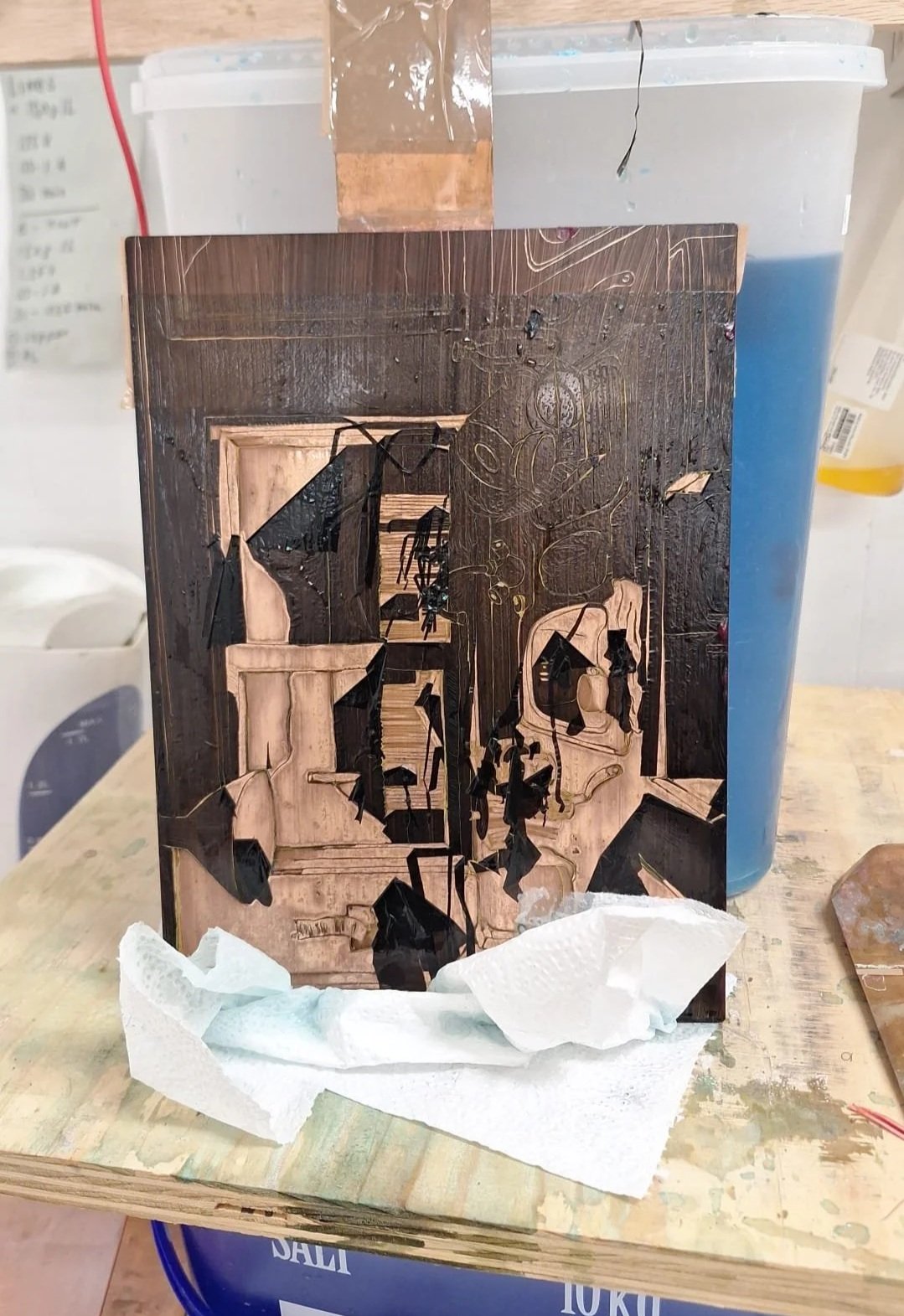
The Lascaux and Indian-ink mixture began dissolving after 15 minutes - so clearly not a good combination!
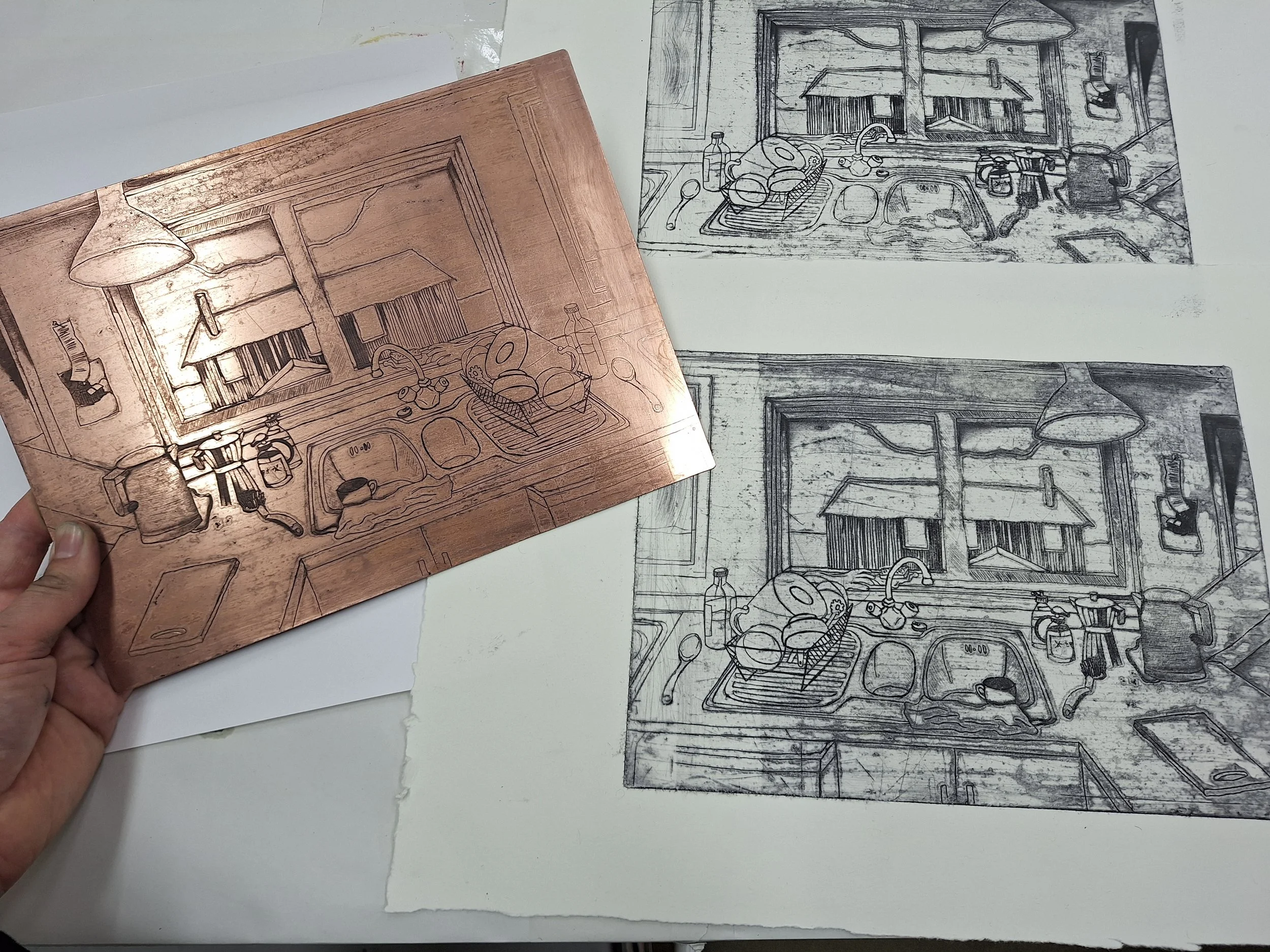
The plate and print - lots of strange things happening here!
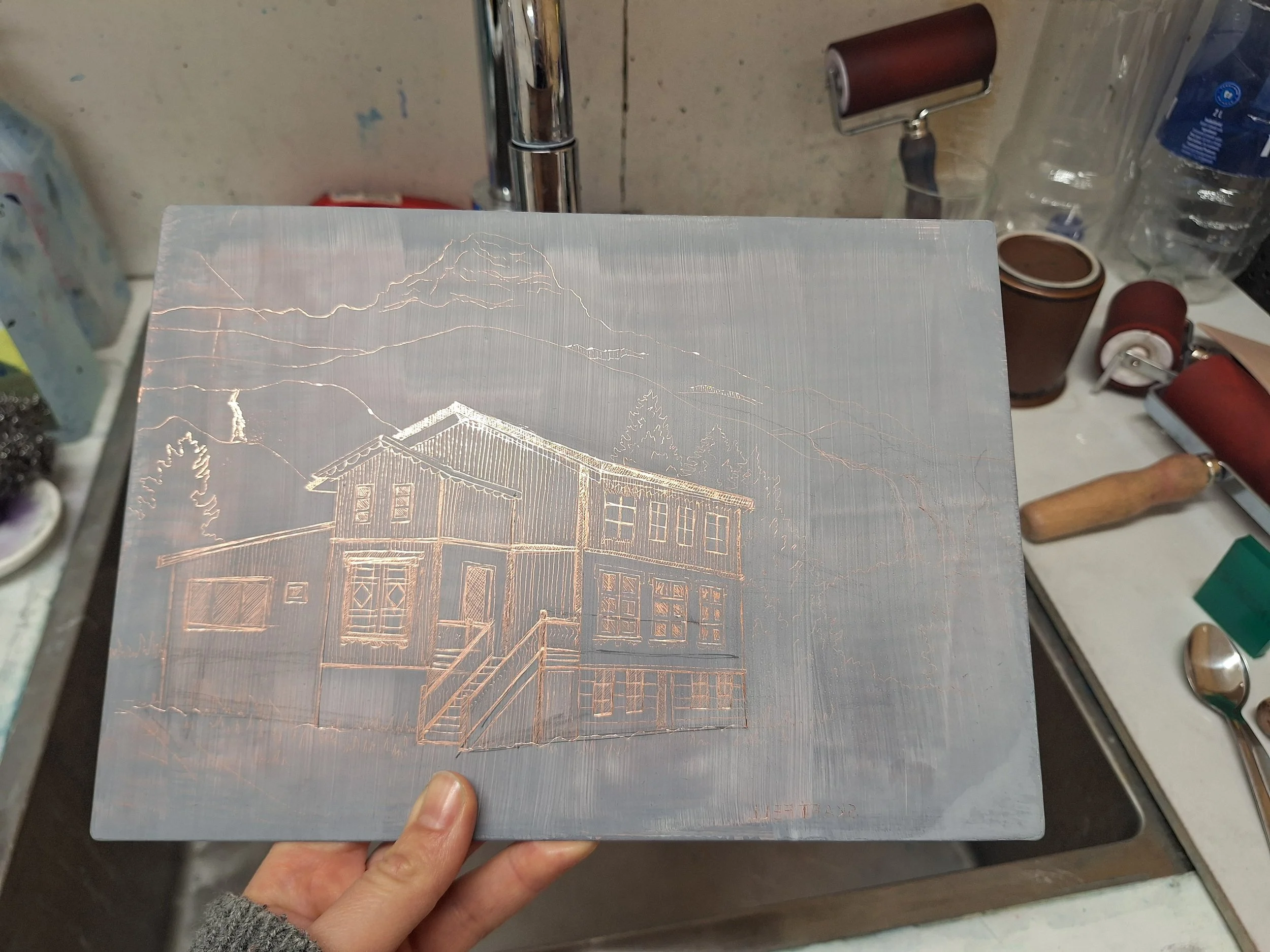
A drawing of Skaftfell Art Center ready to be etched. Here I have covered the transparent hard resist with Lascaux’s own colour coatings - a mix of black and white, as the white was too thick and the black was too runny. It was brittle and difficult to scratch into, but at least the hard resist underneath did not come off in large flakes during etching - although it did begin to dissolve around the 35-40 minute mark.
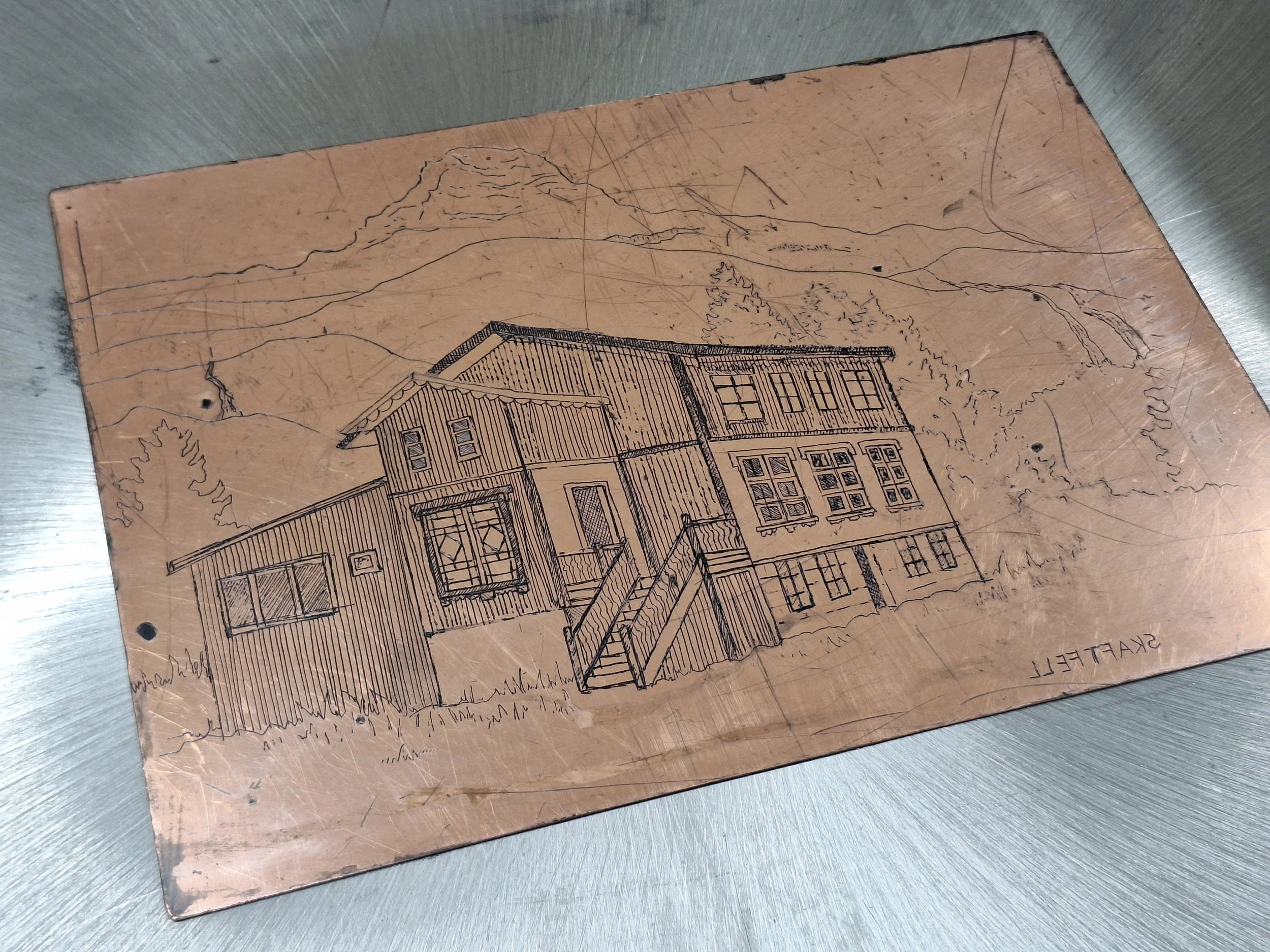
The plate after 45 minutes of etching. Some of my scratched lines never made it through the top colour coating and down through the hard resist, resulting that they never etched. The lines that did etch became rather furry with occasional open bites due to the hard resist dissolving. Clearly the plate should not be submerged for more than 30 minutes.
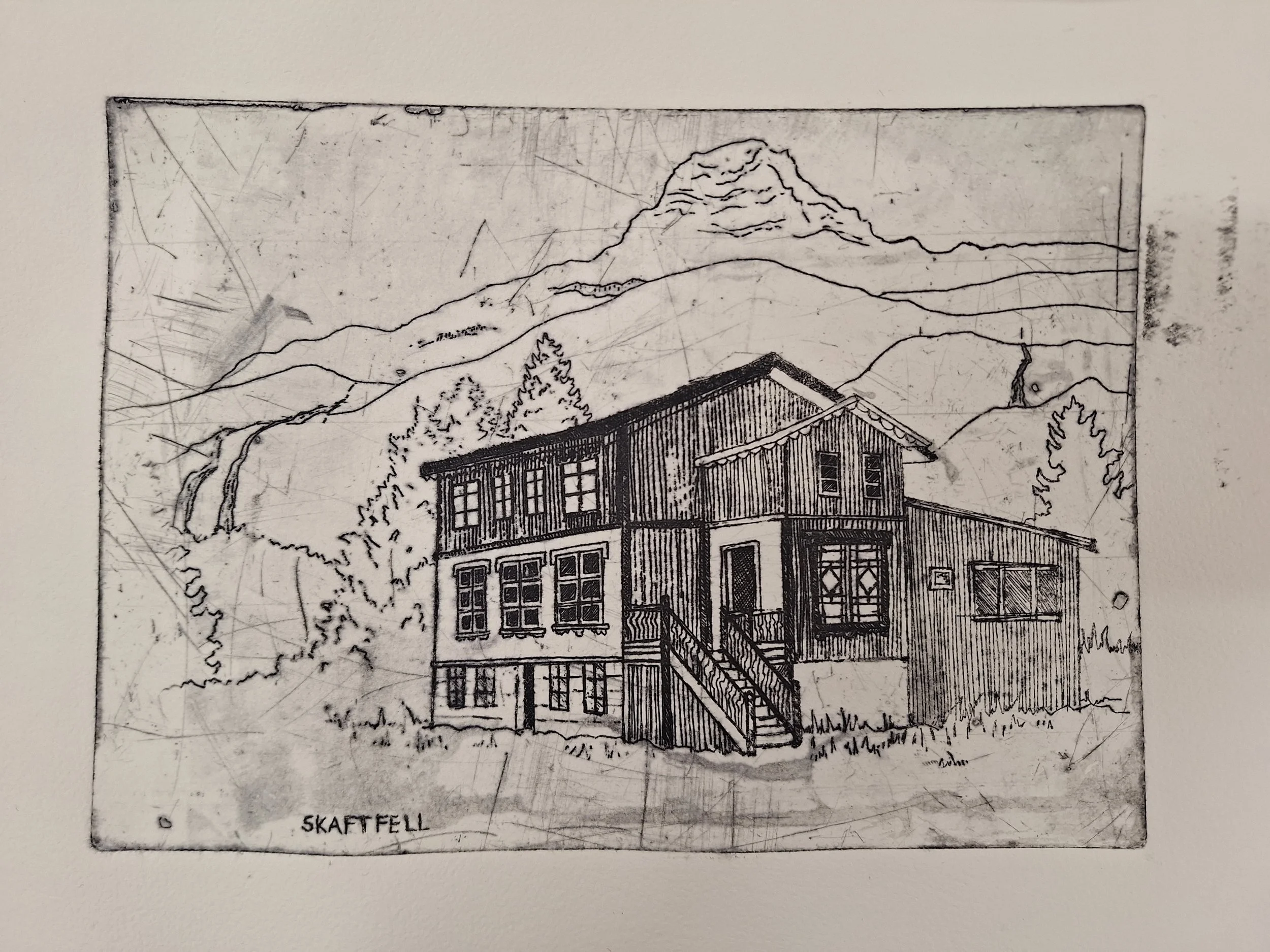
The finished print. I still really like it, despite its technical flaws! Also, this is my first free-hand drawing of a building in many years, so I am quite chuffed!

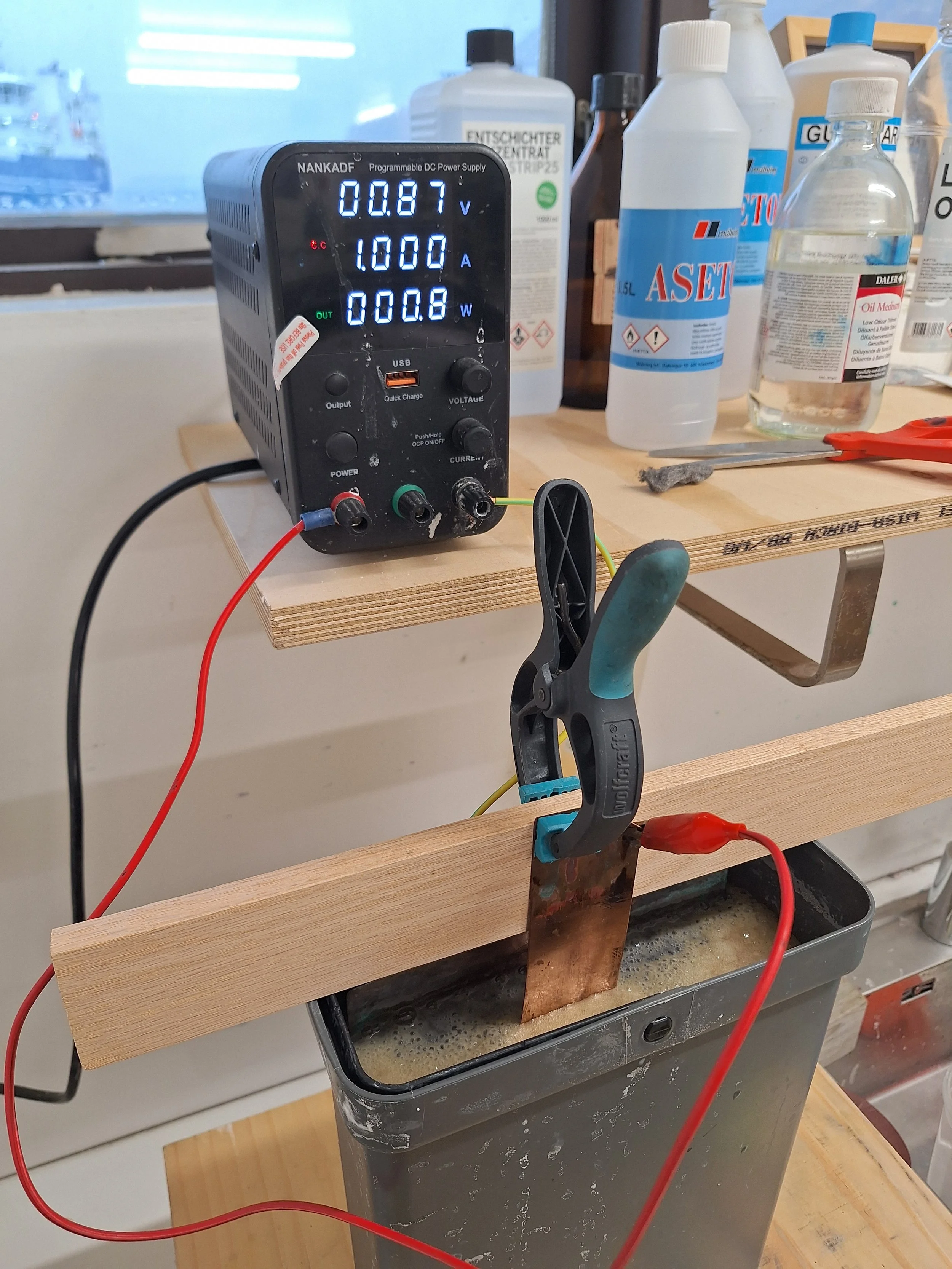
Despite many frustrations and a lot of head scratching - one thing I have been enjoying a lot about learning non-toxic processes, is familiarising myself with electrolyte etching. As mentioned in the previous blog post, it is a metalworking process that uses a direct electric current and an electrolyte solution (of water and salt) to remove metal without using harsh acids. It is definitely a method that is easy and safe to set up in one’s own home or studio, and a lot less messy than ferric chloride! While I still have a lot of experimenting and research to do, it has been really fun to at least get a grip of the process!
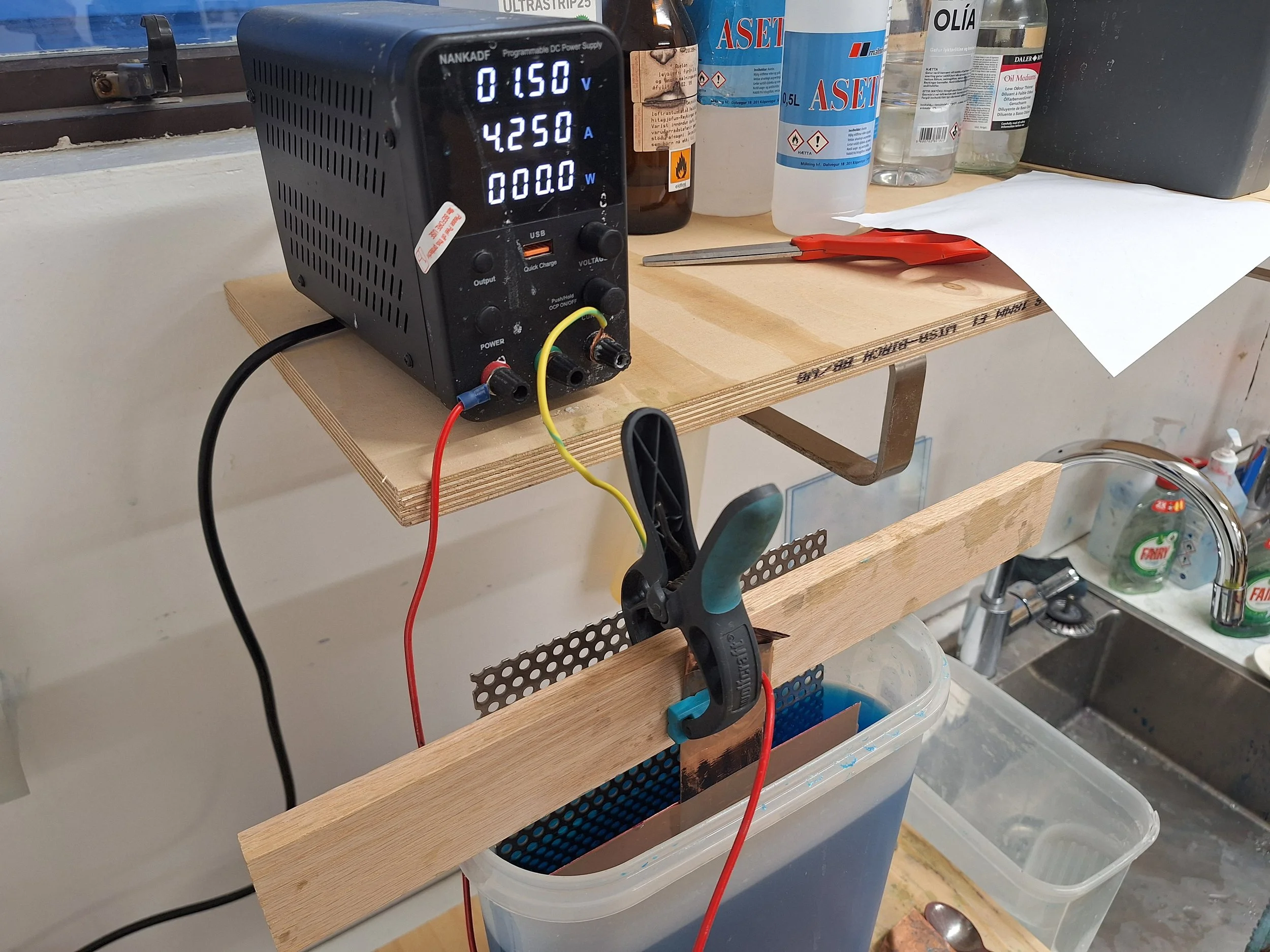
Electrolytic copper etching uses electricity and a conductive salt, such as a copper sulphate solution, to dissolve copper away from unprotected areas of the metal. The Anode (copper plate) is connected to the positive (+) terminal of a DC power supply. Copper atoms lose electrons and dissolve into the electrolyte as copper ions. The Cathode (the counter-electrode, in this case stainless steel) is connected to the negative (-) terminal. Copper ions from the solution or anode are reduced and deposit onto this piece.

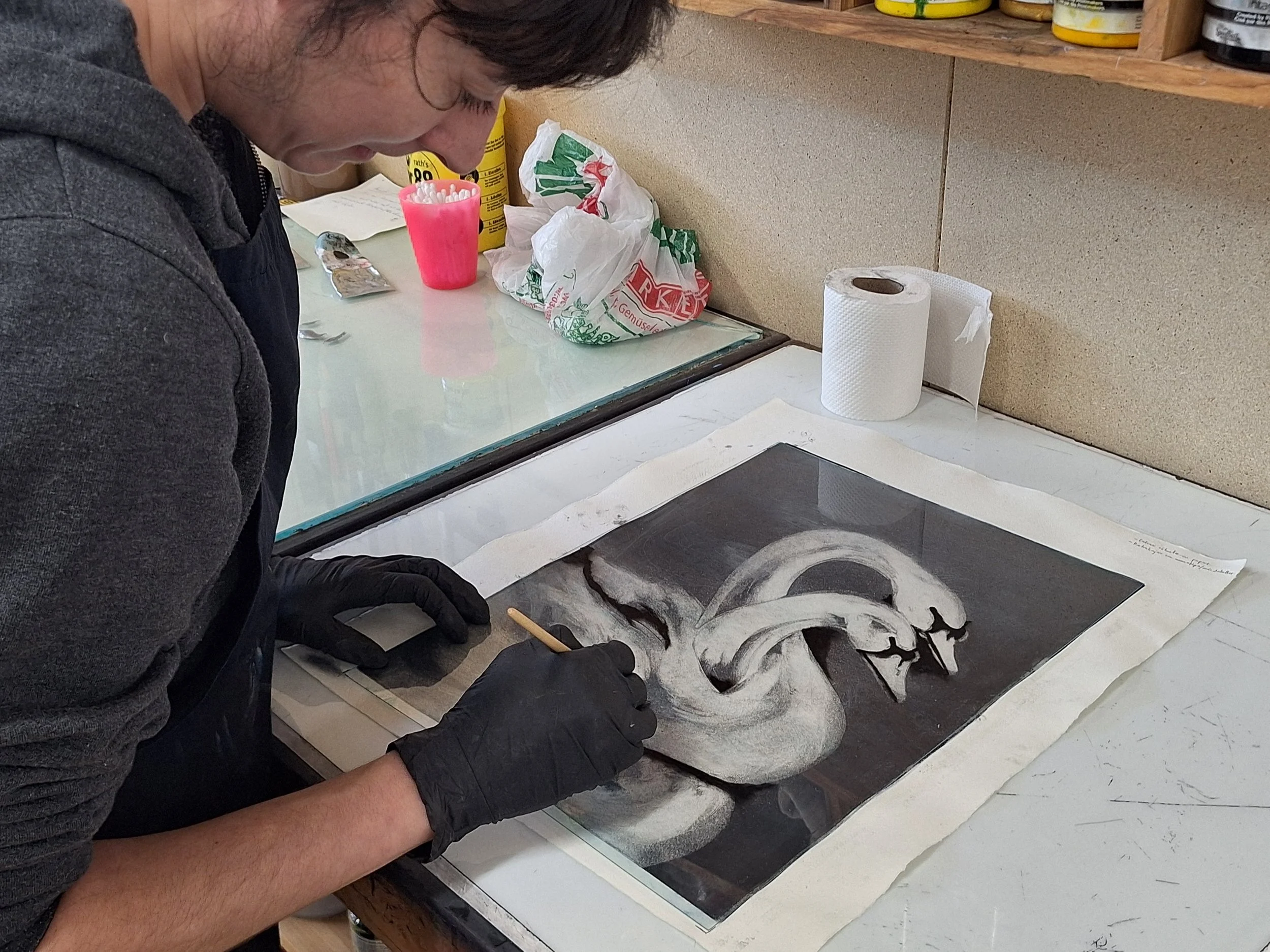
In addition to trying my hands at new ways of etching, I have also spent my evenings working on a small mezzotint. Mezzotint must be my favourite of all printmaking techniques, and I love how it is purely manual - requiring merely hand tools and a lot of patience! However, all studios are different, with different presses and inks - and this time it was striking to see just how much of a difference these variables can do to the same plate!
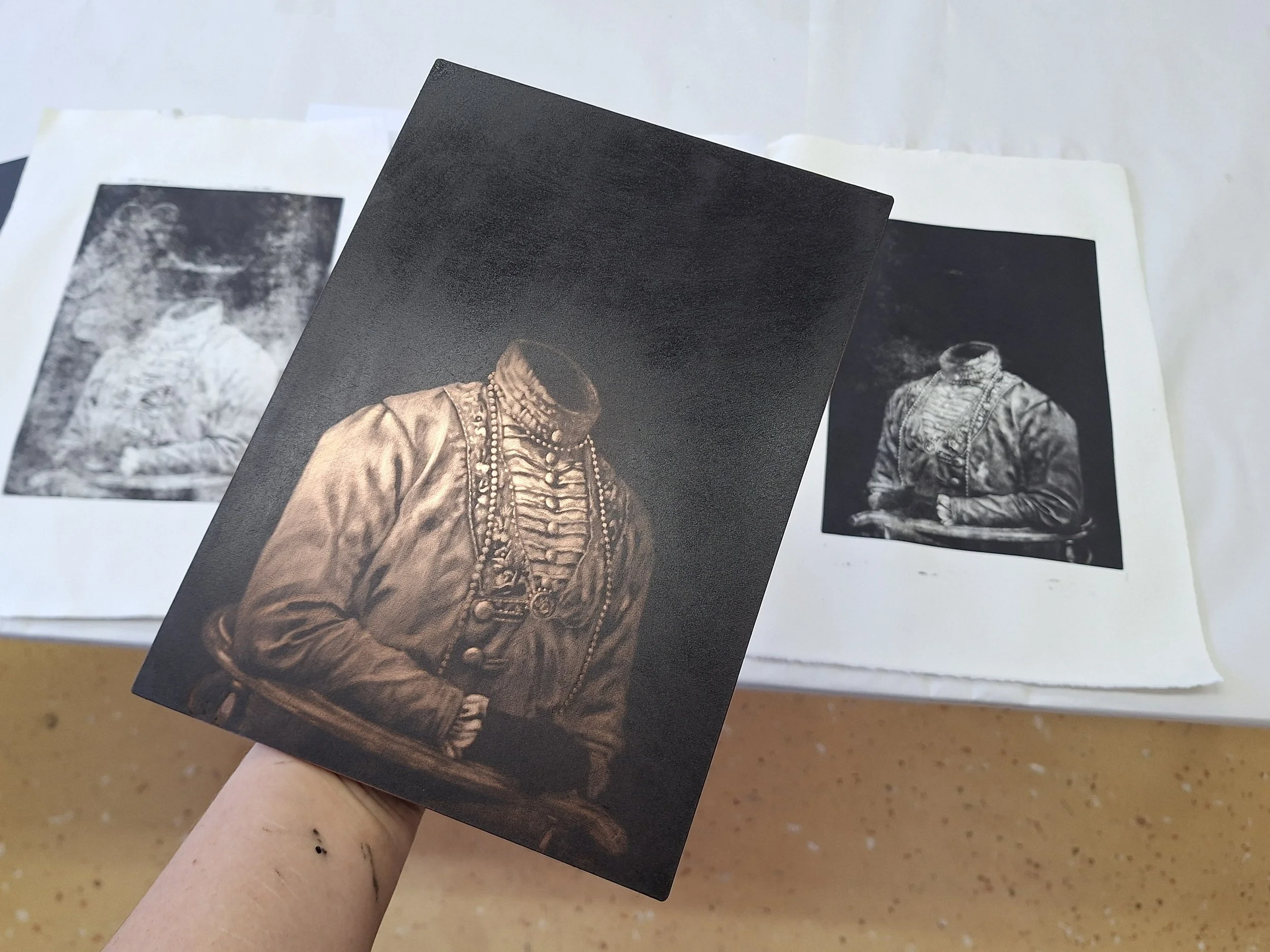
A mezzotint based on a portrait from an outdoor photo exhibition about the historical women of Seyðisfjörður.
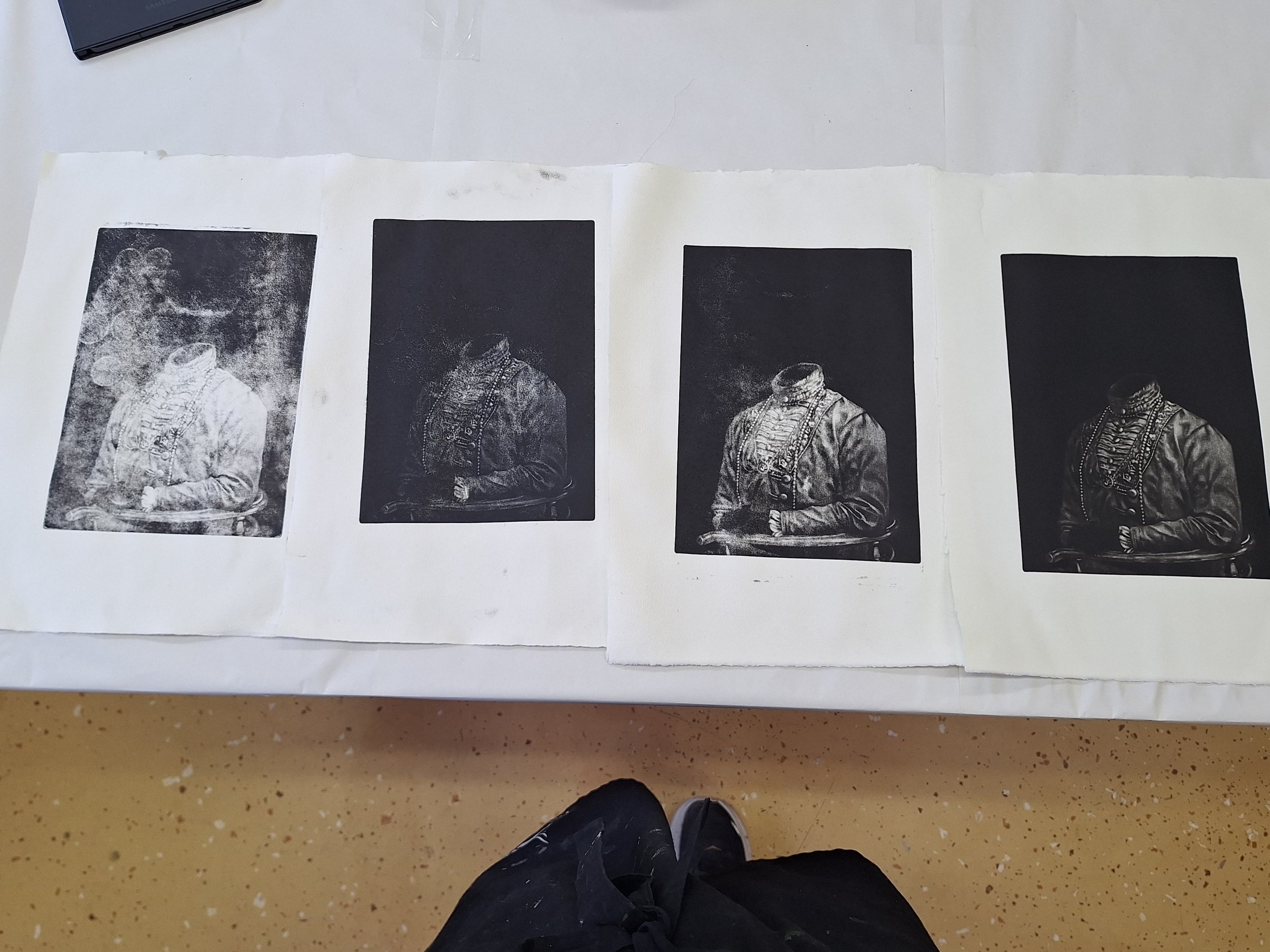
Three different inks, two different presses. In the end I had to ditch the water-based inks and revert back to my trusted Charbonnel 55985.
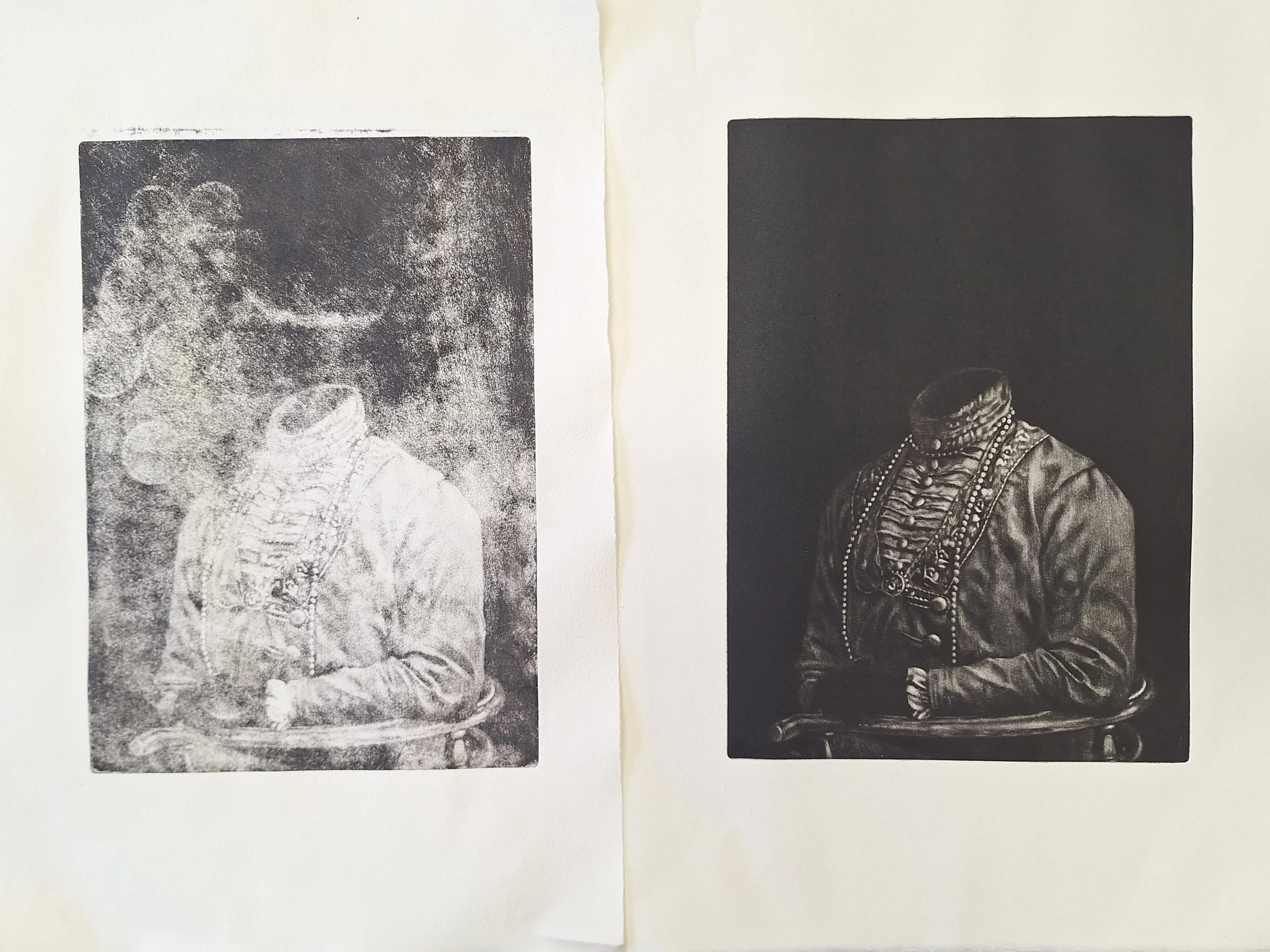
To the left is my first, and very miserable, test print! I used Caligo safe-wash etching ink, but did not have any extender, so the ink was so tacky that it could not be lifted from the paper. I also used a small press with a felt that had clear traces of coins having gone through it at some point! To the right is the same plate printed with Charbonnel 55985 Intaglio ink, this time in a larger press with a different felt. Proof that you must never give up on your plate!
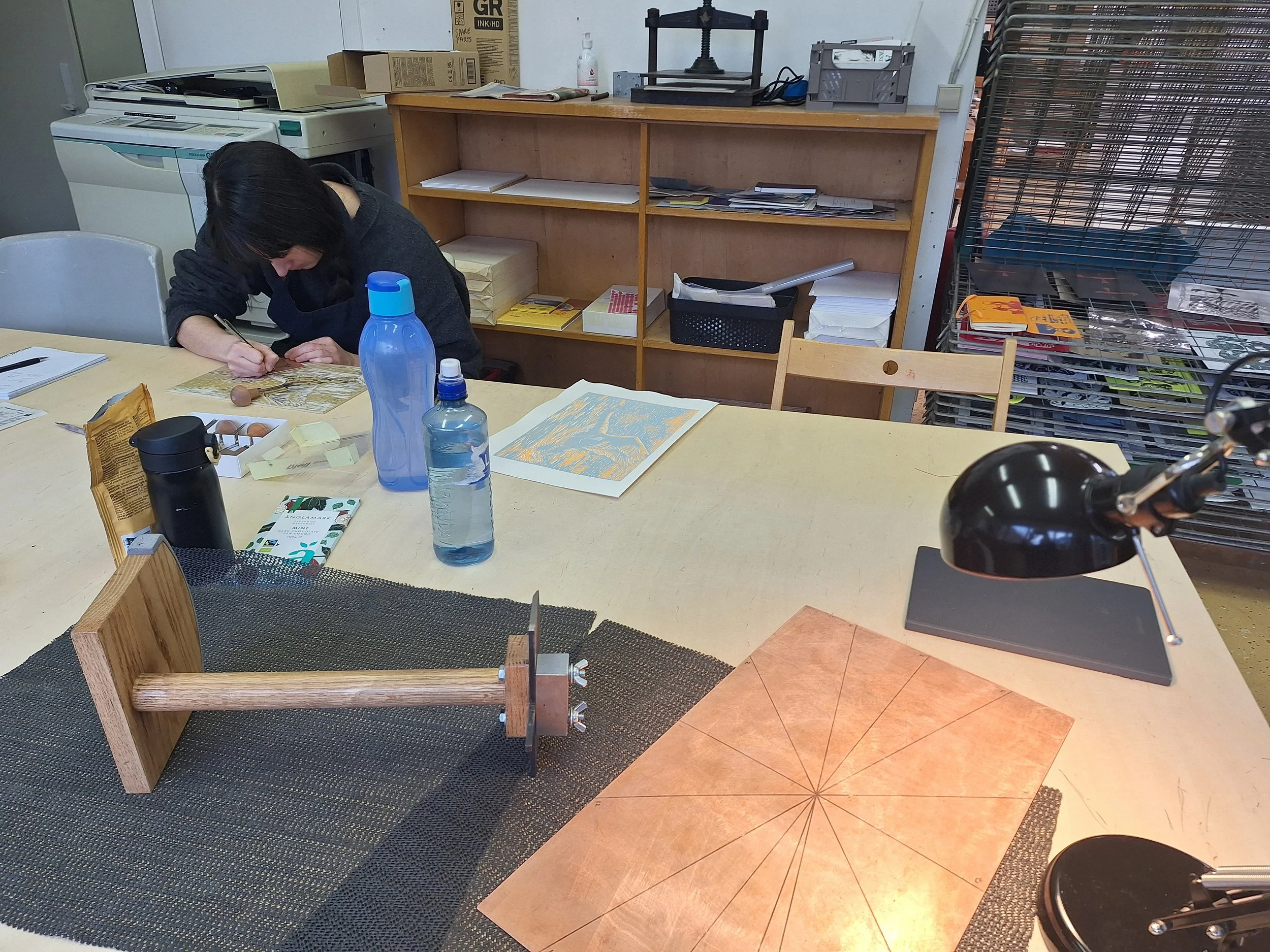
Chill evenings in the printmaking studio.
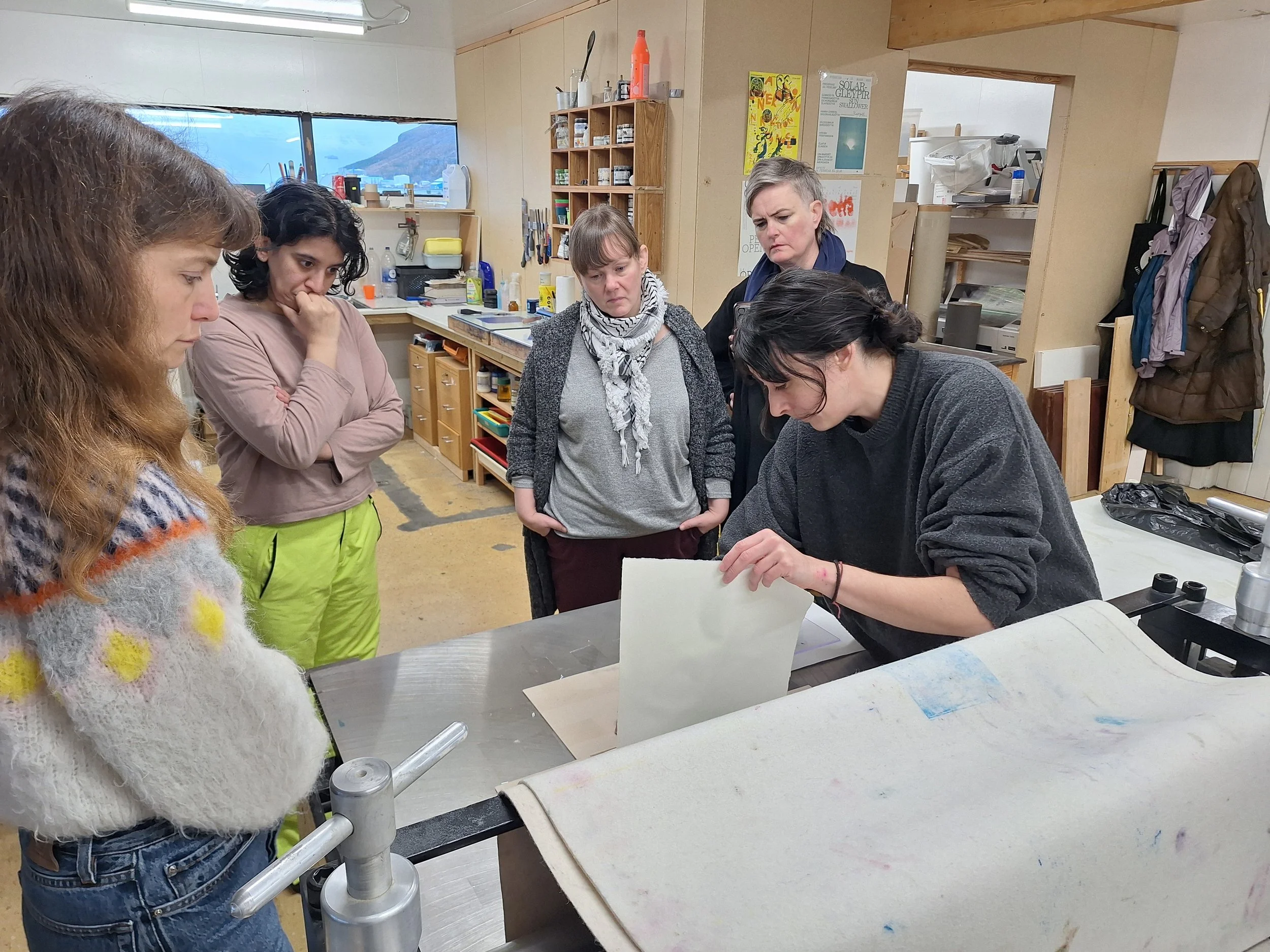
Alejandra hosting a monotype-workshop as part of our residency, with me as assistant!

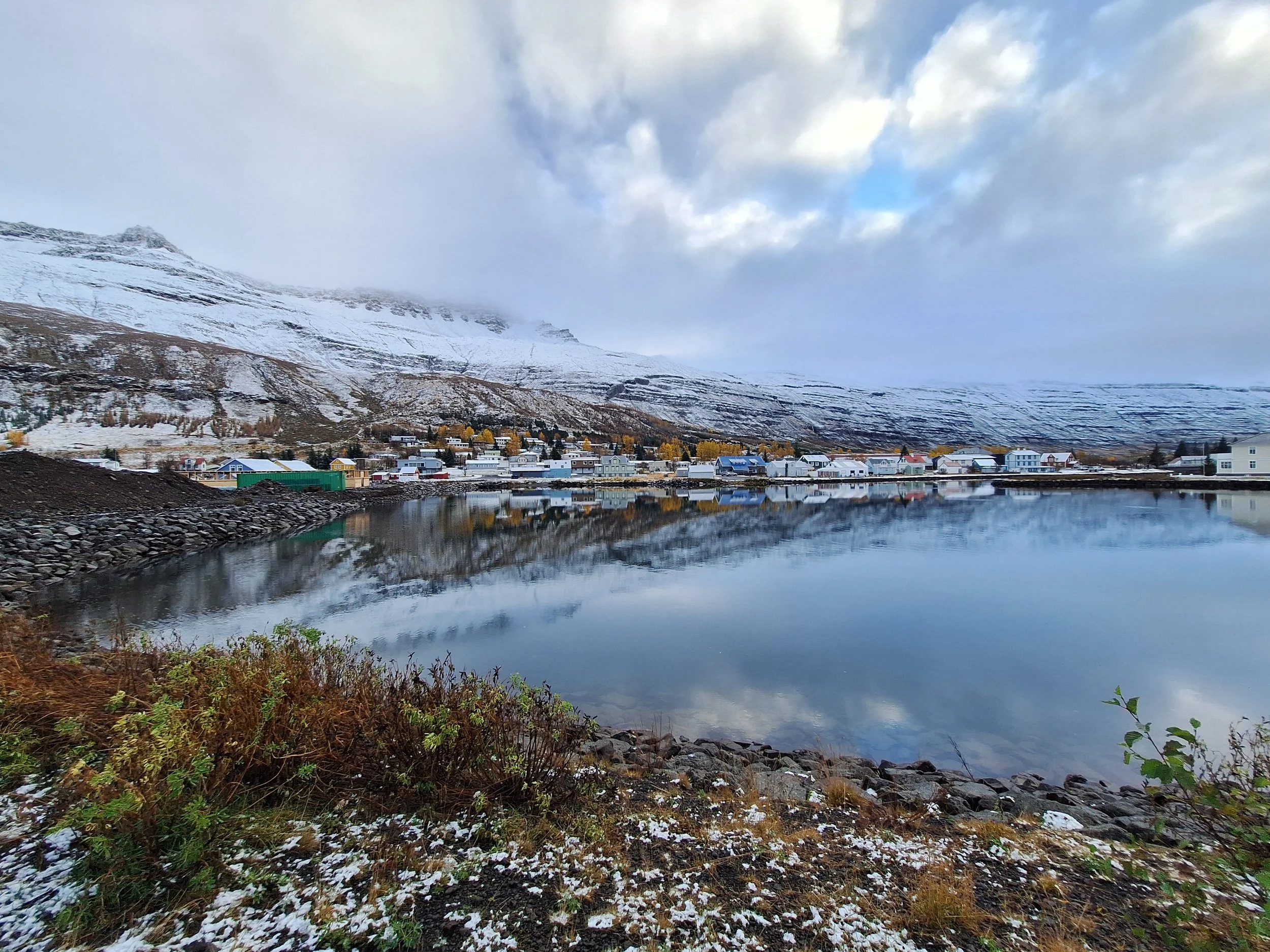
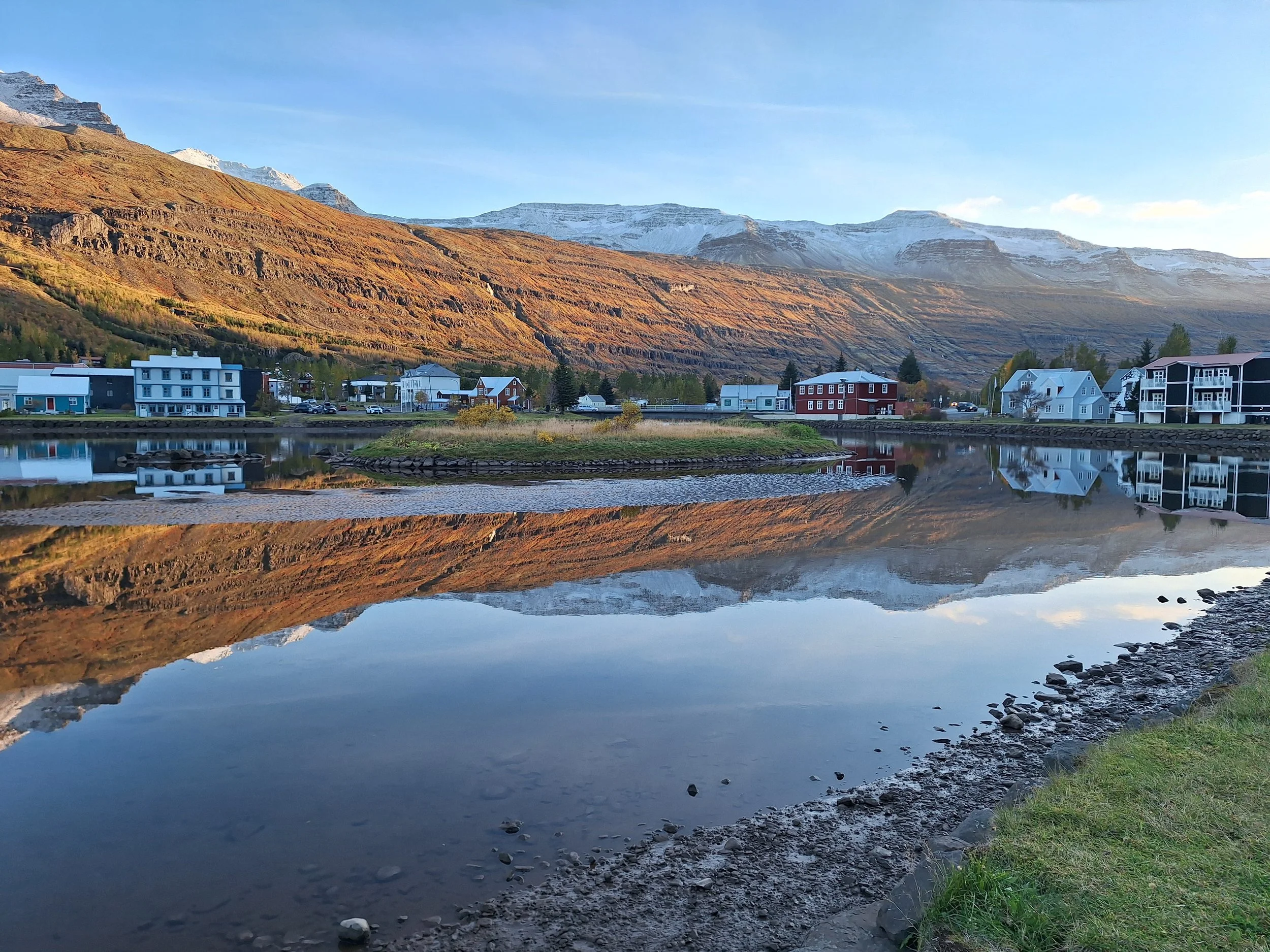
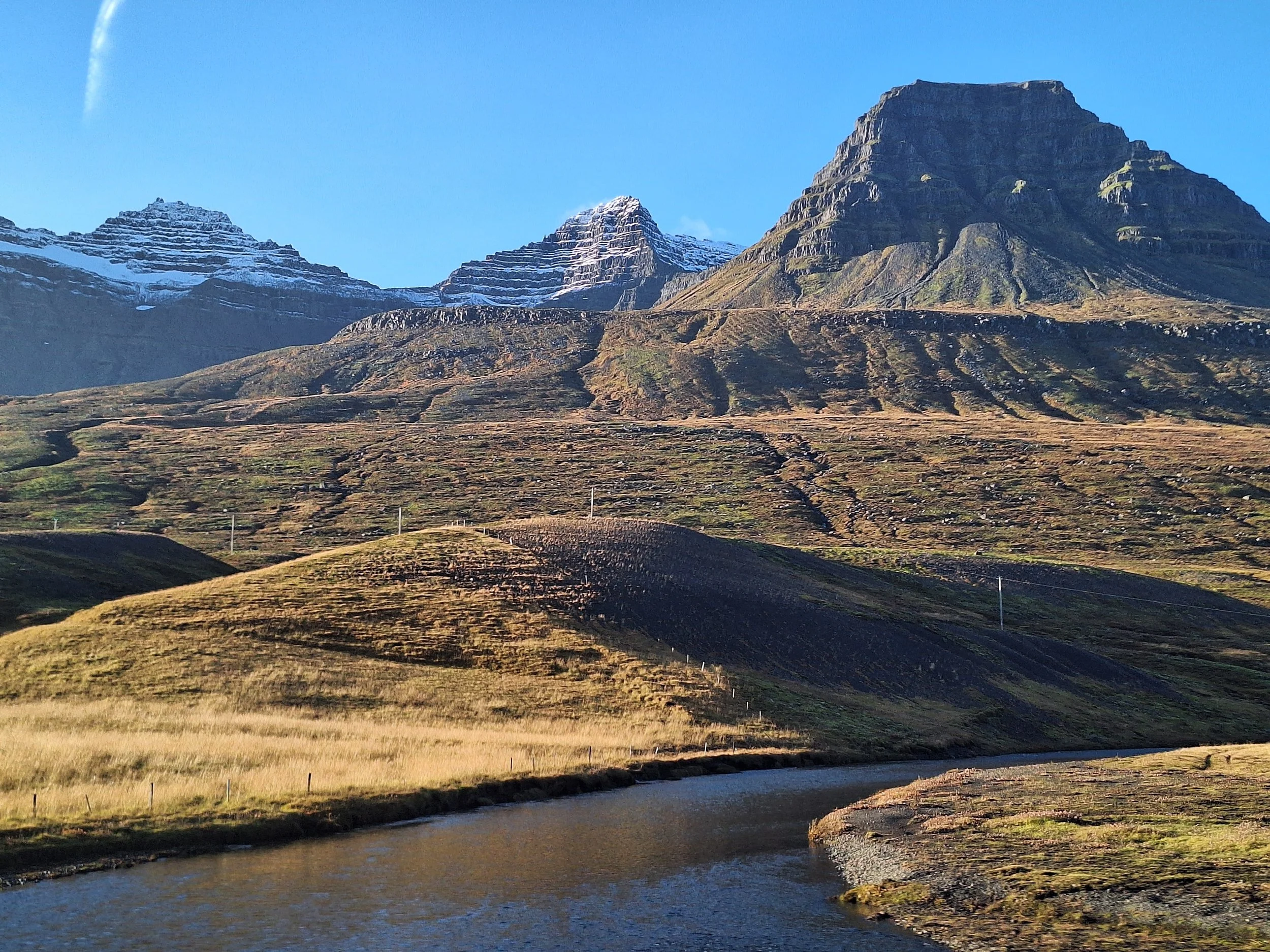
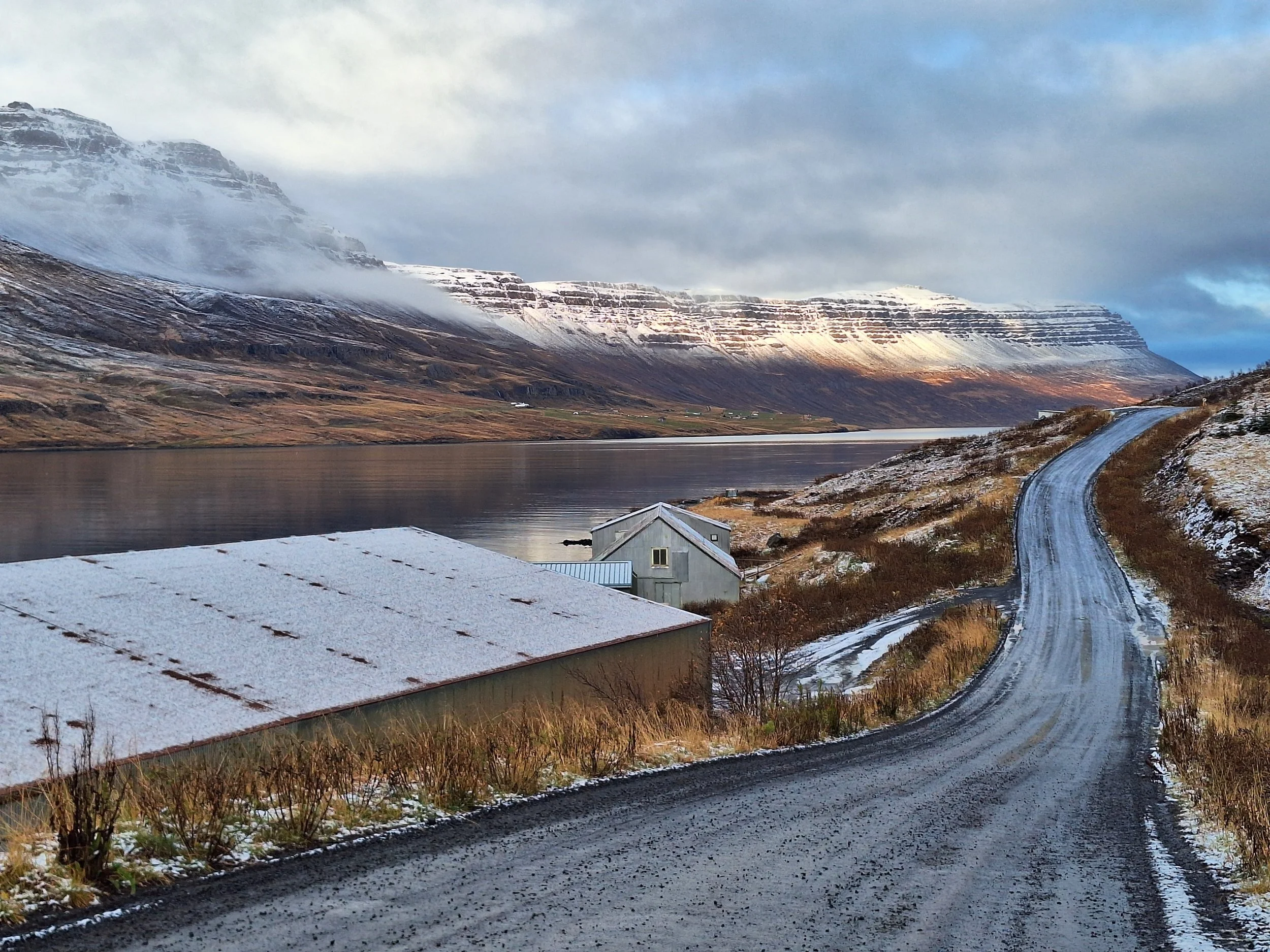
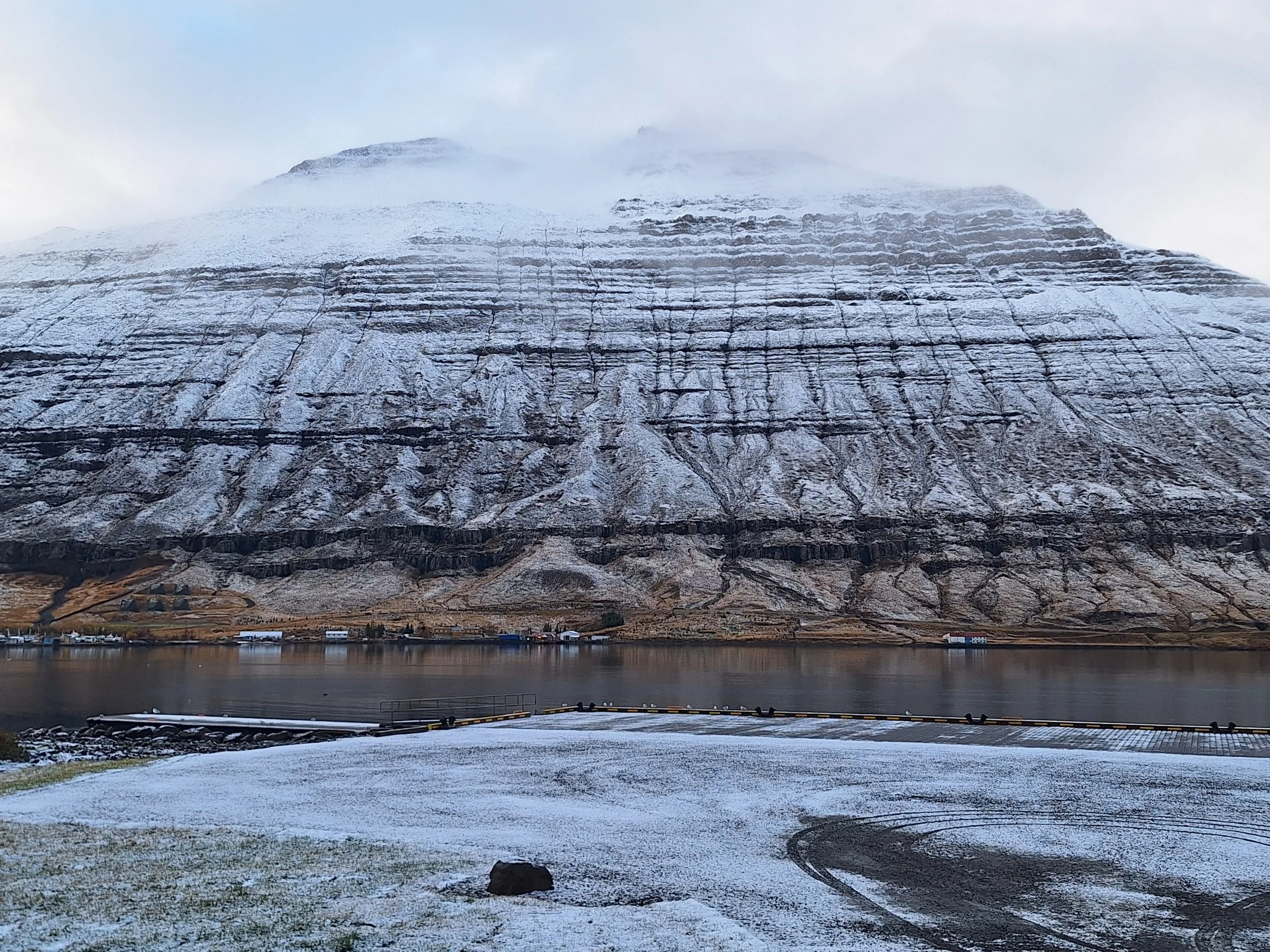
In between epiphanies and frustrations, I needed to take some time to just walk around Seyðisfjörður and remind myself of what a special place this is and how amazing it is to actually be here! It started snowing this week, and although it melted pretty quickly, the mountains looked extra rugged and spectacular once the skies cleared and the sun hit the snowy hilltops. It is strange how quickly you get used to having mountains and a lagoon with seals just outside your window, and sometimes you have to take a breath and remember to take it all in!
Skaftfell Art Center Residency | Week 2

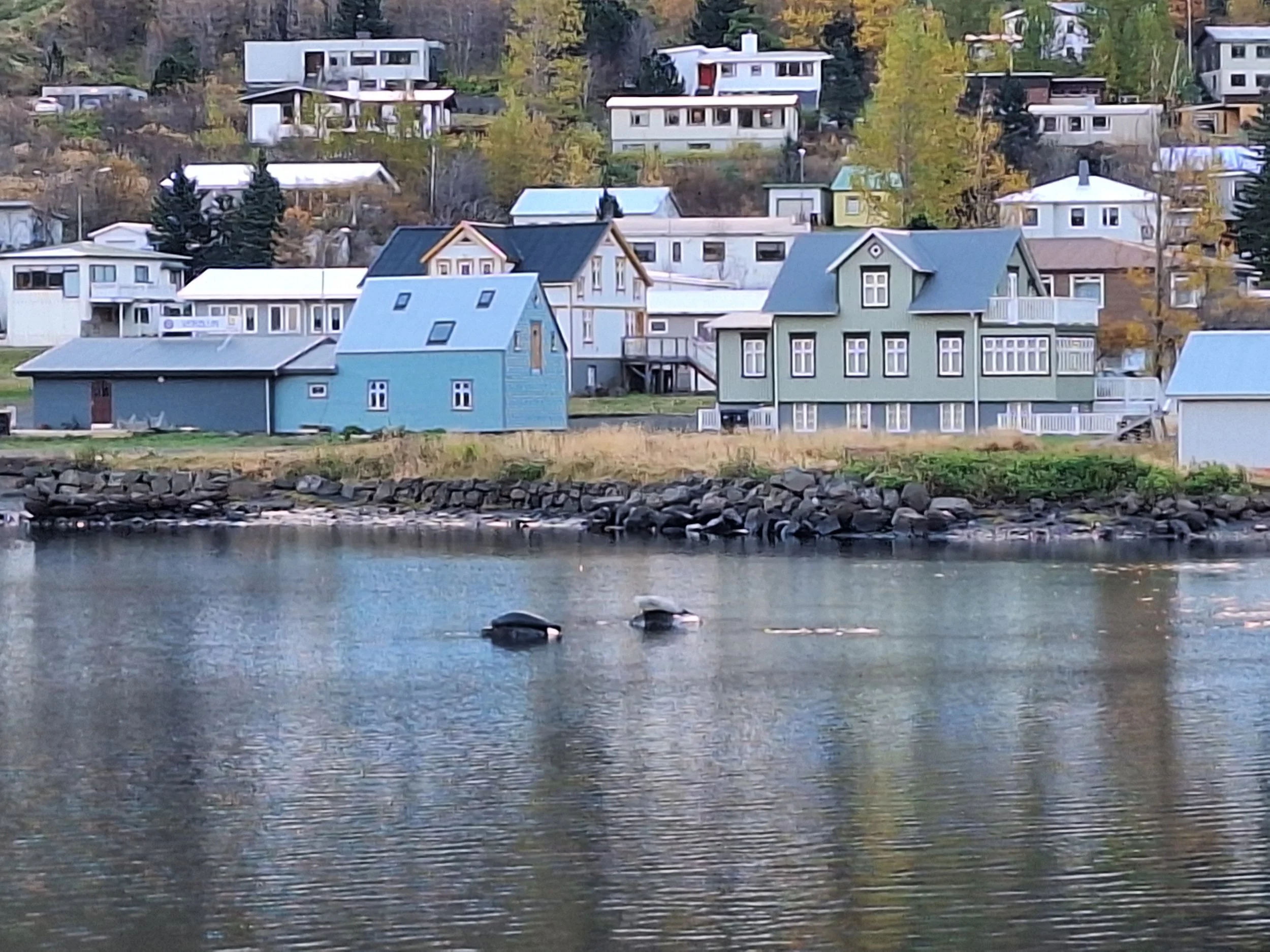
We are in week two of our residency, and Iceland continues to be magical. I feel immensely grateful to be able to spend a whole month here through the Skaftfell residency, learning about Iceland, and just enjoying the peaceful, but still very vibrant and stimulating surroundings that we are finding ourselves in. There is also a special kind of satisfaction that comes along with finally settling into a routine. For example, every morning Alejandra and I will wake up and make a cup of coffee, and look out for the two adorable harbour seals that frequent the lagoon just outside our window. When the water levels are low, they like to rest on a couple of rocks that break through the surface. As I am sipping my coffee, I think about how fortunate I am to be visiting all of these places that are such a contrast to my regular life in Oslo.

The two adorable harbour seals, looking like chubby sausages as they bounce around the rocks on their tummies.

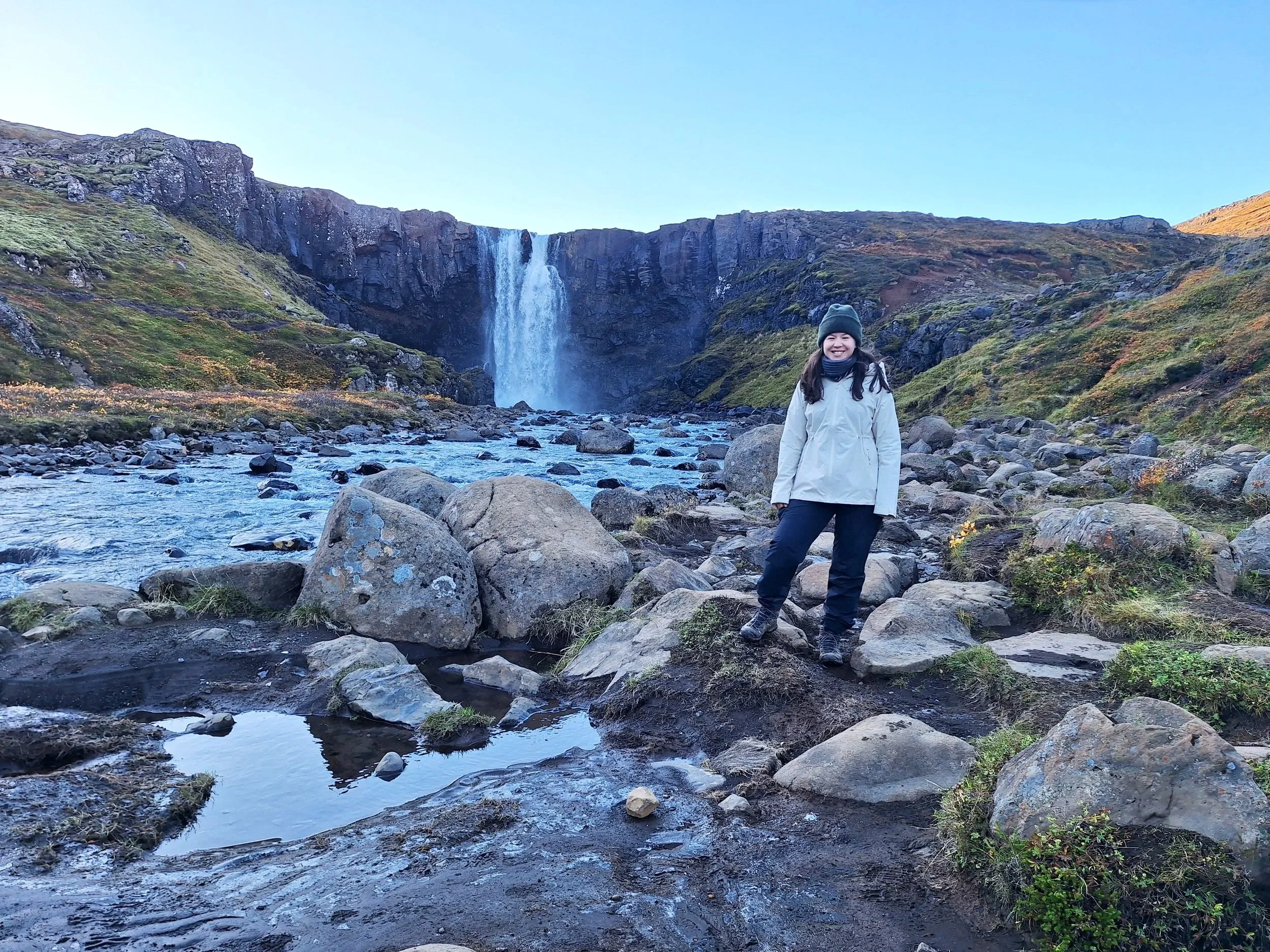
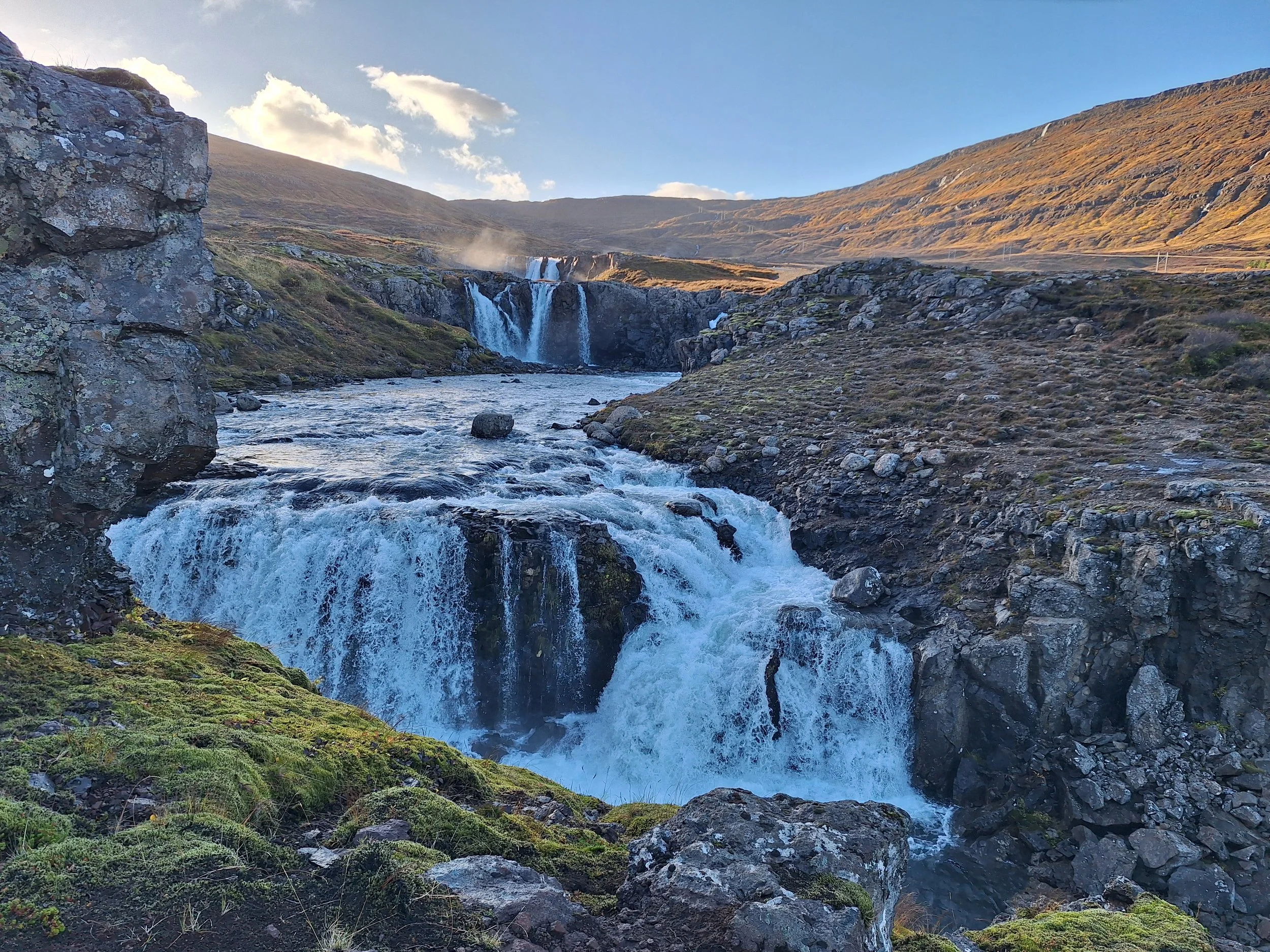
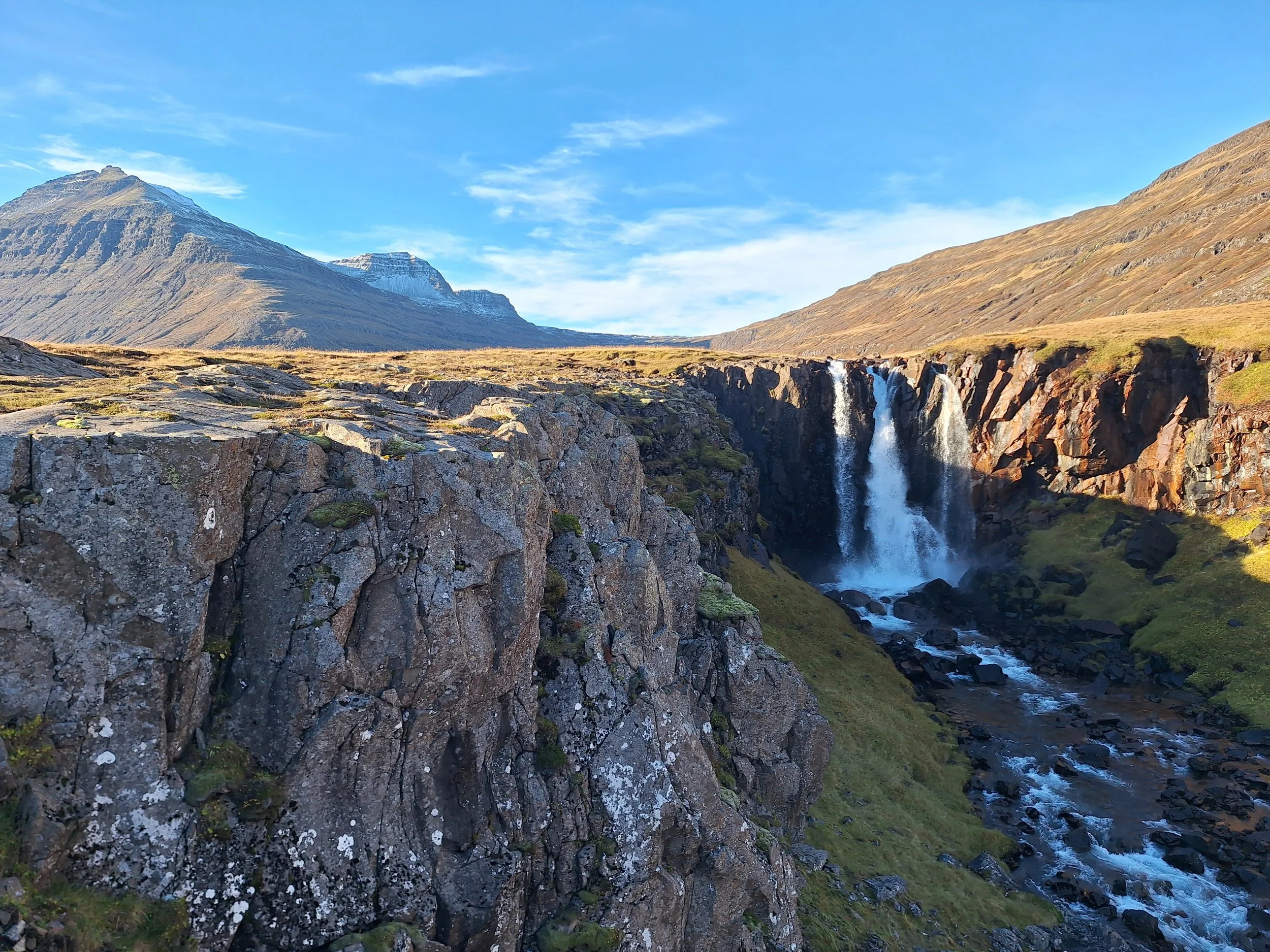
On the rare occasions when the skies are blue and the winds are calm, we pack our rucksacks and explore the outdoors. After a period of heavy rainfall and storm weather warnings across Iceland, the weather finally cleared, and we were able to venture out beyond the town of Seyðisfjörður. The days are getting shorter and shorter at a rapid rate now, so we are making use of the precious daylight that we have. This week we hiked to both Gufufoss and Vestdalsfoss, two stunning waterfalls around a 60-90 minute walk from town in opposite directions. Unlike my residency at Svalbard, where I could not leave Longyearbyen on my own due to the constant risk polar bear encounters, I am now free to roam around to my heart’s (and legs’) content!

Me in front of Gufufoss, tired (but happy) after having trekked uphill in head wind for about an hour.

Selfoss, which we stumbled upon by accident after following the wrong trail on our way to Gufufoss.

Vestdalsfoss

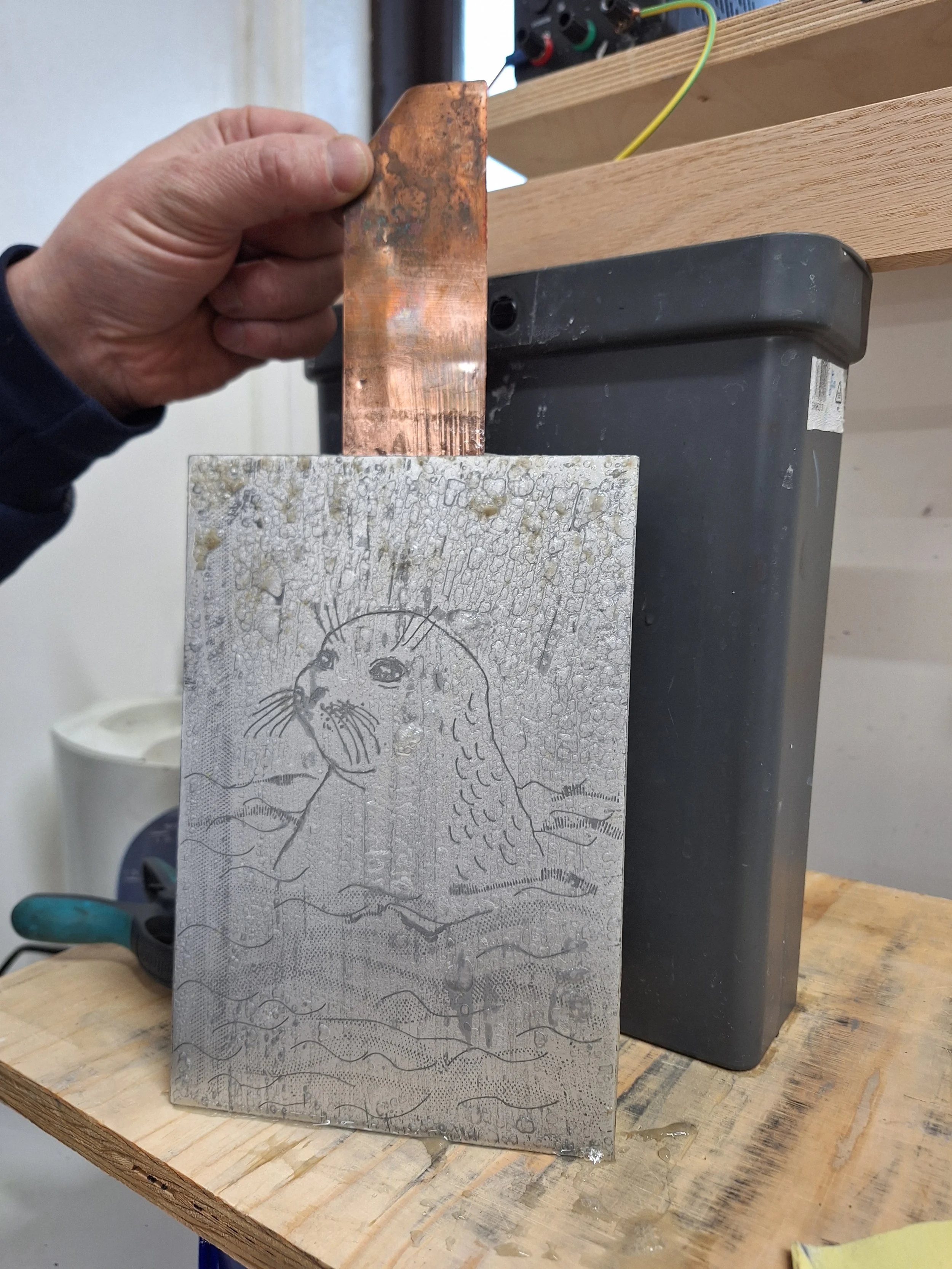
Luckily for us, there are also many rainy days in Iceland, forcing us to actually spend time in the printmaking studio making art! The workshop technician at Prentverk Seyðisfjörður, artist and printmaker Linus Lohmann, has kindly been showing us how to do electrolytic etching. Electrolytic etching (or electrochemical etching) is a metalworking process that uses a direct electric current and an electrolyte solution (of water and salt) to remove metal without using harsh acids. In other words, you can use this method to etch lines and aquatints into your metal printing plate, rather than using potentially hazardous solutions such as ferric chloride or nitric acid. This week we etched aluminium plates, and next week we will be using a slightly different salt solution to etch copper plates. In honour of the harbour seals in the fjord, I made a test plate featuring a (slightly goofy looking) seal.

Electrolytic etching in progress

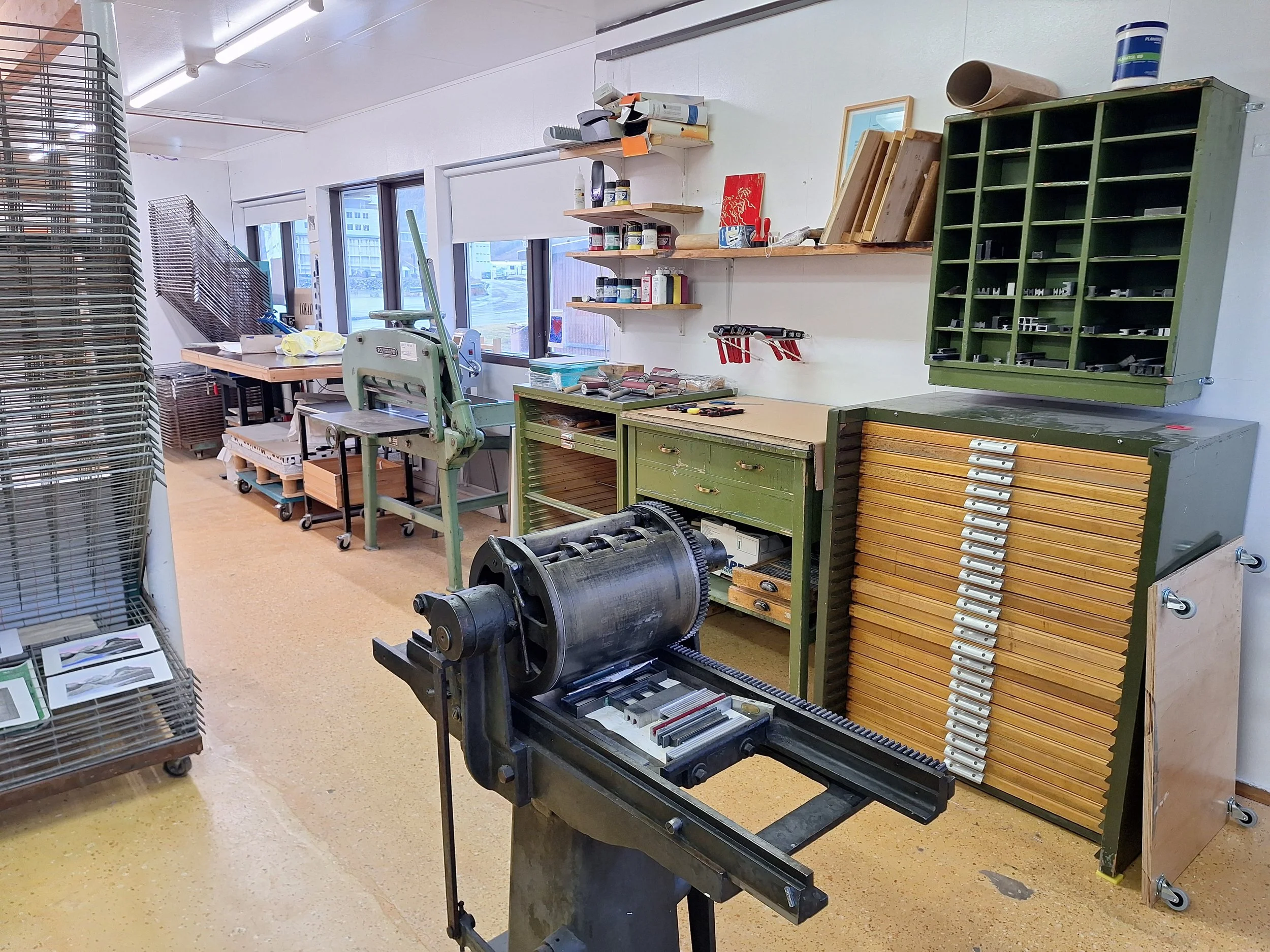
The letterprint press

Line etching on aluminium

Alejandra working on a series of monotypes

While sketching, photographing and researching, I have been thinking a lot about how to incorporate this residency experience into my artistic practice. While we are not required to make work that directly echo Iceland or Seyðisfjörður, I feel it is inevitable not to be influenced by your surroundings in some ways, and to begin viewing your art through a different lens than you would at home.

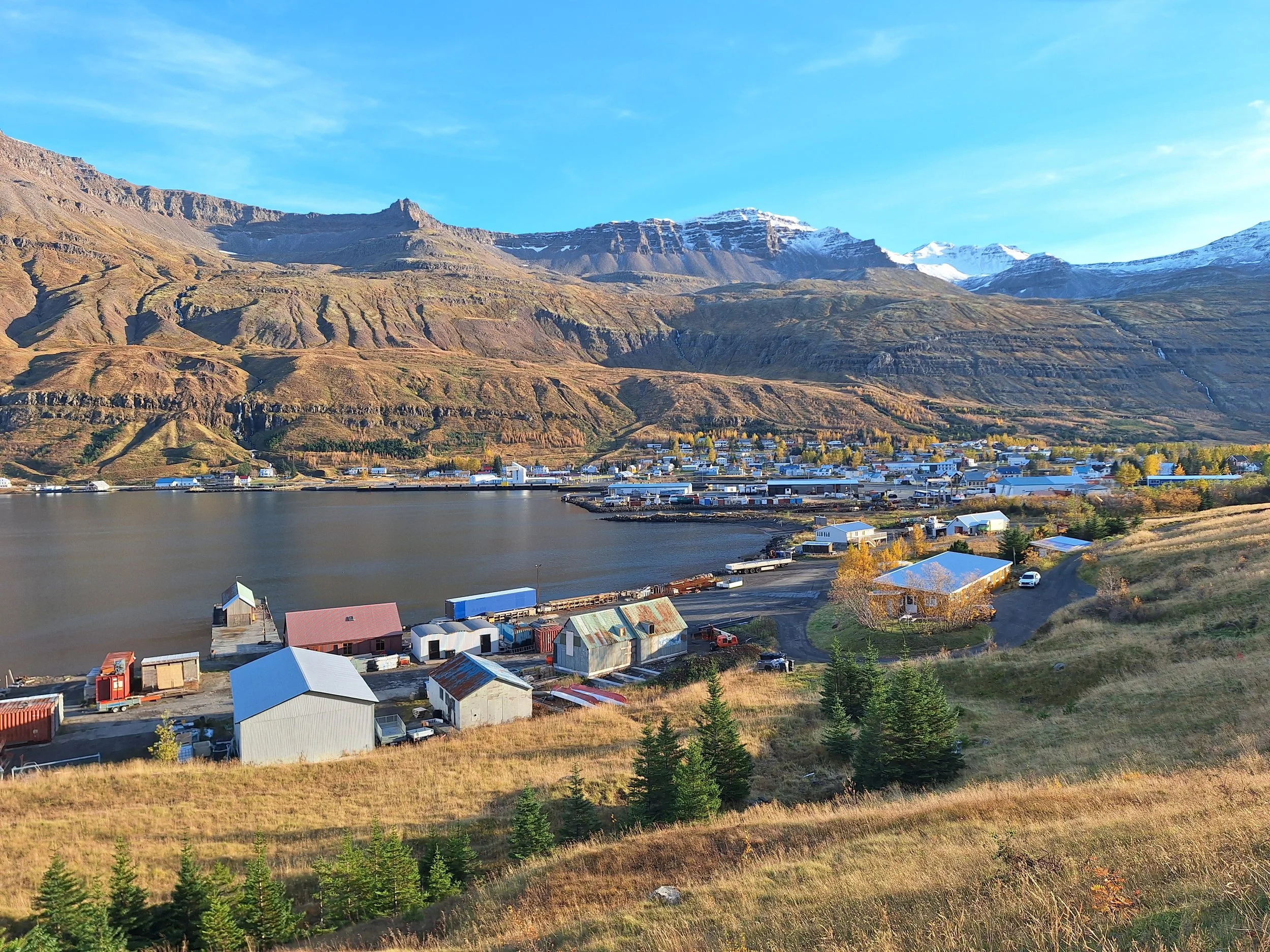
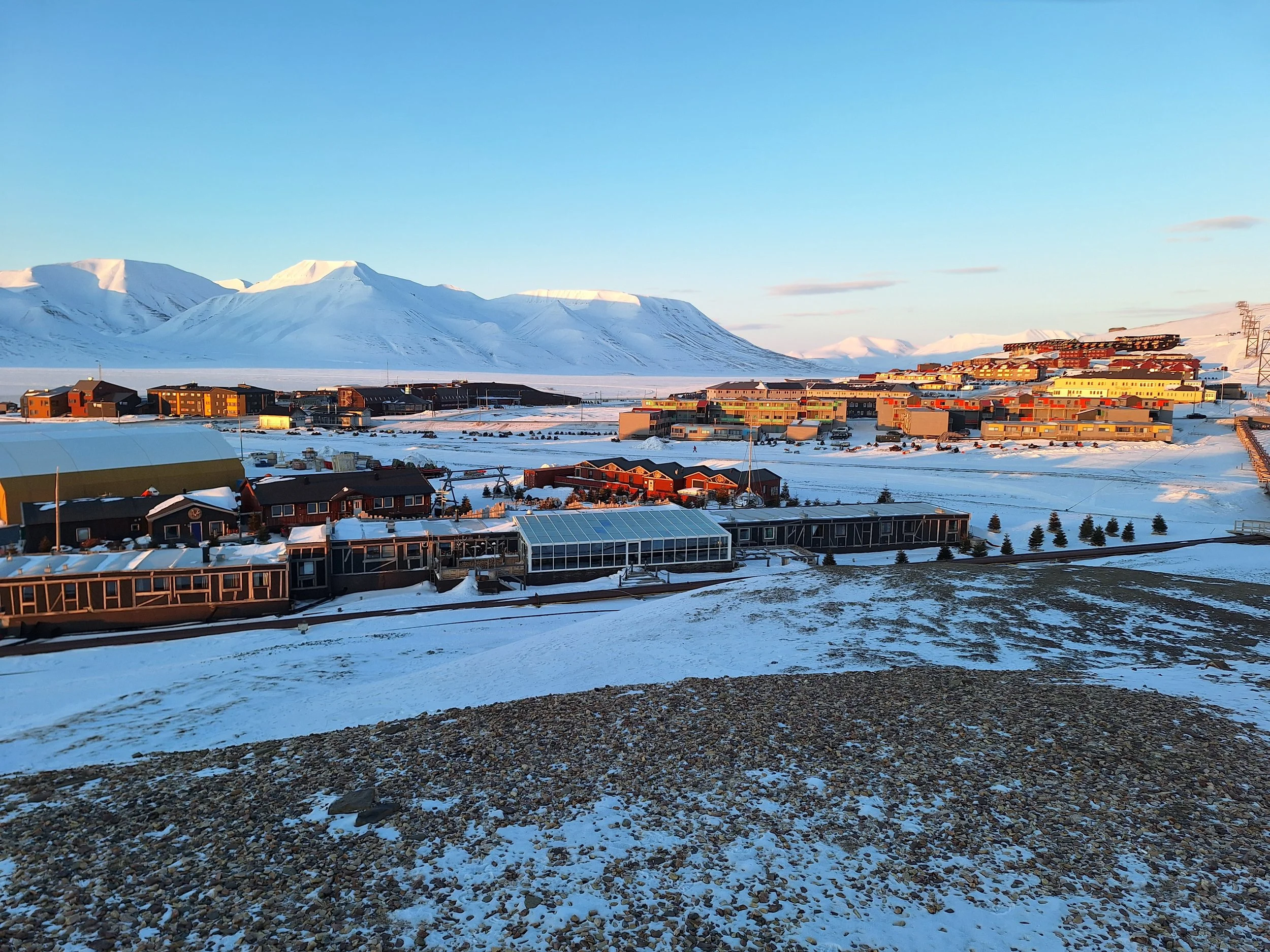
Coming to Seyðisfjörður, a small remote town in the vicinity of the Arctic circle, I have been drawing many parallels to life in Longyearbyen in Svalbard, where I did a three month artist residency with Artica in 2024. In fact, it was through Artica that I was invited to Skaftfell Art Centre, and in some ways I view this residency as an extension of Svalbard. These are both places where climate change and the powerful presence of nature are felt viscerally, and human settlements appear small and vulnerable within the barren vastness of the endless mountains. At the same time, there are noticeable differences between Longyearbyen and Seyðisfjörður to address.

Seyðisfjörður

Longyearbyen

Firstly, creating work related to Svalbard, whether it pertained to geopolitics, biology or climate change, felt easy and unproblematic, because Svalbard does not belong to anyone - everyone is merely a visitor that comes with their own perceptions and interpretations. It is a place where time feels disjointed, inflicted with short-term memory, because there is such a high turn-over of residents. Old buildings might prevail, but the people who once inhabited them are long gone, and so are the ones to tell their stories. There are no generational overlaps, because Svalbard is a place where people can neither be born nor laid to rest.

Seyðisfjörður on the other hand, very much belongs to someone. Even though there is a constant turn-over of tourists and visiting artists, this is also a place of history and tradition that is being actively passed on and remembered from generation to generation. Therefore, I feel a lot more mindful when seeking to incorporate the experience of this place into my own artistic practice, because Seyðisfjörður is not necessarily “mine” to interpret the way Svalbard is.

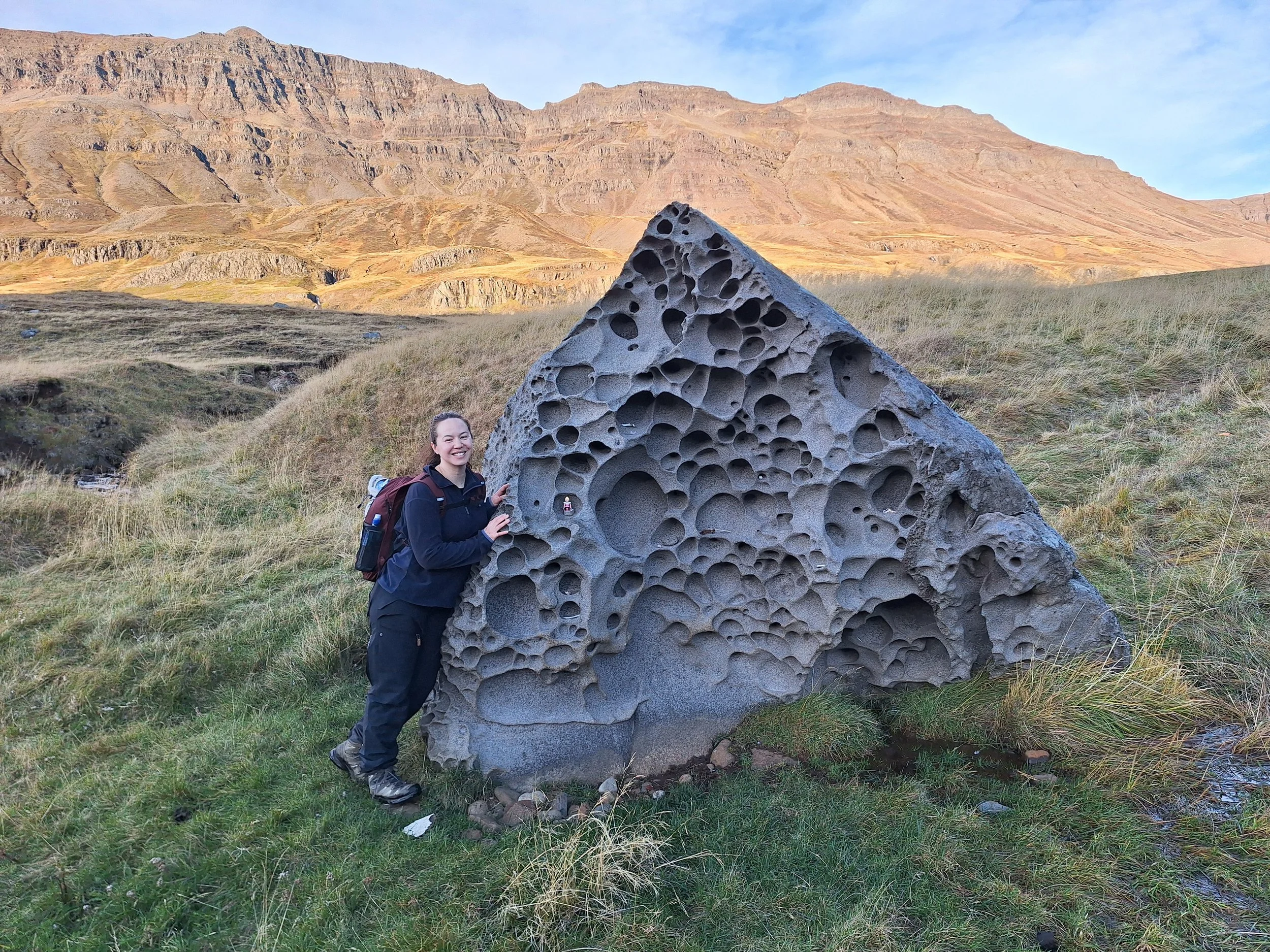
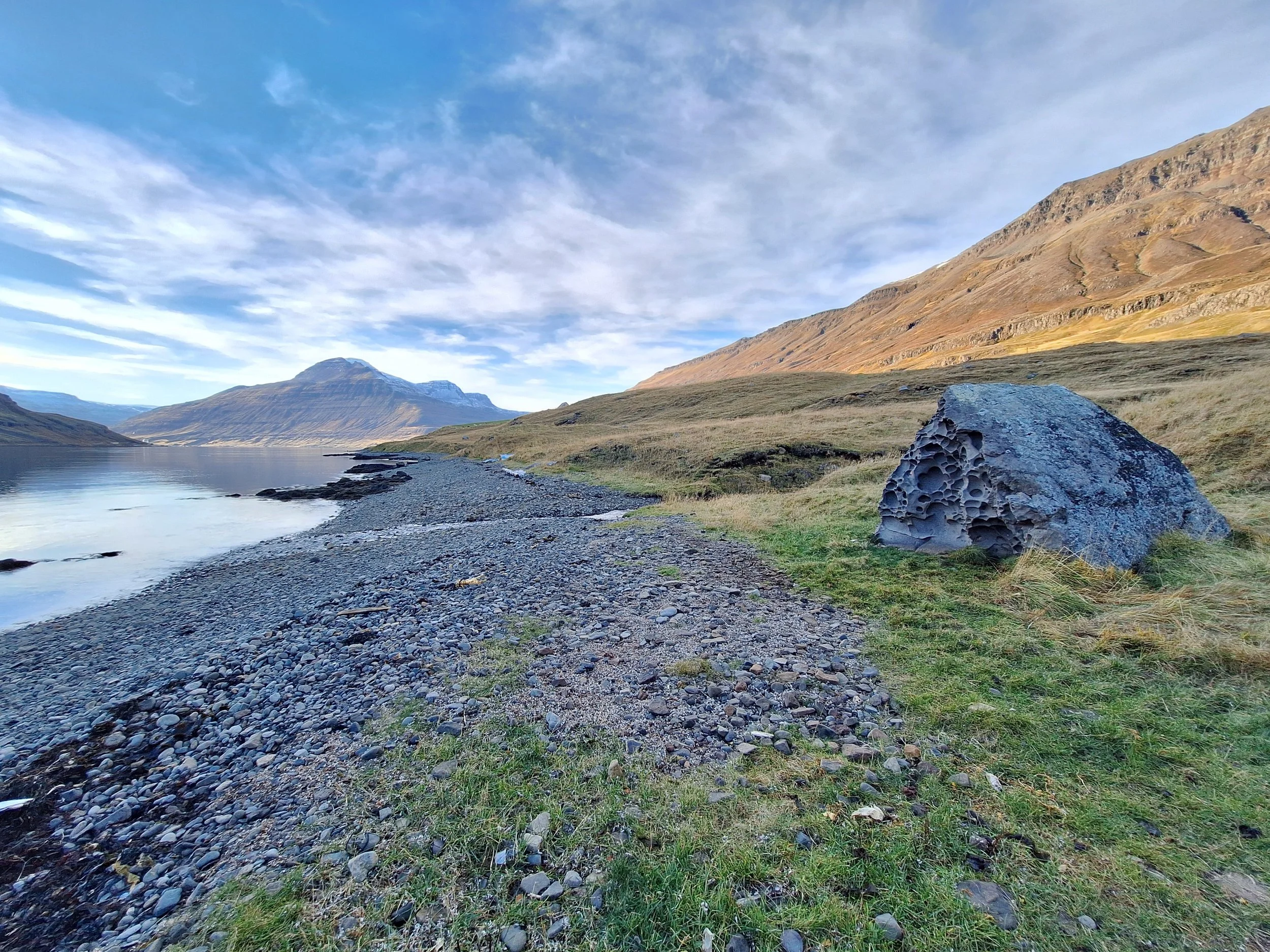
For example - one thing that Iceland has, that Svalbard does not, is a strong sense of folklore. One such instance in Seyðisfjörður is the lore attached to Dvergasteinn (“Dwarf’s Rock”) - a very special boulder standing near the northern waterfront about a two hour walk from town, which Alejandra and I visited this week.

Me looking small compared to Dvergasteinn!
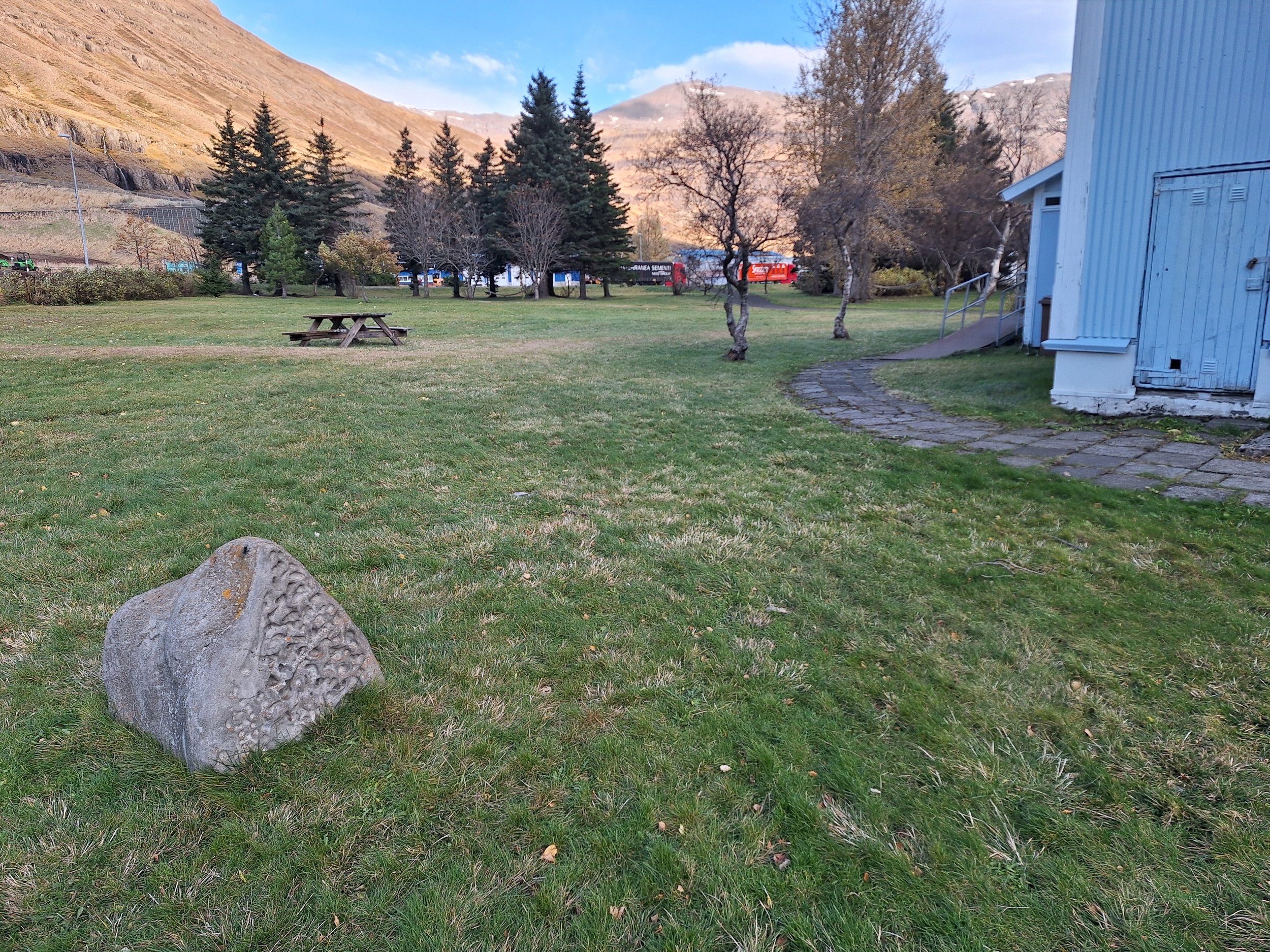
According to folklore, the boulder once stood on the south side of the fjord, next to the local parish church and vicarage. It was widely believed to be home to a family of dwarves. Eventually, the local community decided to rebuild the church directly across the water on the northern shore. This upset the dwarves, and Dvergasteinn sailed across the sea on its own accord in order to once again be near the church. In memory of this event, the vicarage itself was officially named Dvergasteinn. When the church moved to its current location in the centre of Seyðisfjörður in 1920, a miniature version of Dvergasteinn was placed next to it, so that the dwarves would always be a part of their beloved parish.

Dvergasteinn is beautifully situated along the shoreline.

The miniature Dvergasteinn, next to the blue church in Seyðisfjörður’s town centre.

Although Seyðisfjörður is very much an Icelandic town in our day and age, it carries a certain “ghost” of Norway and Norwegian presence - just like Longyearbyen. For the past five years, I have been interested in the concept of "hauntology" in my artistic practice. “Hauntology” was coined by Jacques Derrida and Mark Fisher, as the idea of ​​how the past persists, haunts, and intrudes upon the present—often through a melancholic longing for lost or unfulfilled futures. This concept I mainly explore through the lens of my family’s migration and diaspora, but it is also a sensation I am feeling strongly in these small, arctic communities.

Svalbard is one of the most vivid real-world manifestations of "hauntology." Here, abandoned Norwegian and Soviet mining settlements remain preserved like anachronisms within the permafrost. The physical artifacts outlive the ideologies that created them, and awaken eerie sensations as they stand in the empty and abandoned landscape.

Seyðisfjörður possesses a type of hauntology of its own. First of all, its Norwegian origins are still strongly and physically manifested in the Norwegian wooden catalogue houses that were imported in the late 19th and early 20th centuries by Norwegian fishermen. While it is a beautiful town, I, as a Norwegian, also feel a strange, almost thrilling, sense of dissonance as I walk around the streets. The houses remind me of something nostalgic from my childhood, but in a slightly indecipherable way, something also feels off. Whether it is the houses’ colour or décor, or the fact that they are situated in a vastly different landscape, with many being clad in corrugated weather-protective metal. In a way, these houses have migrated and removed themselves from their Norwegian origins, taking on a distinct Icelandic identity - to the extent that a proud sense of local ownership and nostalgia is now being attached to them.

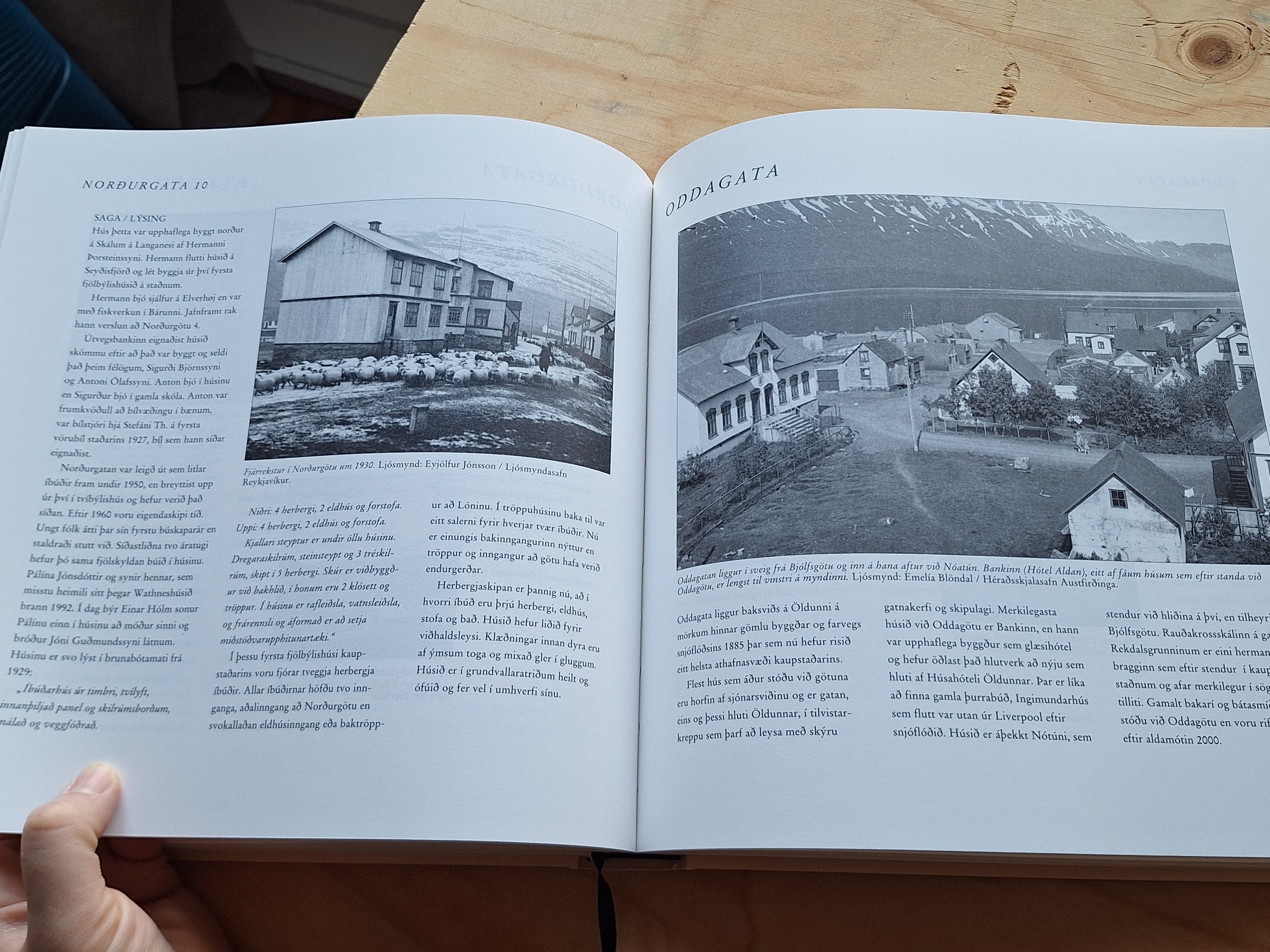
Húsasaga Seyðisfjarðarkaupstaðar by Þóra Guðmundsdóttir. This book documents the history of the town and a great number of the houses dating as far back as 1870.

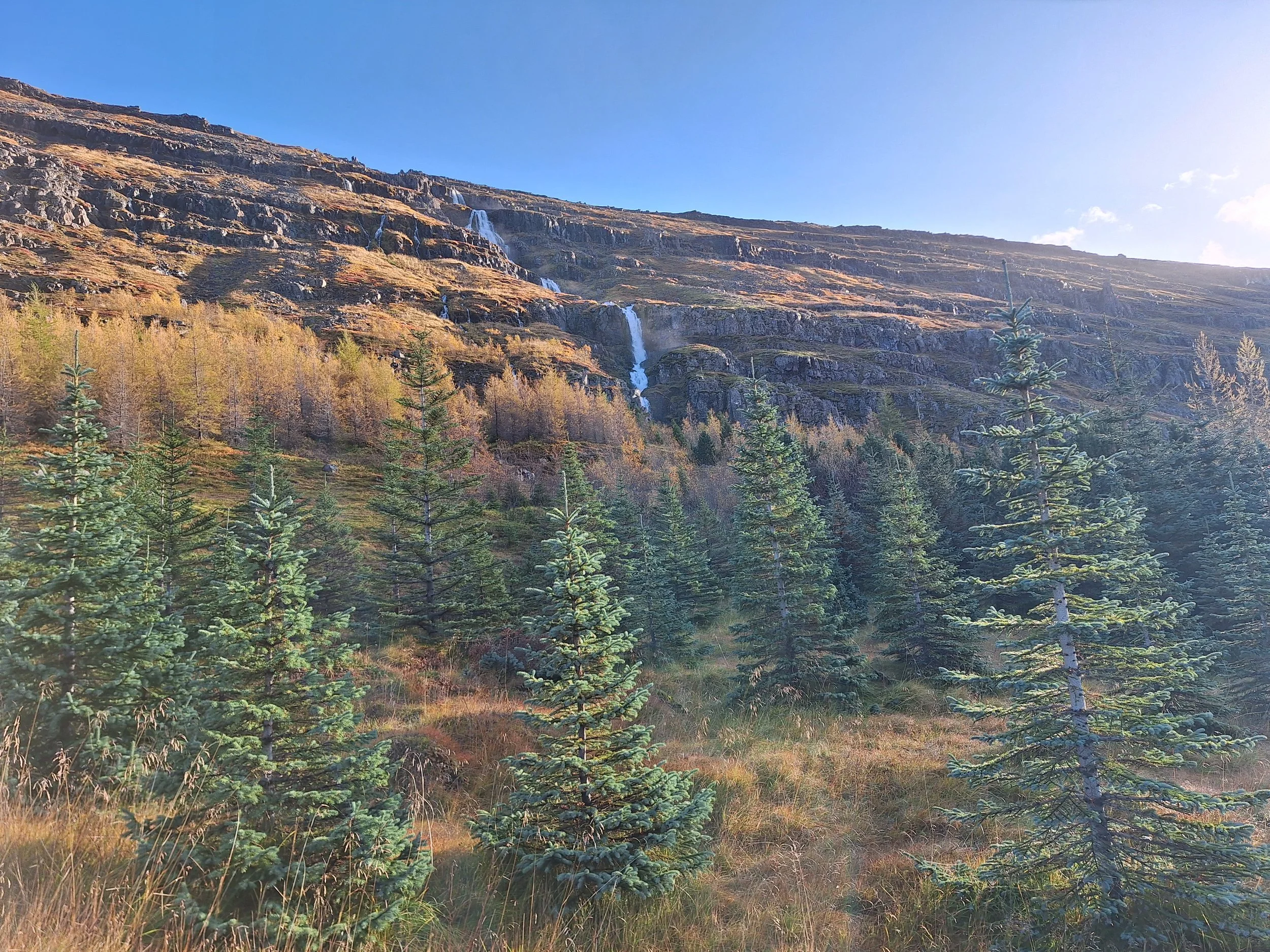
There is also a sad, and slightly ironic backdrop to these imported wooden catalogue houses from Norway. They were imported not only for efficiency, but also due to the fact that wood is scarce in Iceland. When the early Viking settlers arrived from Norway in the late 9th century, they destroyed much of Iceland’s own forests to make space for agricultural land. Forests covered roughly 25% to 40% of the island, and Iceland has spent over a century working to reverse the damage. Today, through native birch restoration and the import of resilient imported species that can tolerate harsh climate and acidic volcanic soils, forest and shrub now cover roughly 2% of the country's land area.

It is strange to think that as a result of a deforestation that happened over a thousand years ago, Iceland now faces the challenge of widespread soil erosion. So in many ways, you could claim that there is a sense of hauntology taking place here, inflicted by Norway in both older and more recent times.

The cultivated forest behind Seyðisfjörður.

In this coming week, I am excited to pursue this path of hauntology further, and to share some sketches I made back in 2024 when I was in Longyearbyen, and which I have for some reason found myself returning to and developing here in Seyðisfjörður.

Skaftfell Art Center Residency | Week 1

Together with my dear printmaking colleague Alejandra Aguilar Caballero, I have had the pleasure of being invited to Seyðisfjörður in Iceland for a four week residency with Skaftfell Art Center - generously supported by Arts Council Norway (Kulturrådet). Skaftfell provides artists with the opportunity to immerse themselves in their work in peaceful surroundings, while also sharing their practice with the local community through creative workshops, exhibitions and open studio presentations. We arrived on Monday 5 October, and will be living and working here until the end of the month.

Seyðisfjörður

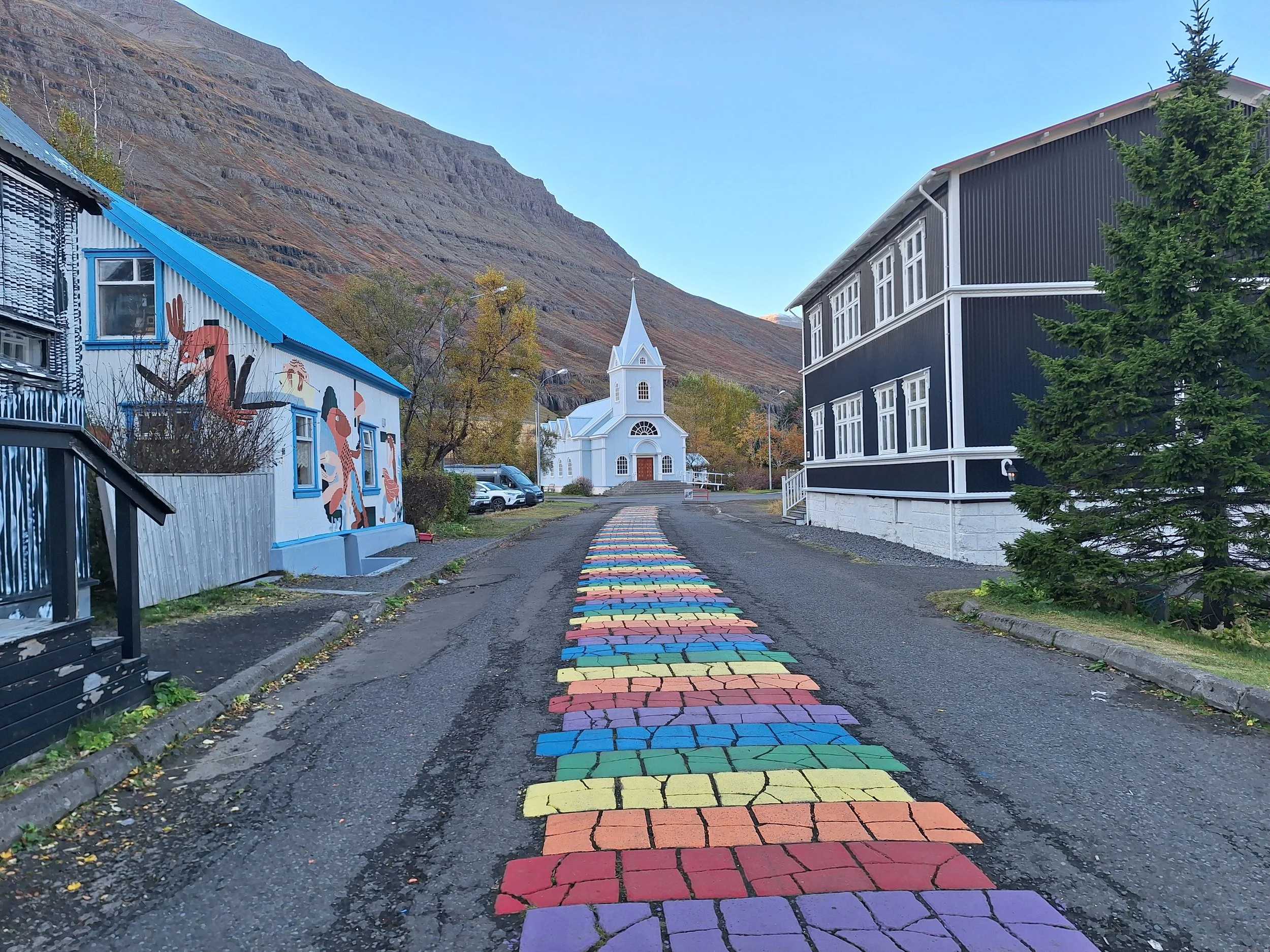
The much photographed rainbow path leading up to the iconic blue church.

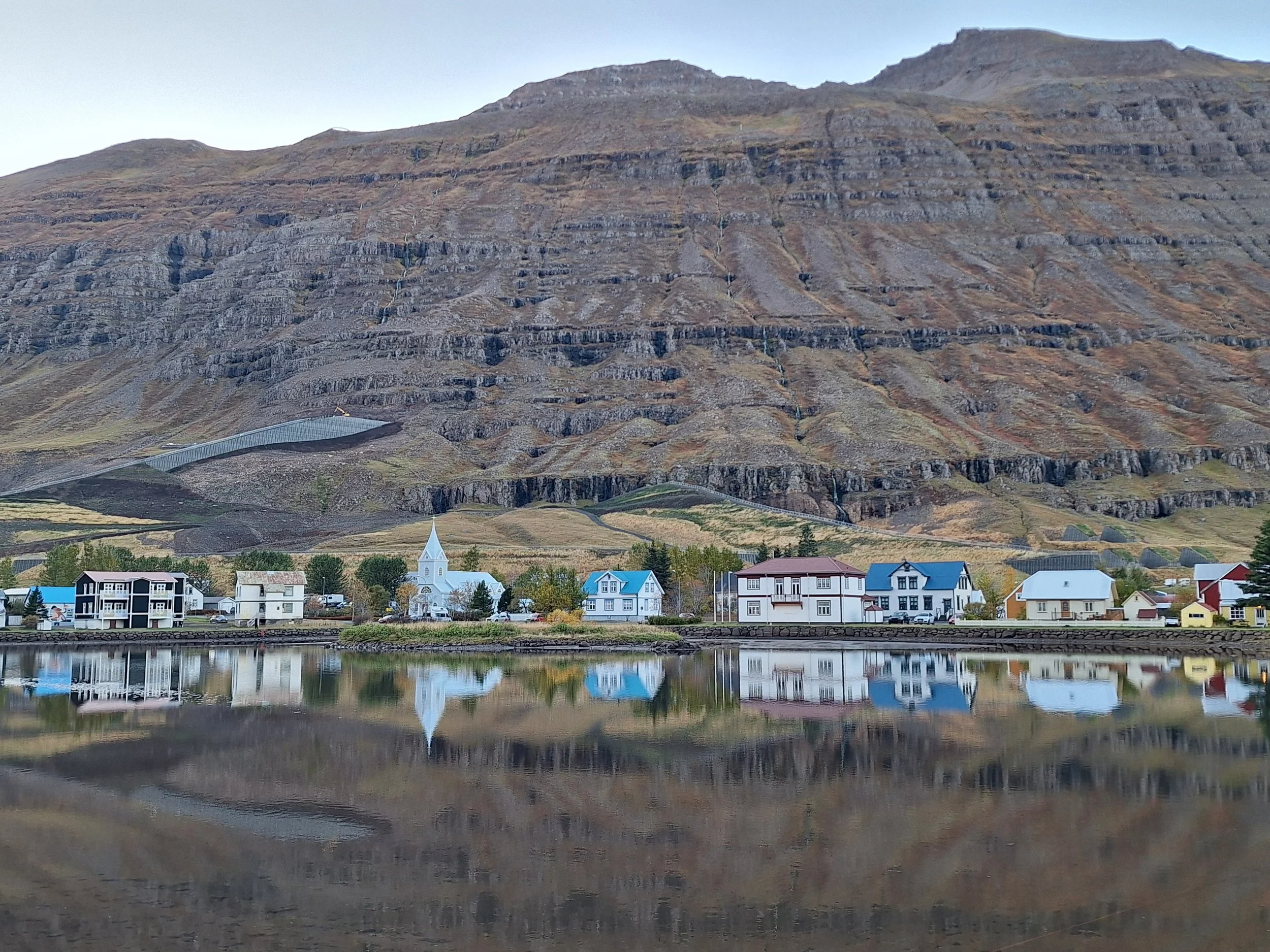
Seyðisfjörður is a small, remote town located in the very eastern part of Iceland, with a population of around 650 people. The mountain pass connecting the town to the main ring road can be periodically inaccessible during winter, but because Seyðisfjörður harbours the only ferry connection to mainland Europe, it also feels surprisingly connected - becoming a buzzing tourist destination throughout the summer season. Seyðisfjörður is also a destination for international artists, through residency initiatives such as Skaftfell, which was founded in 1998 in the spirit of Swiss-German artist Dieter Roth (1930-1998), who frequently lived and worked here during the final ten years of his life. The autumn season also marks the beginning of several cultural activities around town, such as the semester start of the artist-run folk school LungA, and the six-week Queer Residency at the artist collective Heima.

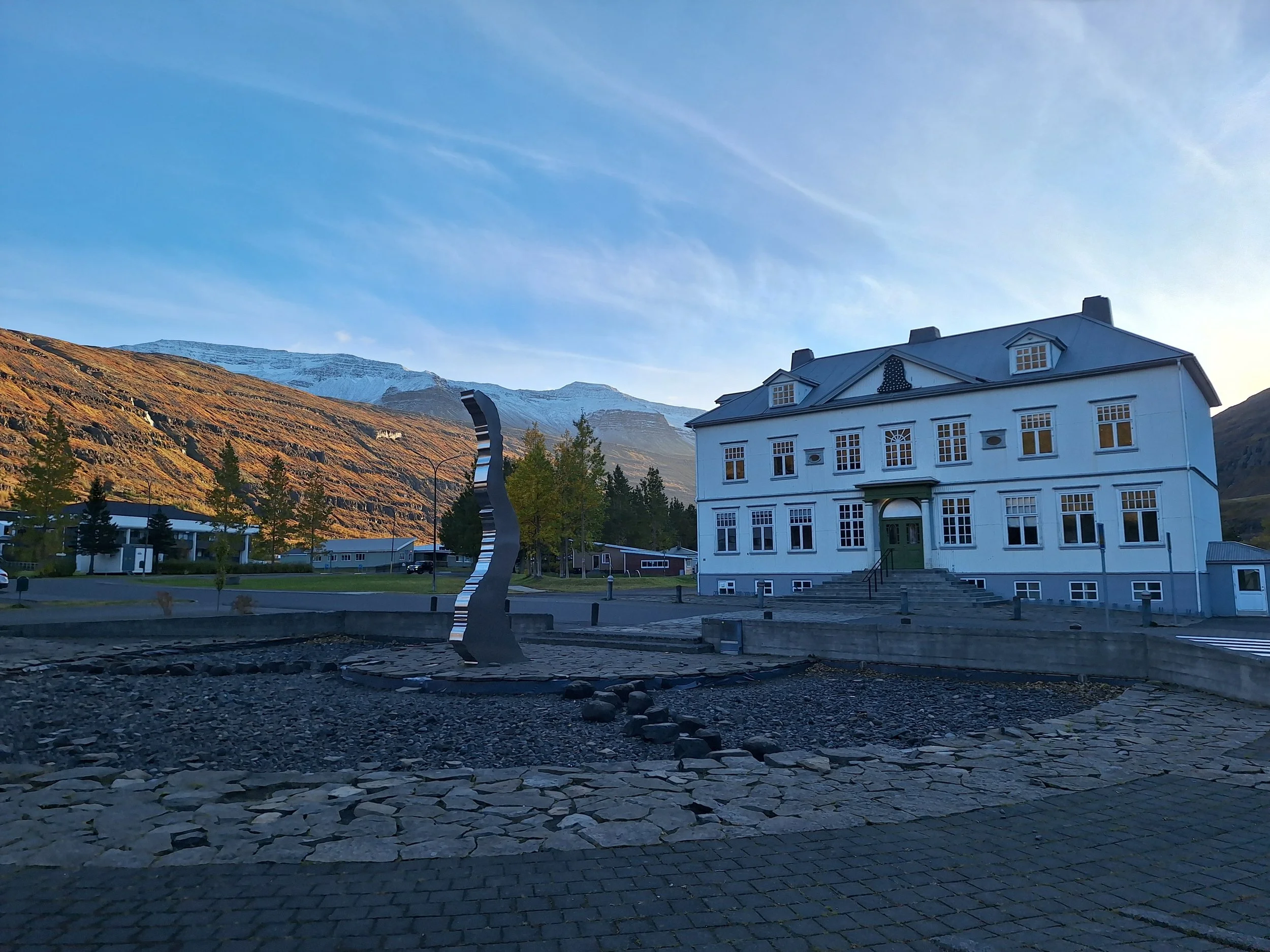
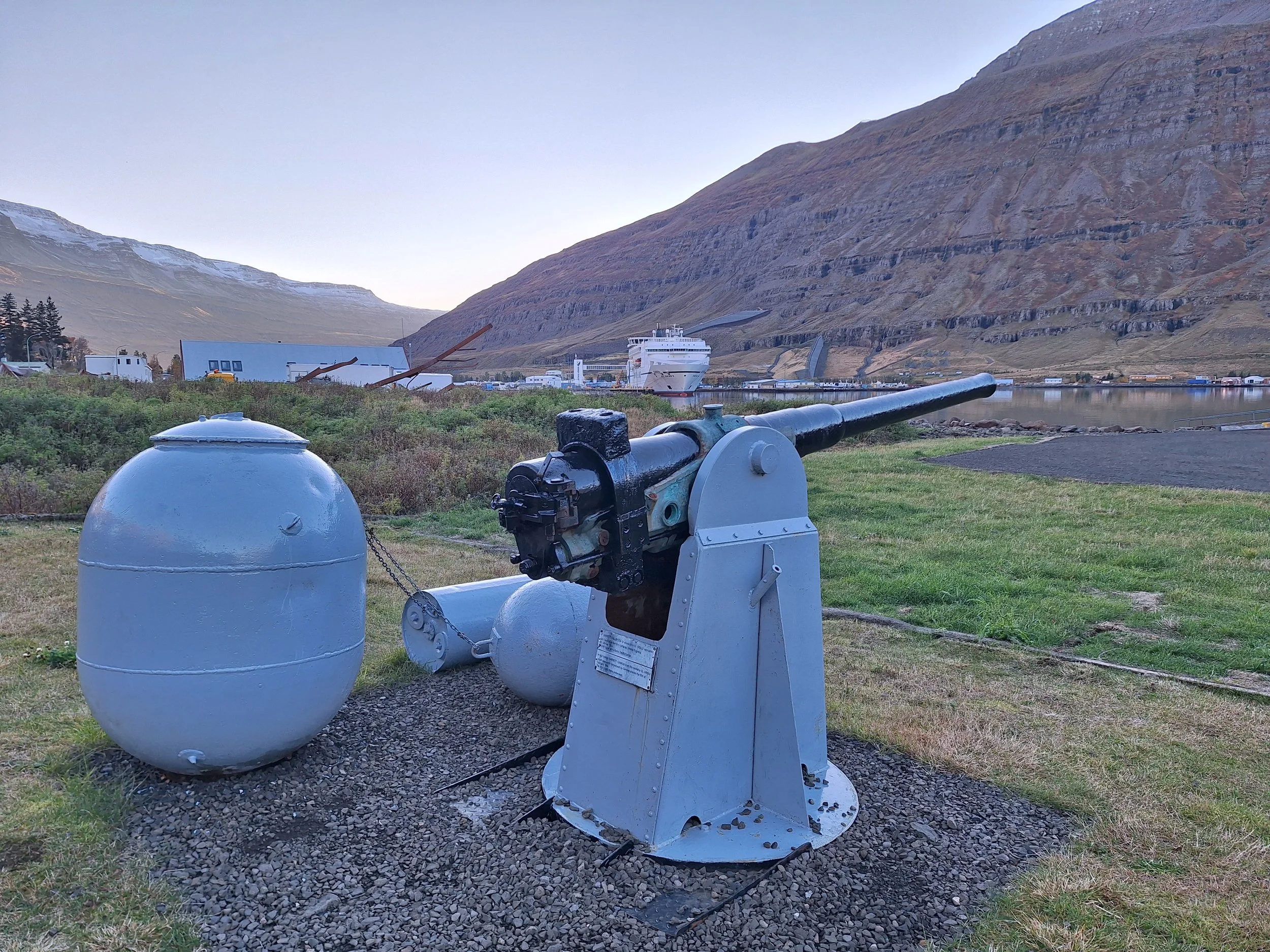
The town of Seyðisfjörður was founded in 1848, when it was settled by Norwegian fishermen. Its location, nestled by a long protective fjord, was ideal for herring fishing, and Seyðisfjörður quickly grew into one of the most prosperous towns in the area. The most striking feature of Seyðisfjörður is its many colourful wooden houses. In fact, many of these are kit form buildings that were imported directly from Norway in the early 20th century - and this is the reason why the town has such a distinct Scandinavian feel. One example is the primary school building from 1907, which is still in use - although it does not meet modern requirements of accessibility and comfort. Many of the wooden houses have also been given additional weather protection in the form of corrugated steel, as the harsh Icelandic weather caused many of the wooden houses to rot. In 1906, Seyðisfjörður became the land side of the first undersea cable connecting Iceland to Europe, and was also a base for Allied forces during the Second World War. In fact, the British oil tanker El Grillo was sunk in this fjord by German fighters stationed in Norway. It now rests at the bottom of the fjord, still leaking oil, and is a popular site for divers. In 2015, Seyðisfjörður became known to international audiences through the series "Trapped" (Ofaerd), which aired on the BBC.

The Norwegian elementary school building from 1907 - still in use!
A salvaged part of El Grillo, looking out over the fjord.

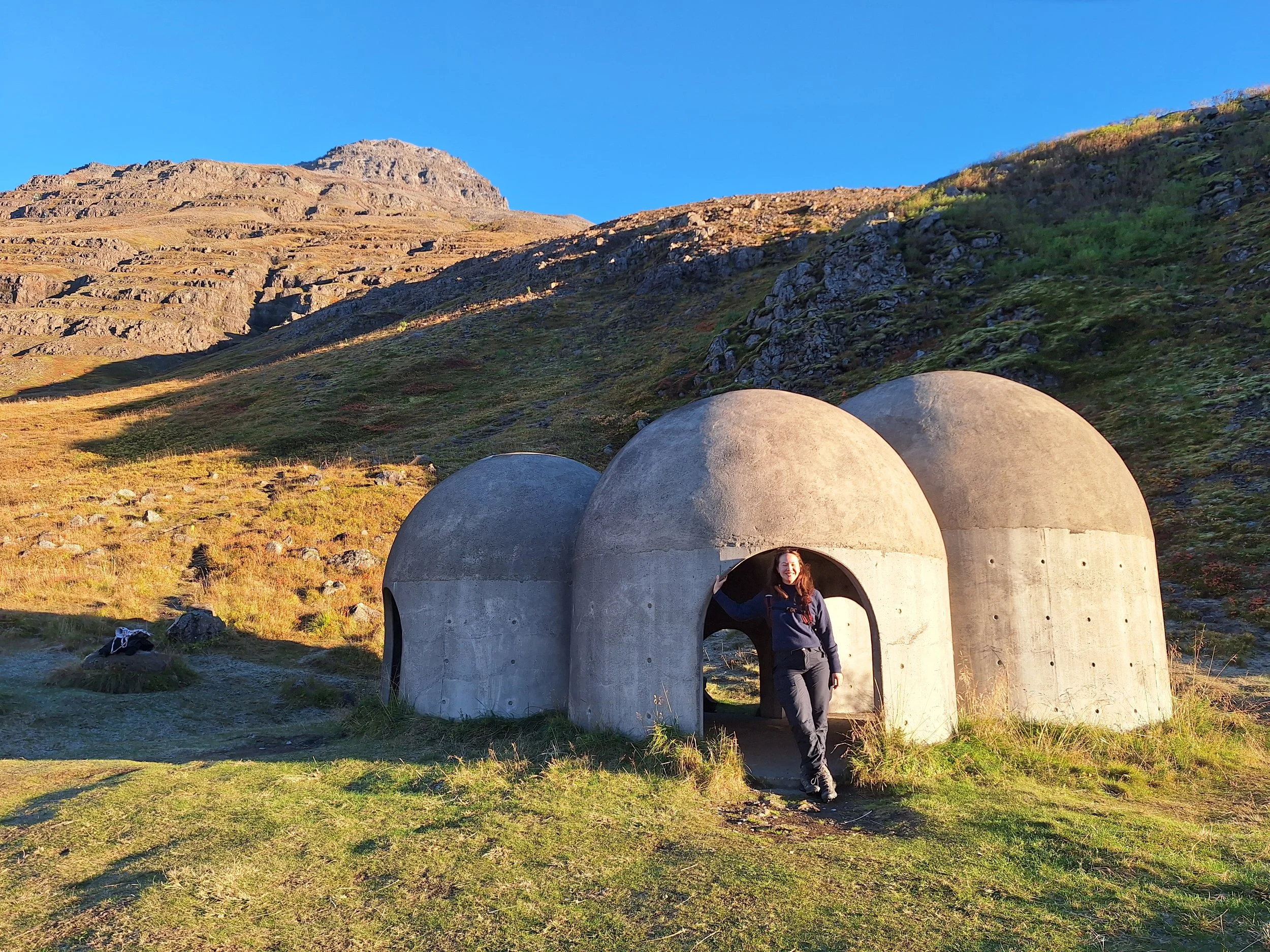
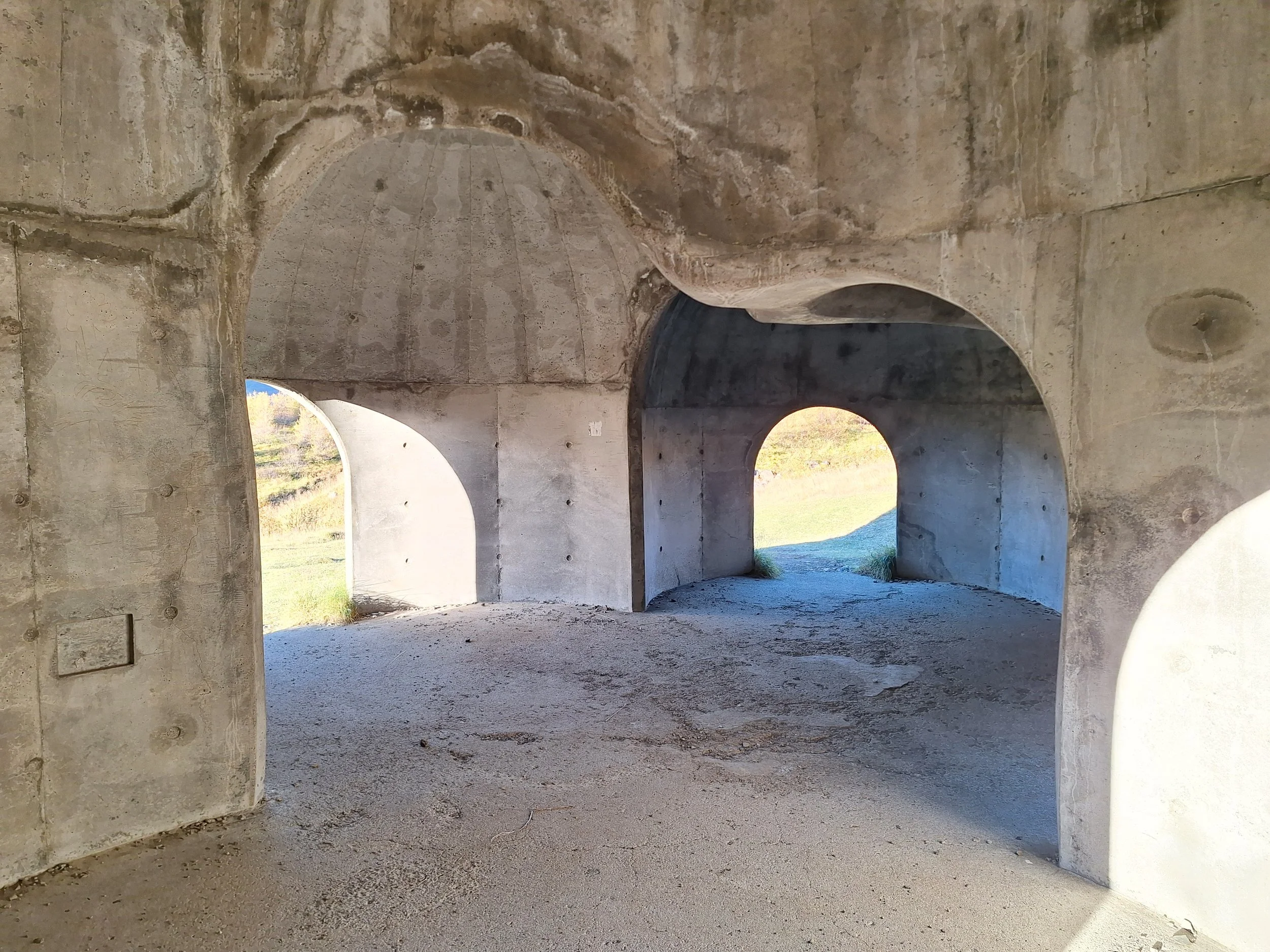
This first week we have been busy settling in, exploring the town and making use of a brief spell of sunshine. It seems like every path you take will lead you to a beautiful mountain scape or a scenic waterfall, and if you follow the trail up the mountainside beyond Skaftfell Art Center, you will encounter the unexpected gem Tvísöngur, a sound sculpture by German artist Lukas Kühne. The sculpture is a grouping of five hollow concrete domes, each designed to resonate at different harmonies as the visitors sing and make sounds within. The five chambers represent the Icelandic quintal harmony, with each dome corresponding to a tone in the tradition. The round concrete structure looks like something that has been dropped from the sky in an apocalyptic science-fiction movie, but its smoothness also feels striking and almost beautiful against the rugged mountains.

Me happily posing in front of Tvísöngur

Inside Tvísöngur

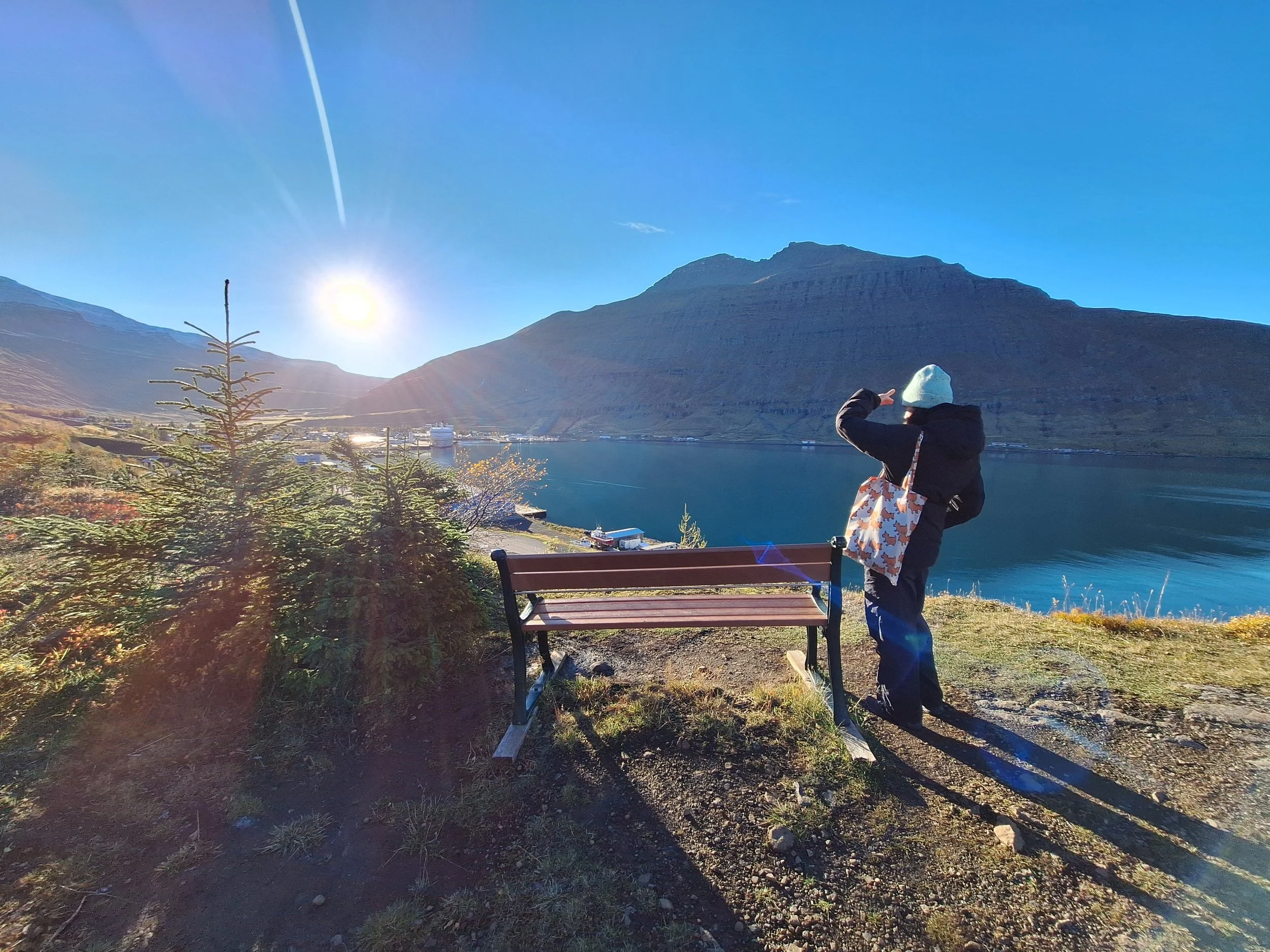
Alejandra looking out over Seyðisfjörður

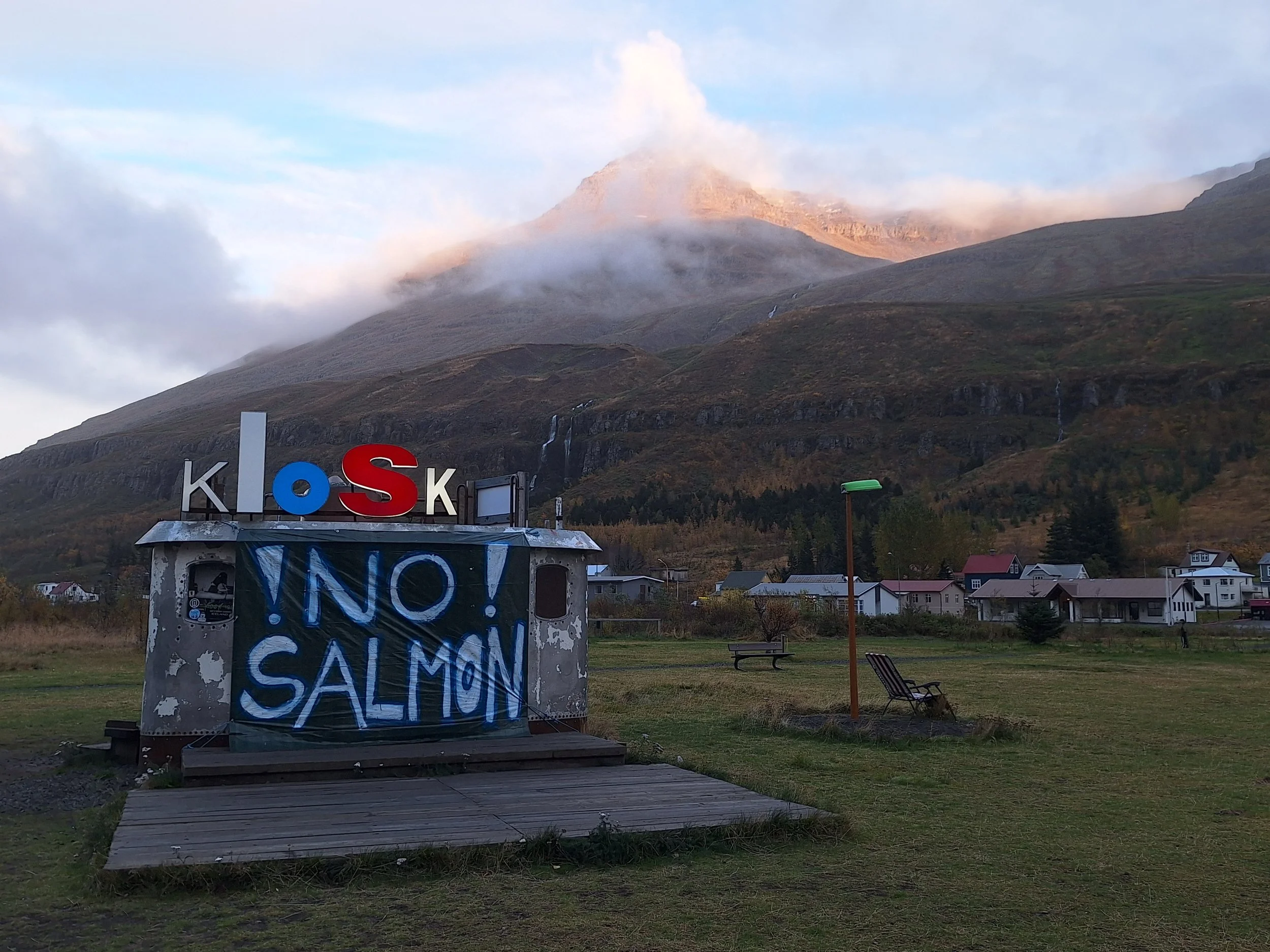
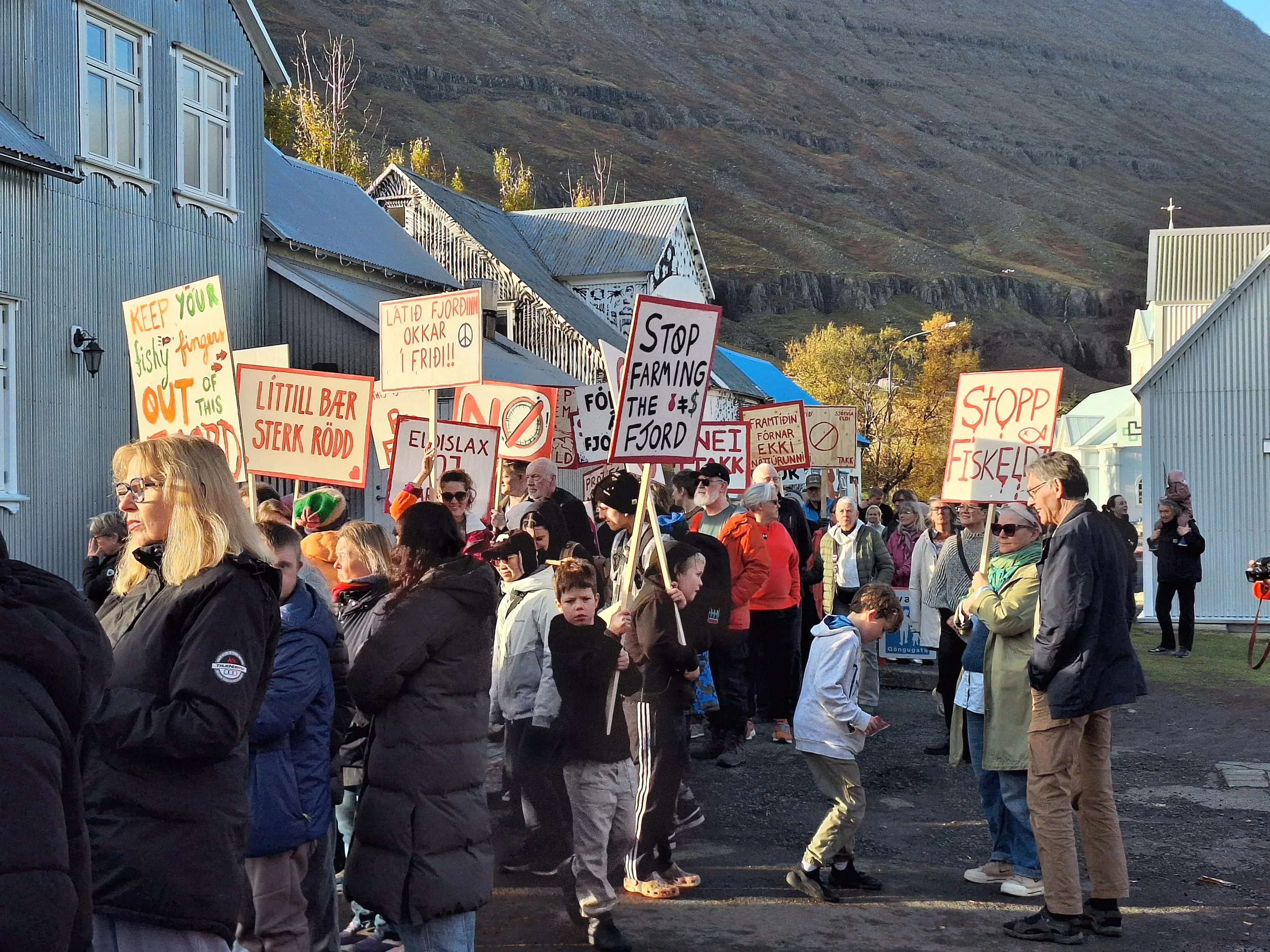
We also got to learn about many of the current debates taking place in Iceland, as Seyðisfjörður is currently fighting a sole fight against Norwegian companies freely establishing salmon farming facilities in Icelandic fjords. Salmon farms are to be found in nearly every single fjord, and the big companies have encountered very little push-back from both local communities and the Icelandic government. However, the fjord of Seyðisfjörður is already saturated with ship activity (as well as an oil leaking ship wreck), and the general consensus here is that not only is there no space left in the fjord - it is also the Norwegian companies that profit from salmon farming, and not the Icelandic people. On top of this, there are of course a long list of environmental and ethical concerns that follow. This Sunday there was a big protest in town, and also one simultaneously taking place in front of the parliament in Reykjavik.

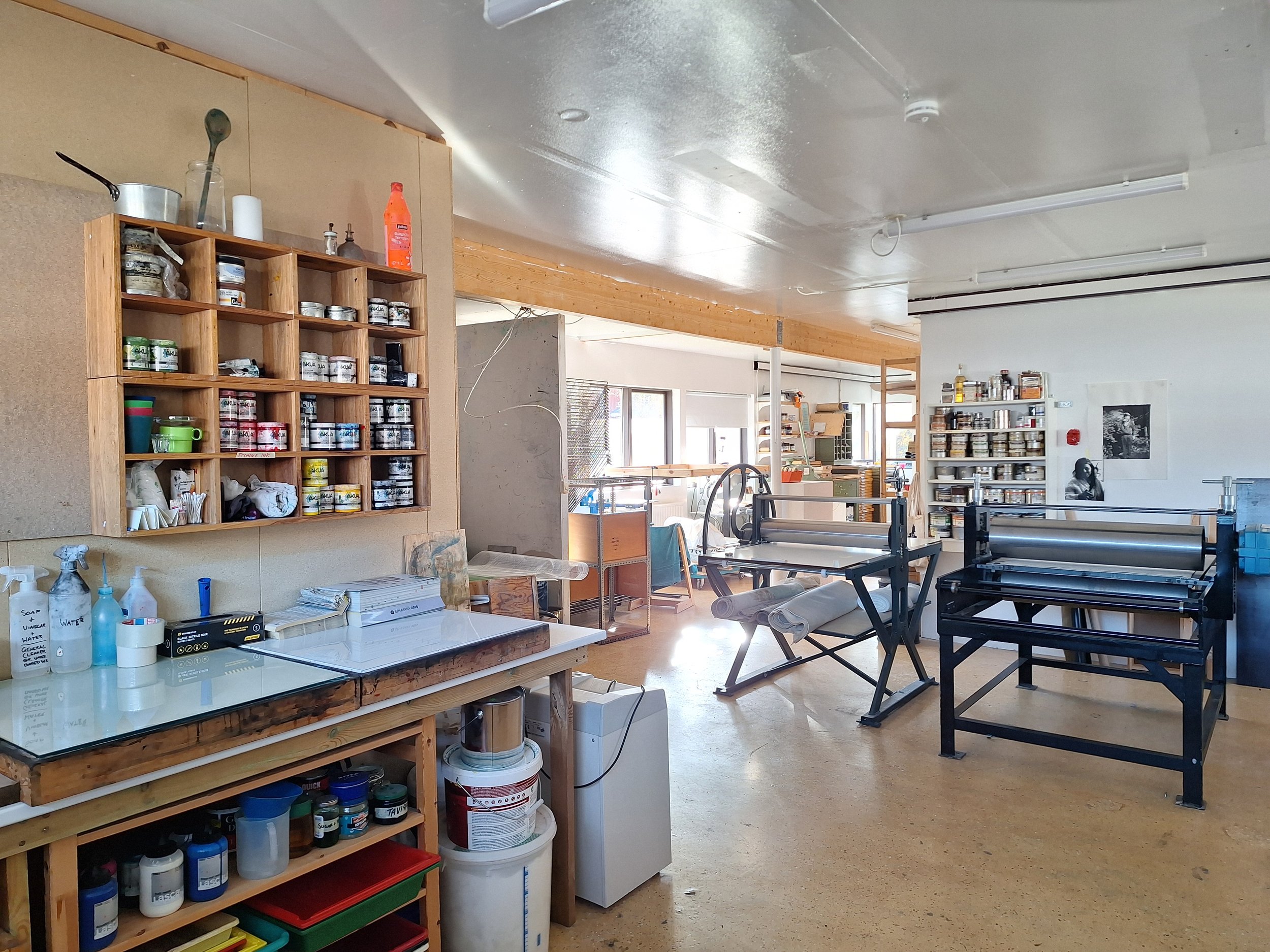
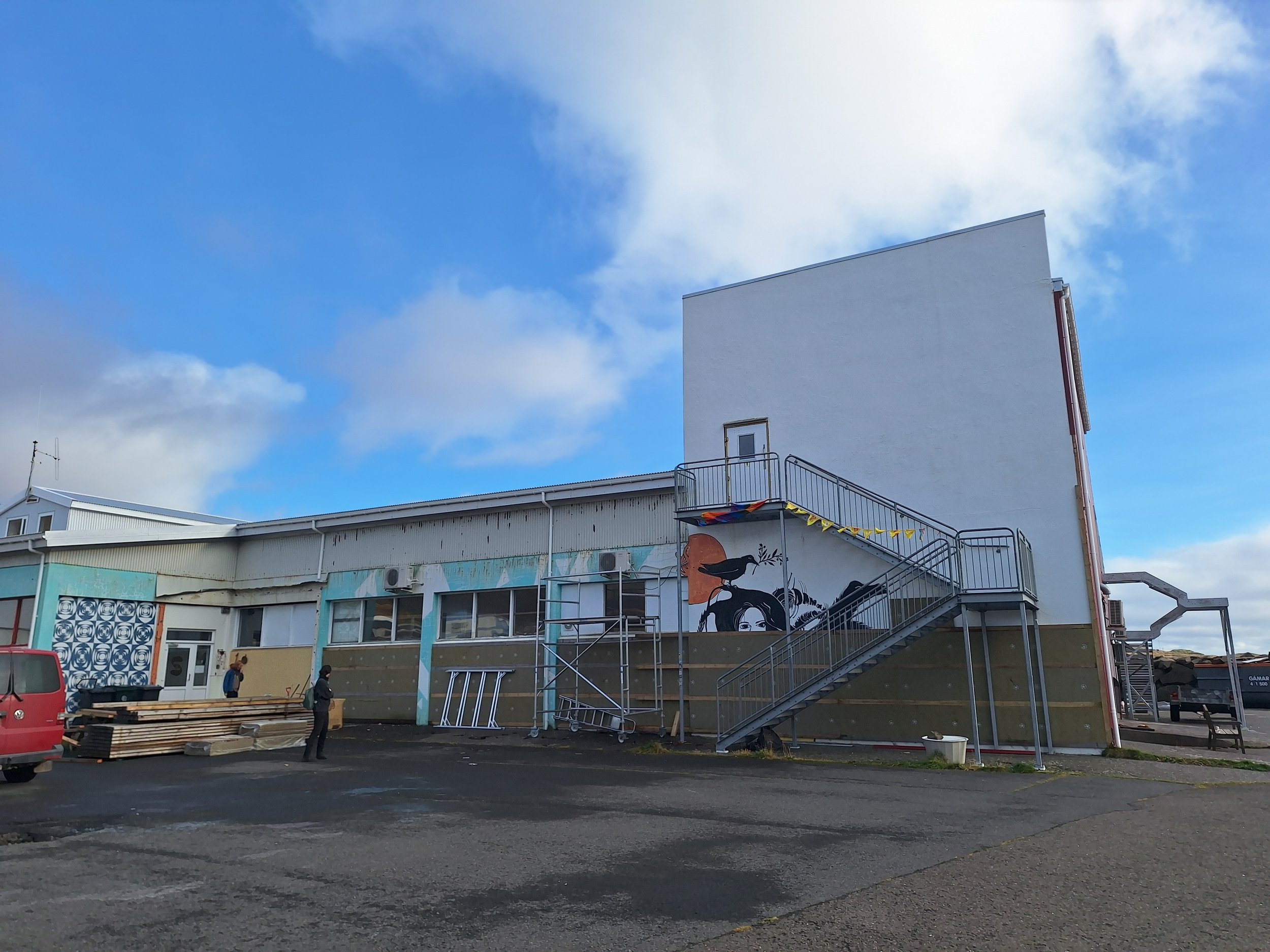
In addition to familiarising ourselves with our new surroundings and all of the current issues taking place in Iceland, Alejandra and I have been giving workshops for children and adults, which is a central part of our residency. We are staying in apartments just above the printmaking workshop Prentverk Seyðisfjörður. The current workshop is in the process of being re-established, after the original workshop was destroyed in the December 2020 landslides, which swept away several buildings, including parts of the Technical Museum which housed the print studio. Fortunately, nobody was killed, but it definitely left a physical and emotional scar on the town. The new workshop space is coming along nicely, although it is still a work in progress, with presses being added, removed and re-arranged. The space is also open for members who can pay a fee and take introduction classes in order to gain open access to the workshop.

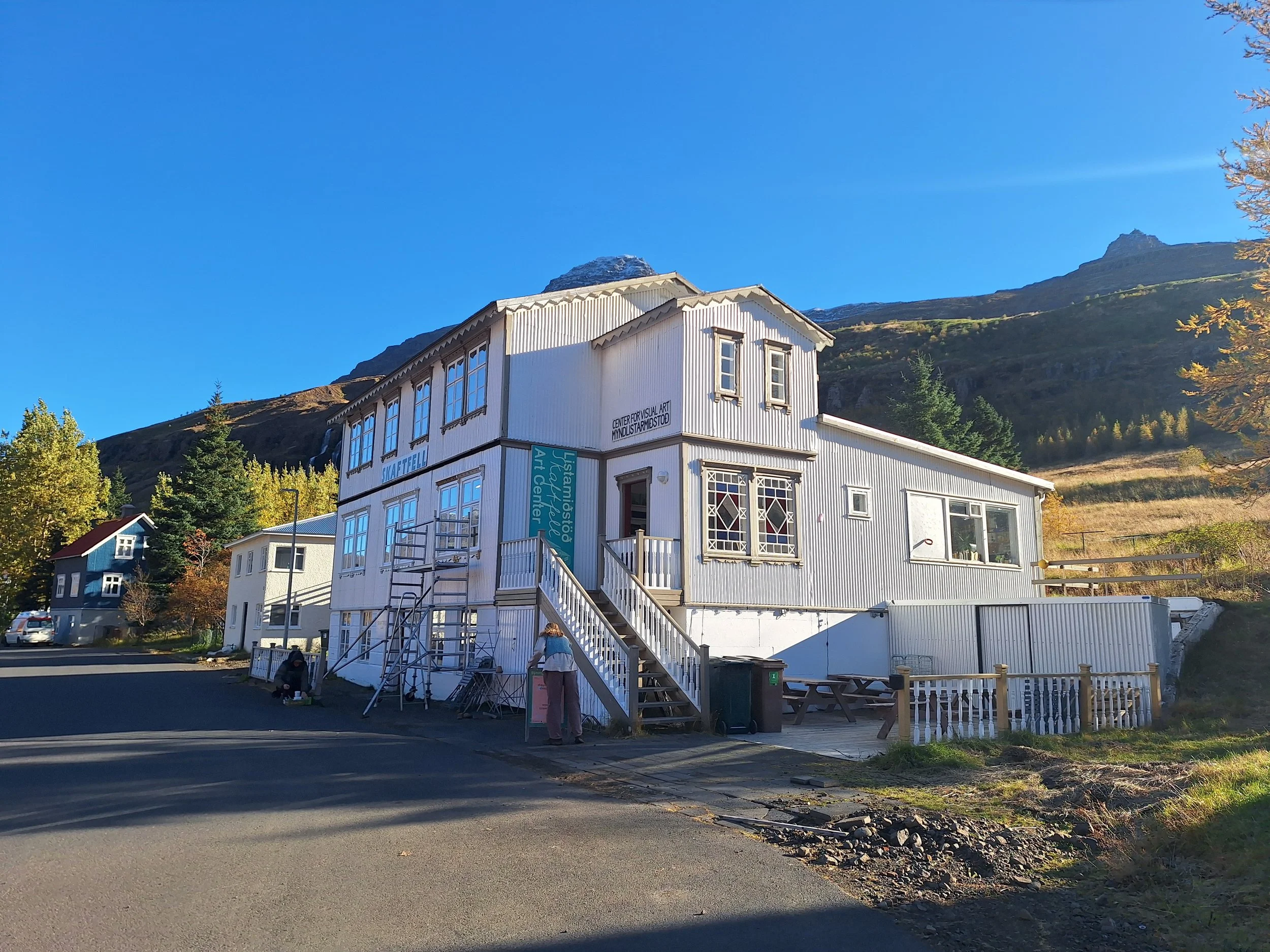
Skaftfell Art Center

Prentverk Seyðisfjörður.

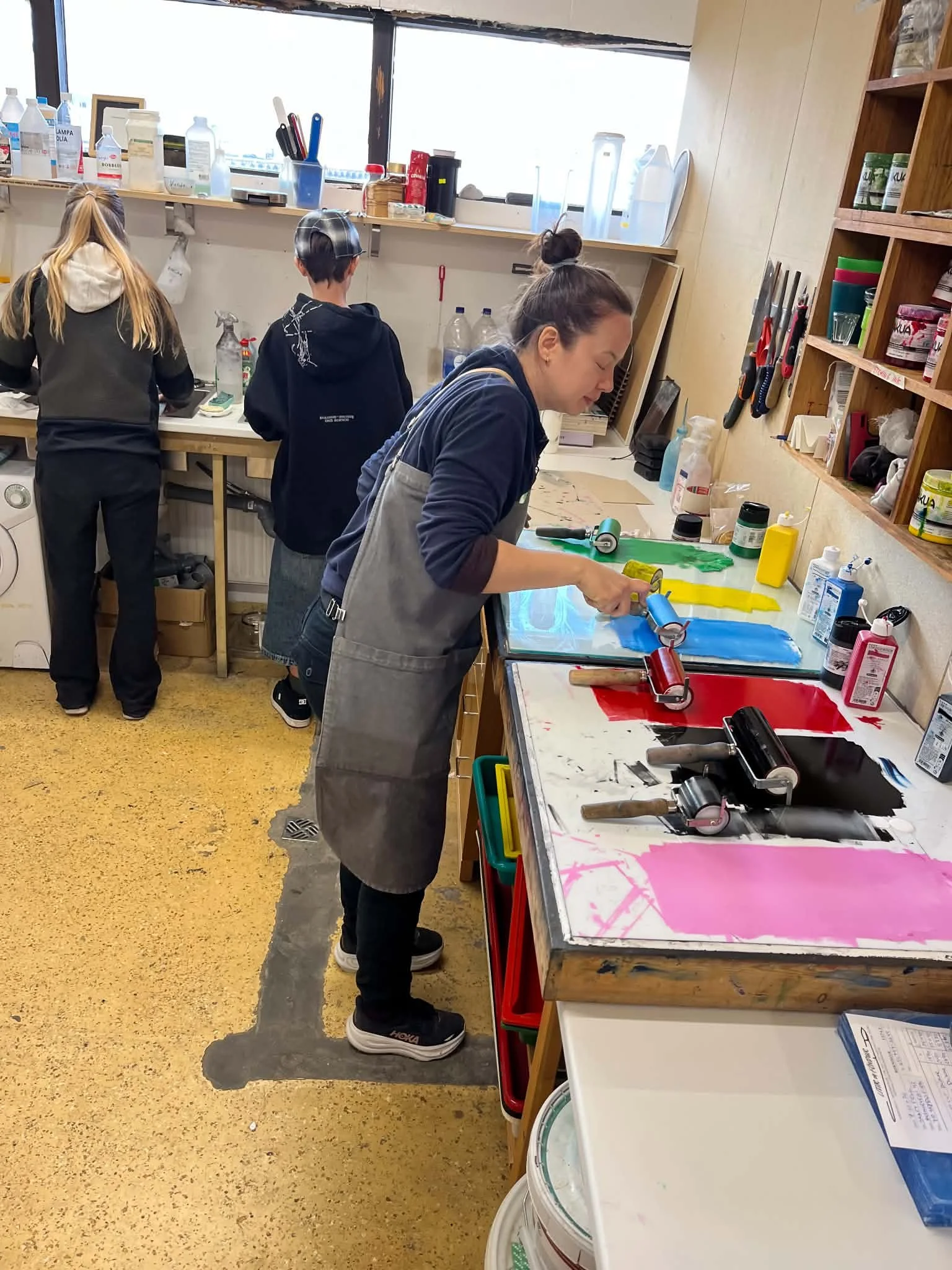
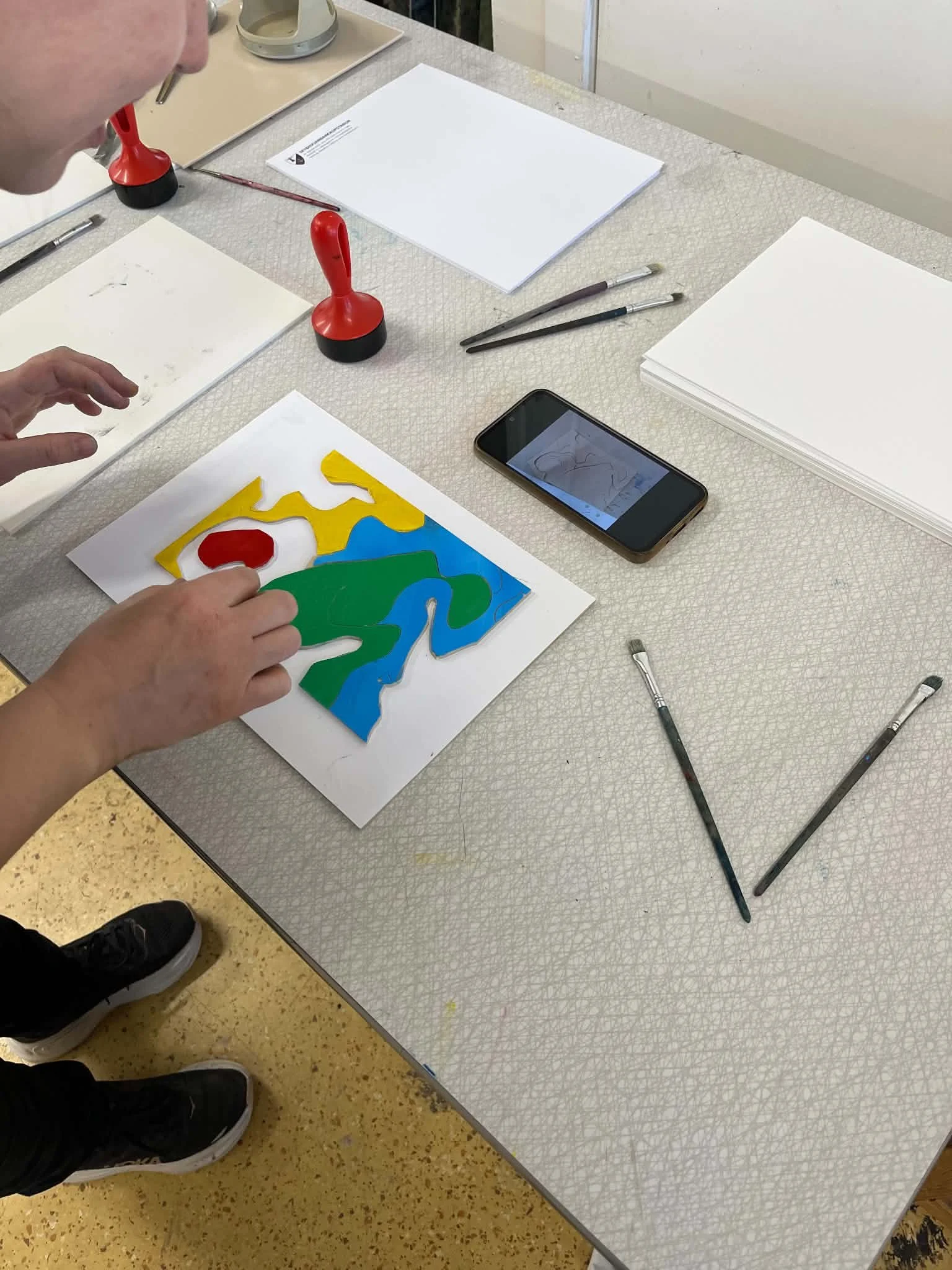
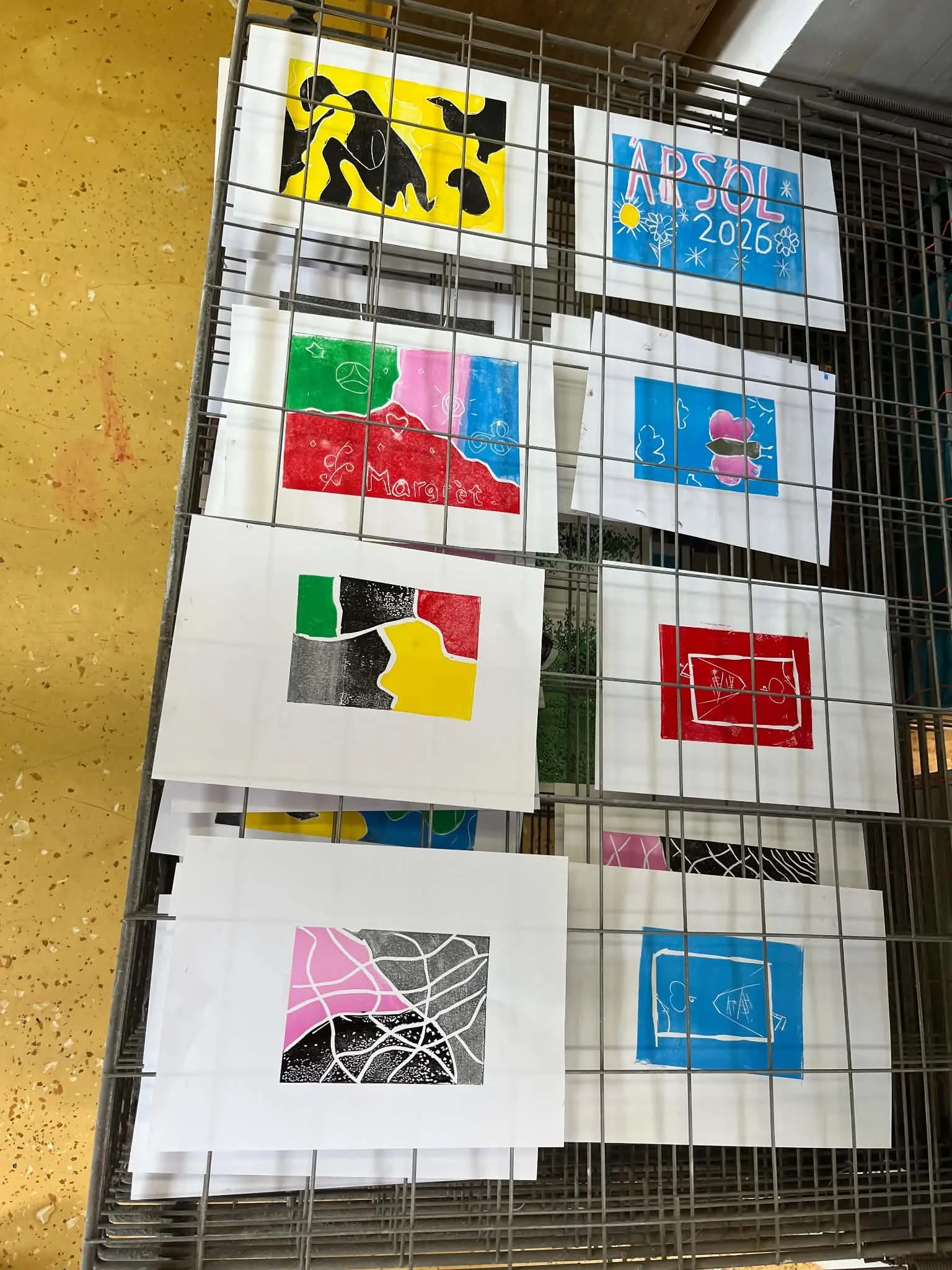
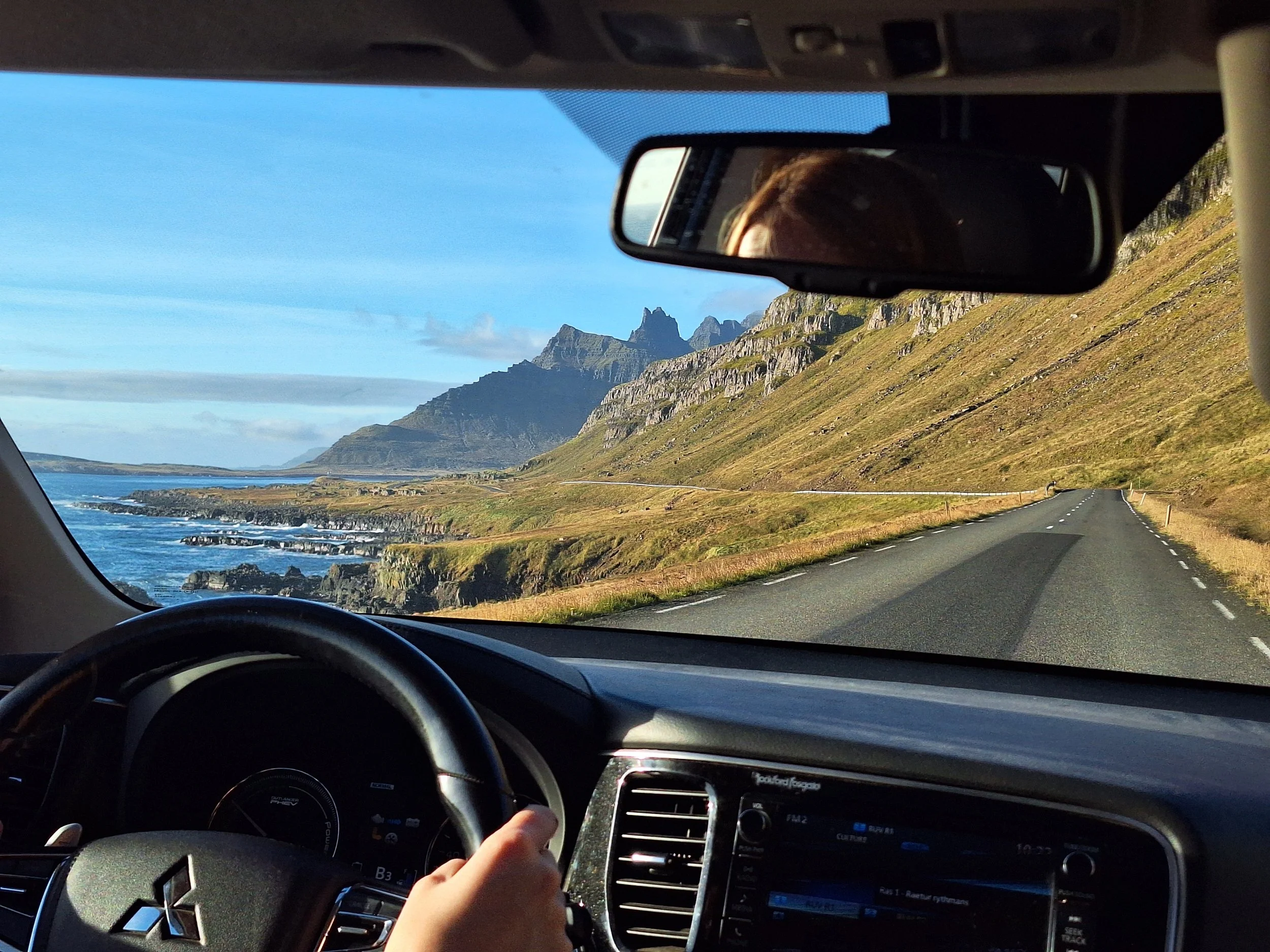
One of the focuses of this residency is non-toxic printmaking, meaning we will only be using water-based inks and non-toxic etching solutions. (This is a challenge for me, as I am only used to oil-based inks and traditional etching methods!). On Saturday we hosted a linocut workshop for seven local kids, and the day after we were taken to the Fish Factory Creative Center in the tiny town of Stöðvarfjörður about 1.5 hours drive away, to host a monotype workshop. Unfortunately no kids turned up for the latter, but we had an amazing road trip to an amazing art center! Being a Norwegian who is very spoiled when it comes to beautiful scenery, Iceland still manages to impress!

Linocut workshop for local kids!

Using Edvard Munch’s jigsaw technique.

Some of the finished prints!

Just some of the landscape we encountered on the road to Stöðvarfjörður…

Fish Factory Creative Center in Stöðvarfjörður

It has been a wonderful, but intense first seven days here in Iceland, and next week I am excited to be falling into place a little bit and focusing on producing some work for my upcoming exhibitions!

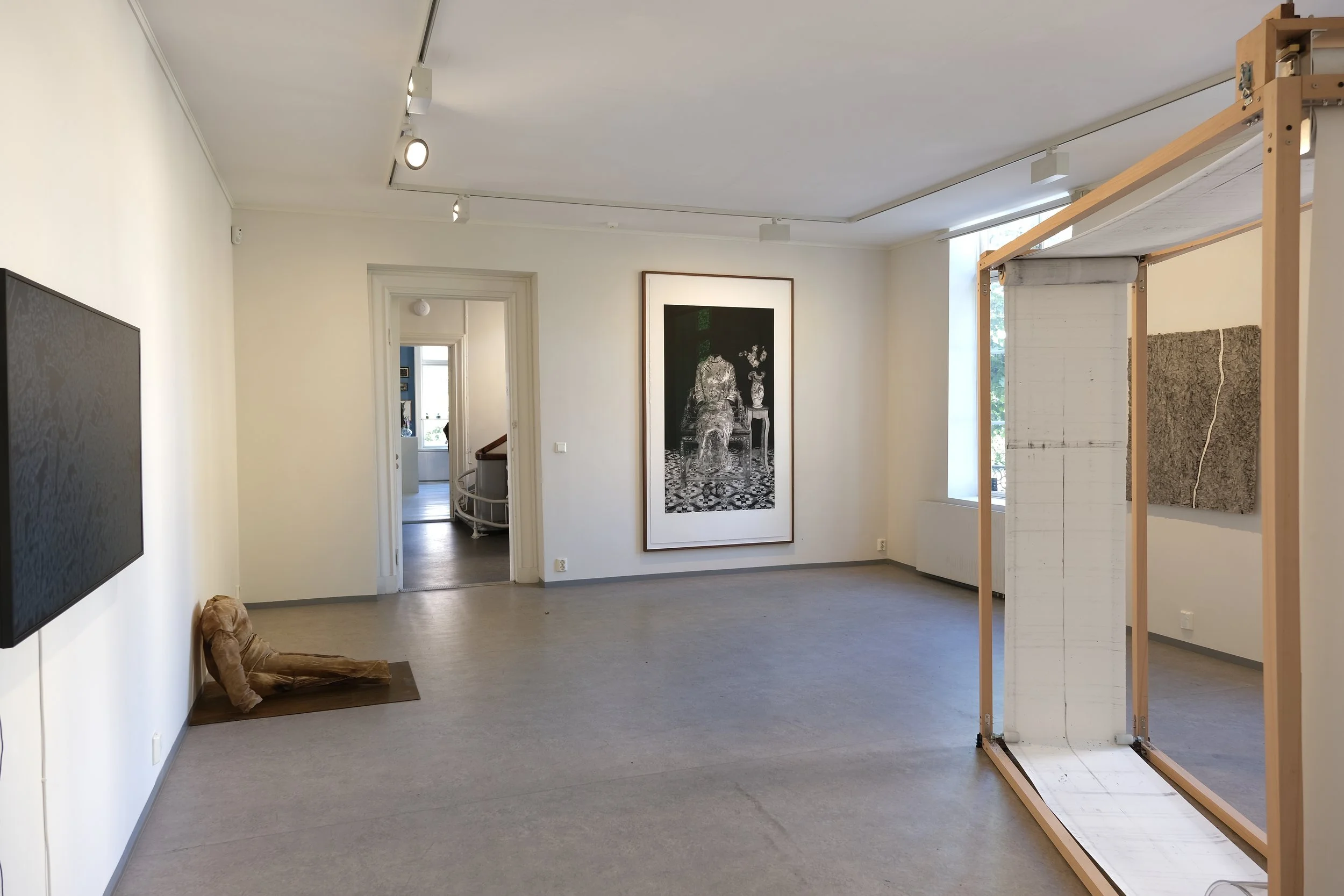
Trykk NÅ, Landeskogen Kunstsanatorium, Setesdal

1 October - 29 November 2026

Landeskogen Kunstsanatorium

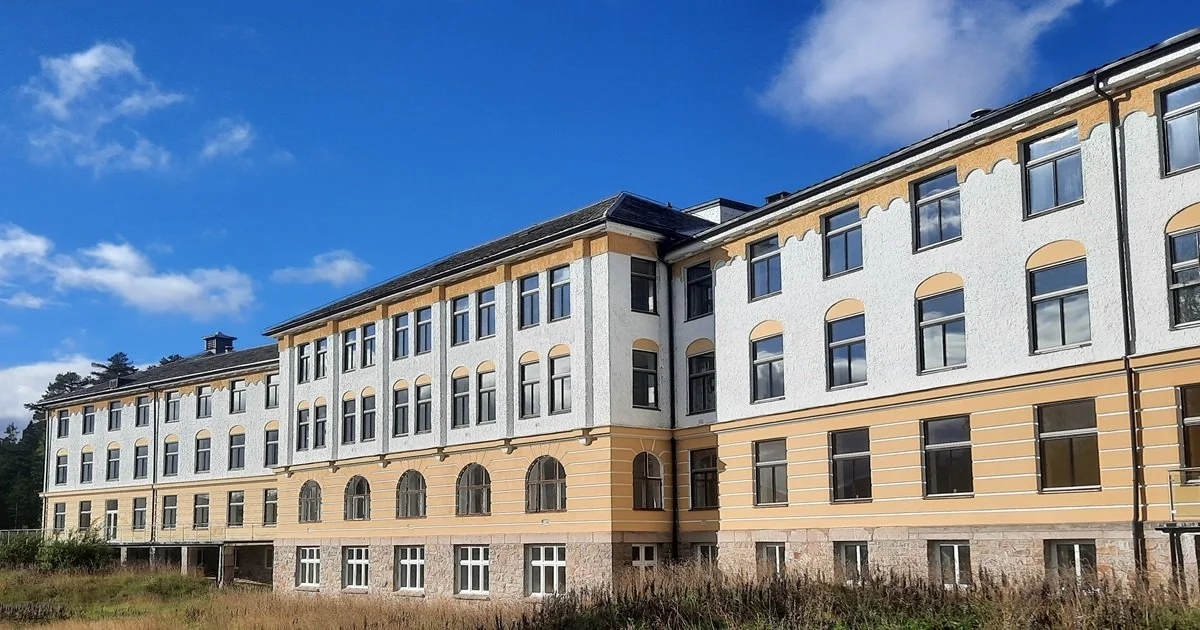
I am very happy to be participating in the international exhibition Trykk NÅ! (Print NOW!), the inaugural exhibition on the 110th anniversary of Landeskogen Sanatorium’s opening. The exhibition is a comprehensive showcase of contemporary printmaking featuring 71 artists from 9 countries, featuring over 200 works in total.

As part of the opening weekend, our film Vi to and Lito (You and Me and Lithography) will be screened at Bygdekinoen Bygland on 2 October at 18:30. Book here.

Foto: Landeskogen Kunstsanatorium

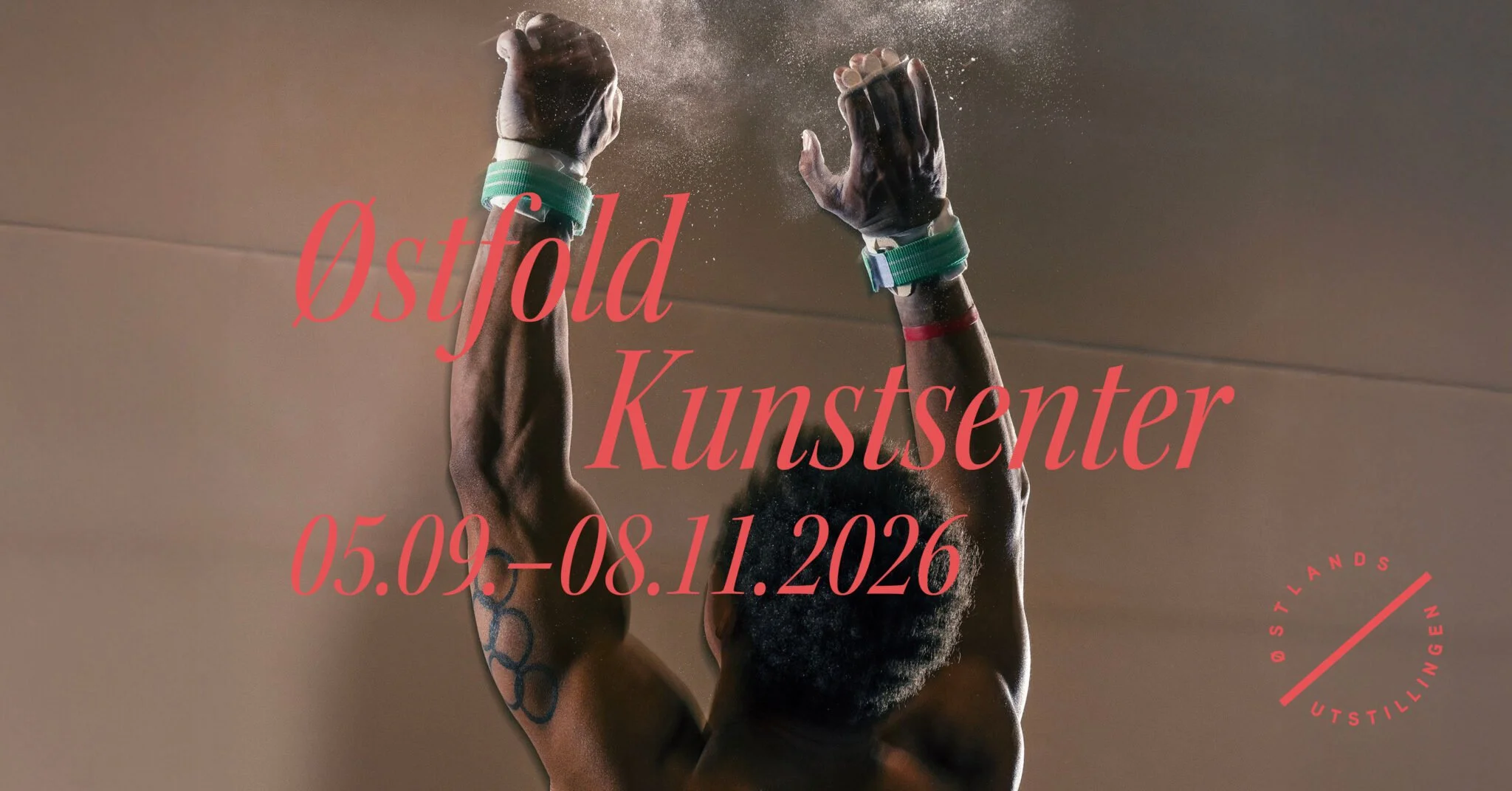
ØSTLANDSUTSTILLINGEN, PART 2

Welcome to the opening of Østlandsutstillingen (part 2) at Østfold Kunstsenter in Fredrikstad, Saturday 5th September 14:00. Full programme here.

Østlandsutstillingen is open until 8 November.

Background image: Ove Kvavik

Photos: Linn Svensson