We are in week two of our residency, and Iceland continues to be magical. I feel immensely grateful to be able to spend a whole month here through the Skaftfell residency, learning about Iceland, and just enjoying the peaceful, but still very vibrant and stimulating surroundings that we are finding ourselves in. There is also a special kind of satisfaction that comes along with finally settling into a routine. For example, every morning Alejandra and I will wake up and make a cup of coffee, and look out for the two adorable harbour seals that frequent the lagoon just outside our window. When the water levels are low, they like to rest on a couple of rocks that break through the surface. As I am sipping my coffee, I think about how fortunate I am to be visiting all of these places that are such a contrast to my regular life in Oslo.
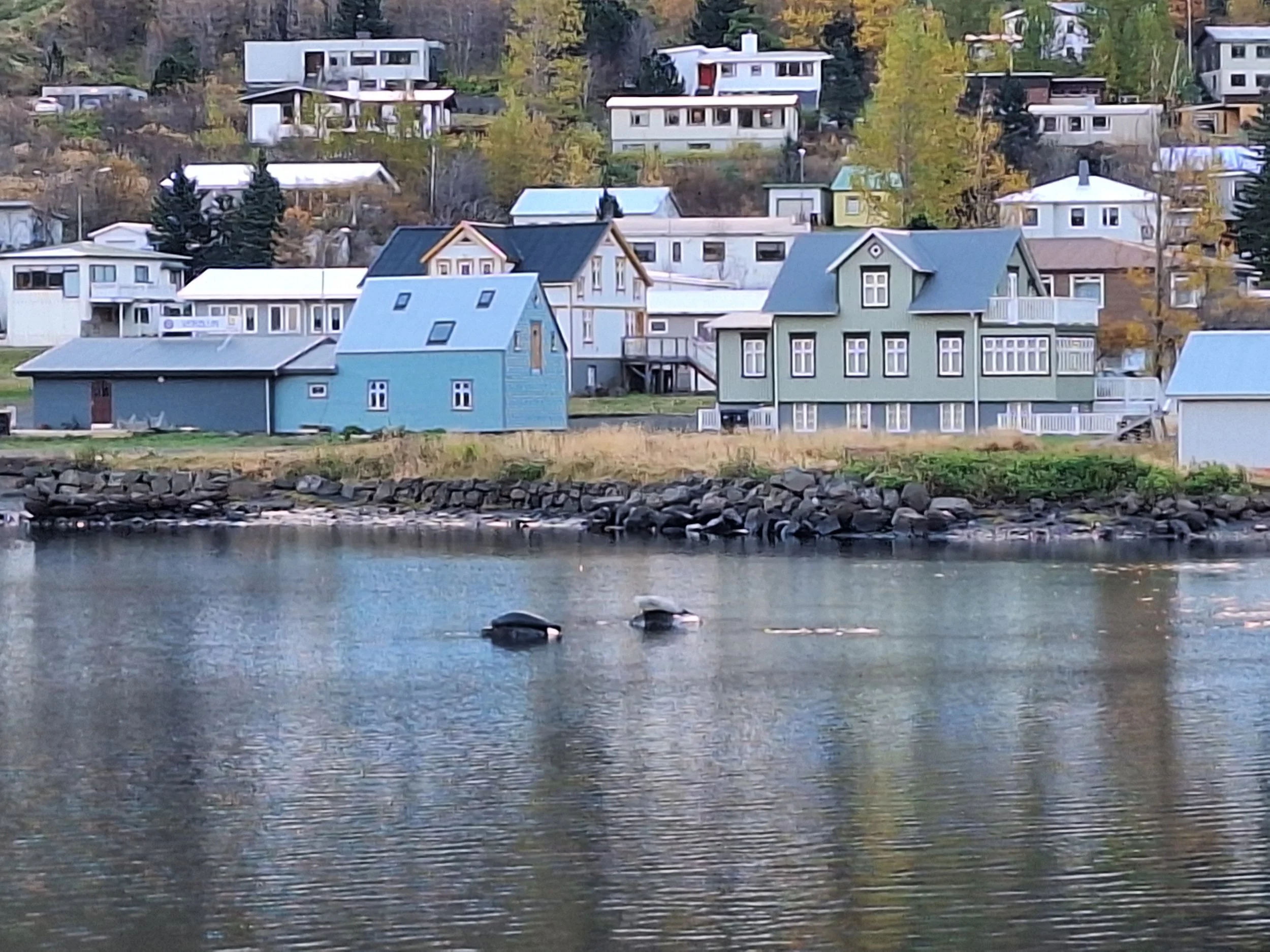
The two adorable harbour seals, looking like chubby sausages as they bounce around the rocks on their tummies.
On the rare occasions when the skies are blue and the winds are calm, we pack our rucksacks and explore the outdoors. After a period of heavy rainfall and storm weather warnings across Iceland, the weather finally cleared, and we were able to venture out beyond the town of Seyðisfjörður. The days are getting shorter and shorter at a rapid rate now, so we are making use of the precious daylight that we have. This week we hiked to both Gufufoss and Vestdalsfoss, two stunning waterfalls around a 60-90 minute walk from town in opposite directions. Unlike my residency at Svalbard, where I could not leave Longyearbyen on my own due to the constant risk polar bear encounters, I am now free to roam around to my heart’s (and legs’) content!
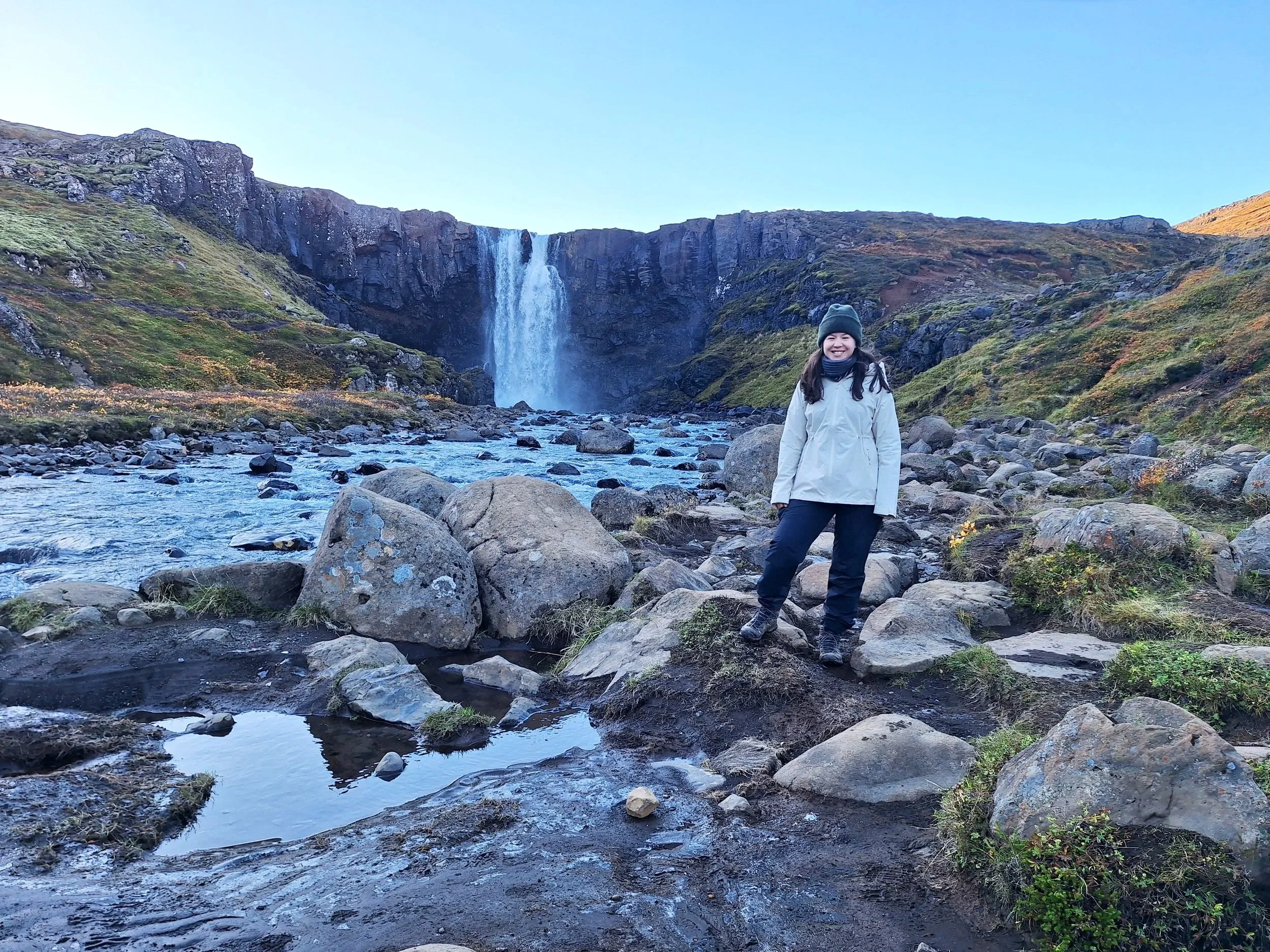
Me in front of Gufufoss, tired (but happy) after having trekked uphill in head wind for about an hour.
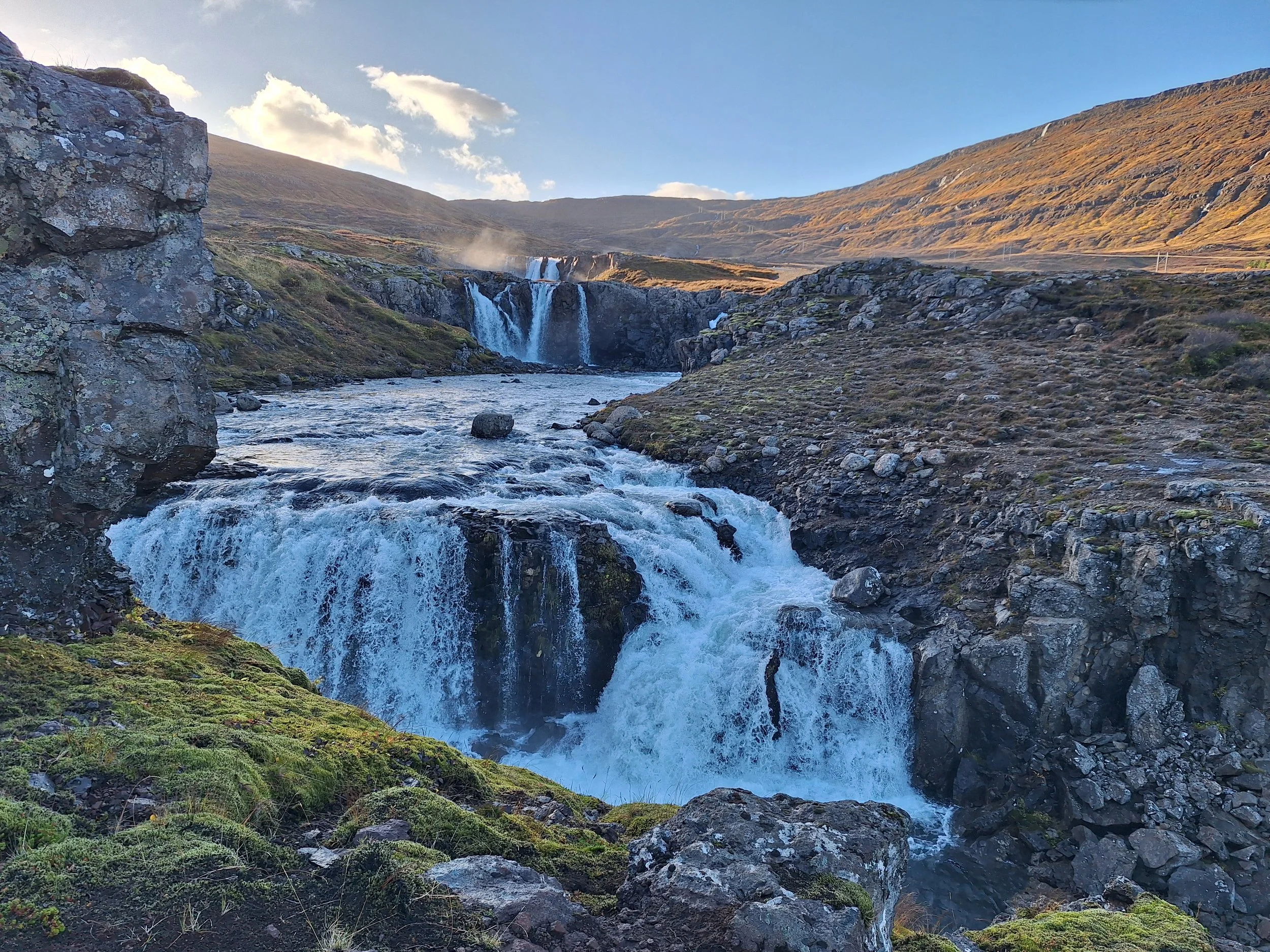
Selfoss, which we stumbled upon by accident after following the wrong trail on our way to Gufufoss.
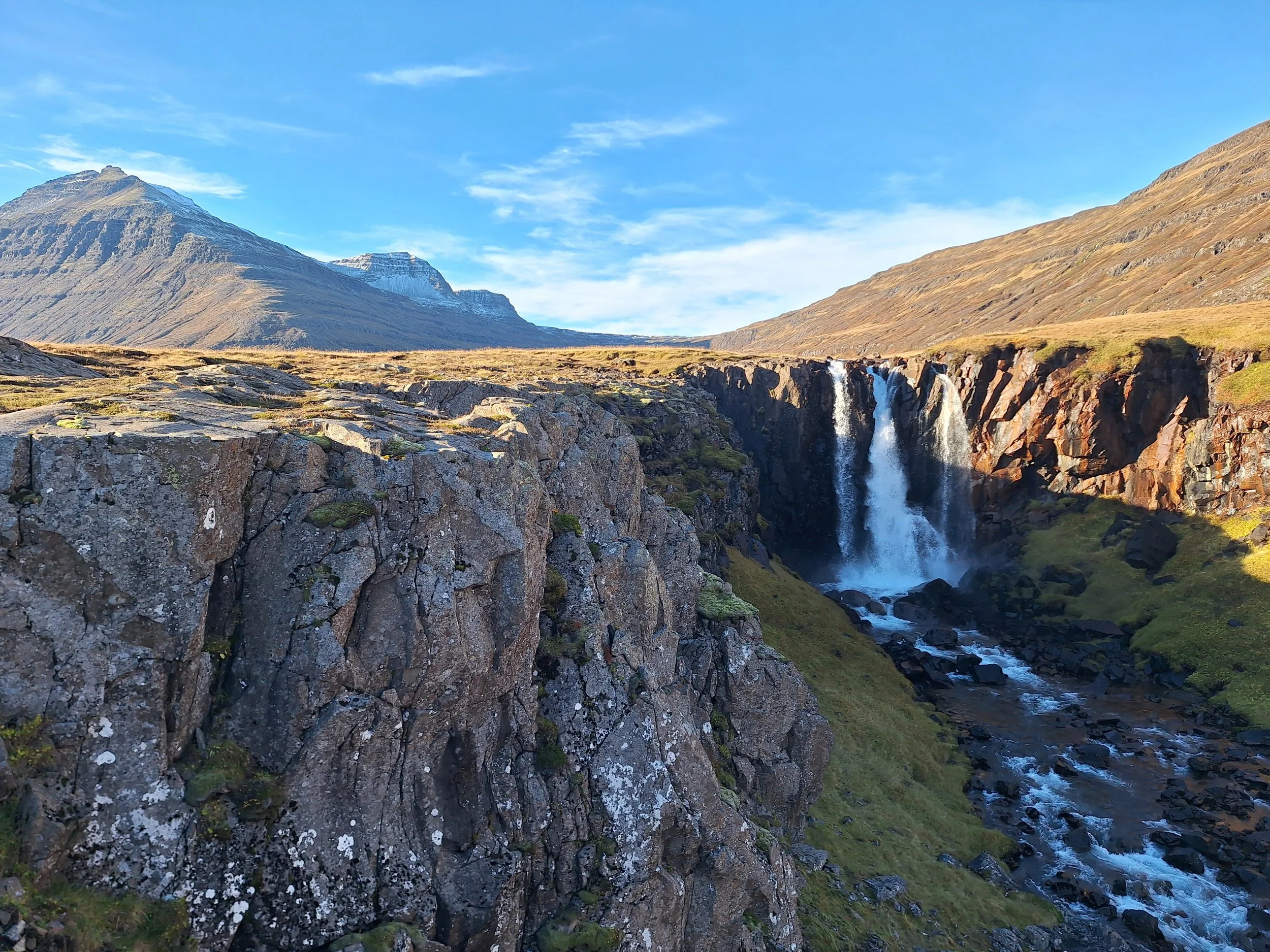
Vestdalsfoss
Luckily for us, there are also many rainy days in Iceland, forcing us to actually spend time in the printmaking studio making art! The workshop technician at Prentverk Seyðisfjörður, artist and printmaker Linus Lohmann, has kindly been showing us how to do electrolytic etching. Electrolytic etching (or electrochemical etching) is a metalworking process that uses a direct electric current and an electrolyte solution (of water and salt) to remove metal without using harsh acids. In other words, you can use this method to etch lines and aquatints into your metal printing plate, rather than using potentially hazardous solutions such as ferric chloride or nitric acid. This week we etched aluminium plates, and next week we will be using a slightly different salt solution to etch copper plates. In honour of the harbour seals in the fjord, I made a test plate featuring a (slightly goofy looking) seal.
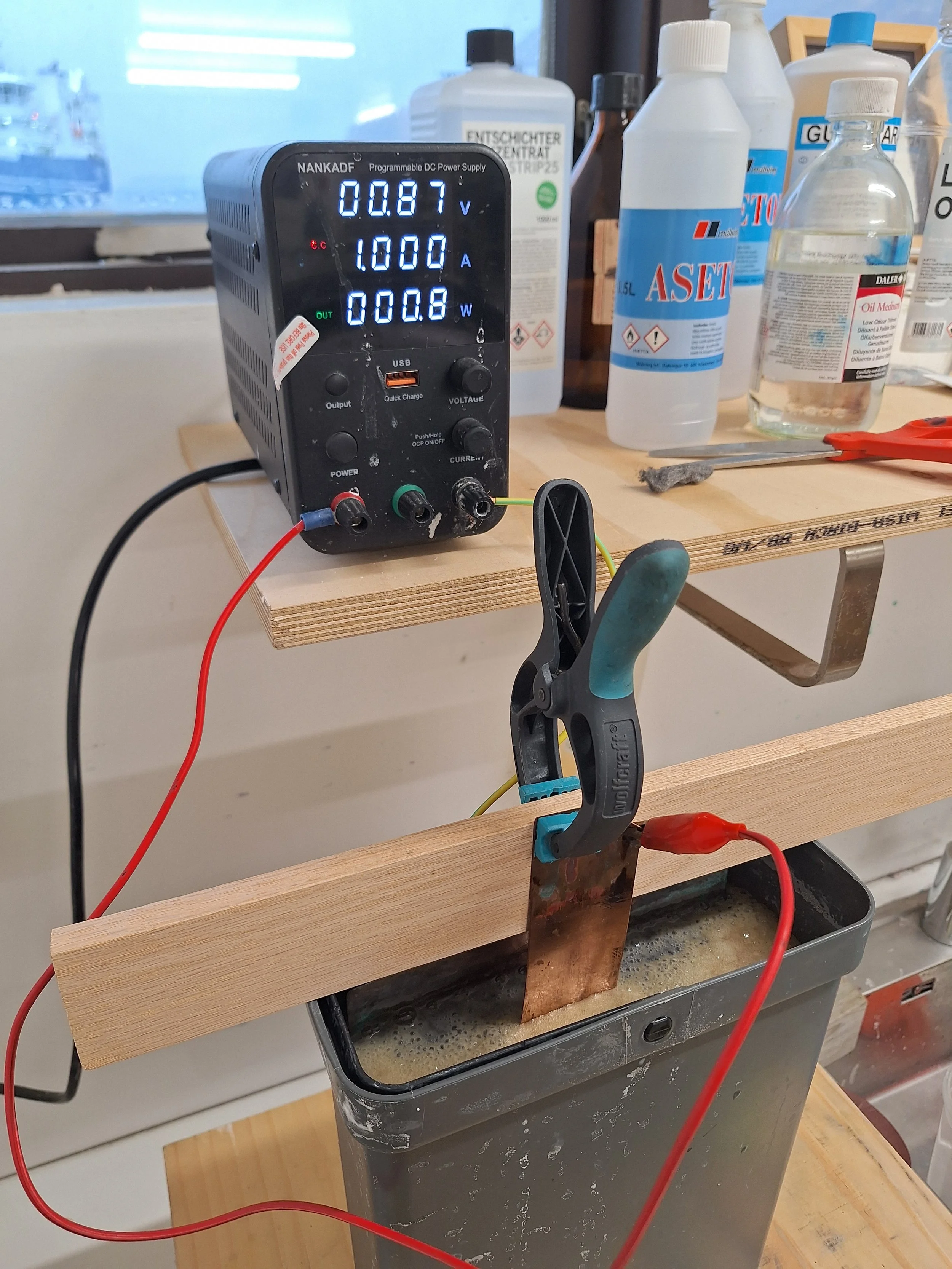
Electrolytic etching in progress
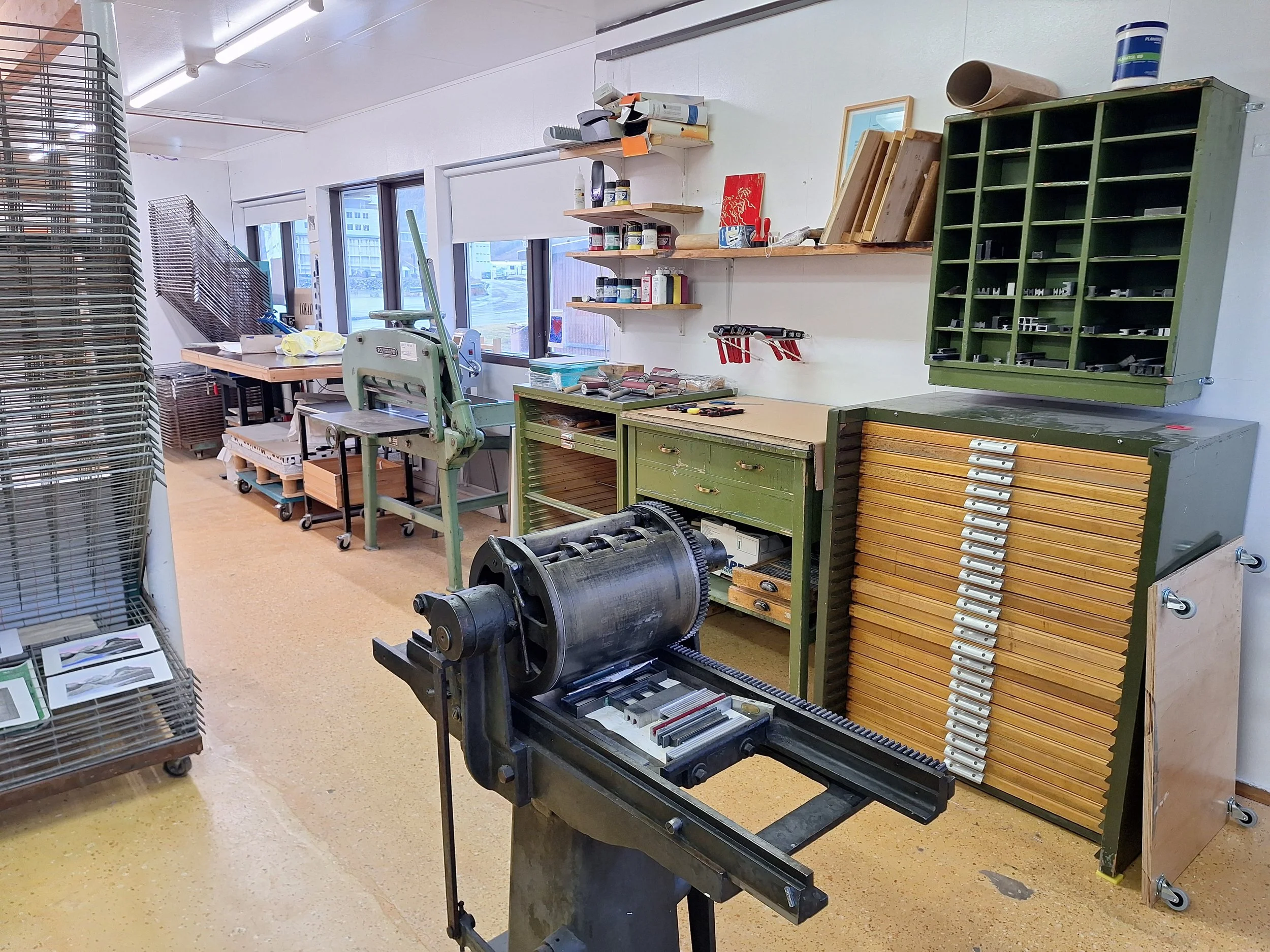
The letterprint press
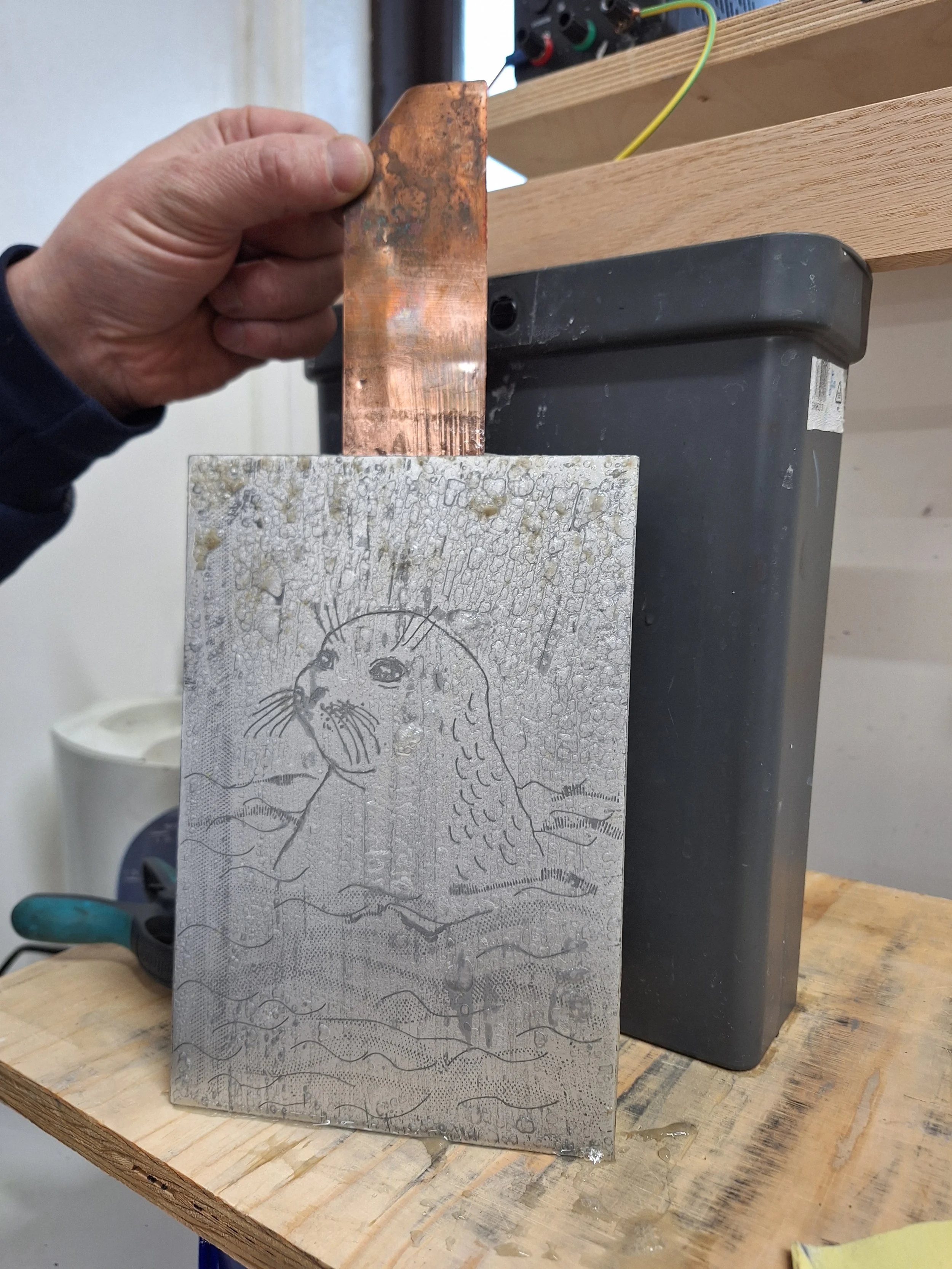
Line etching on aluminium
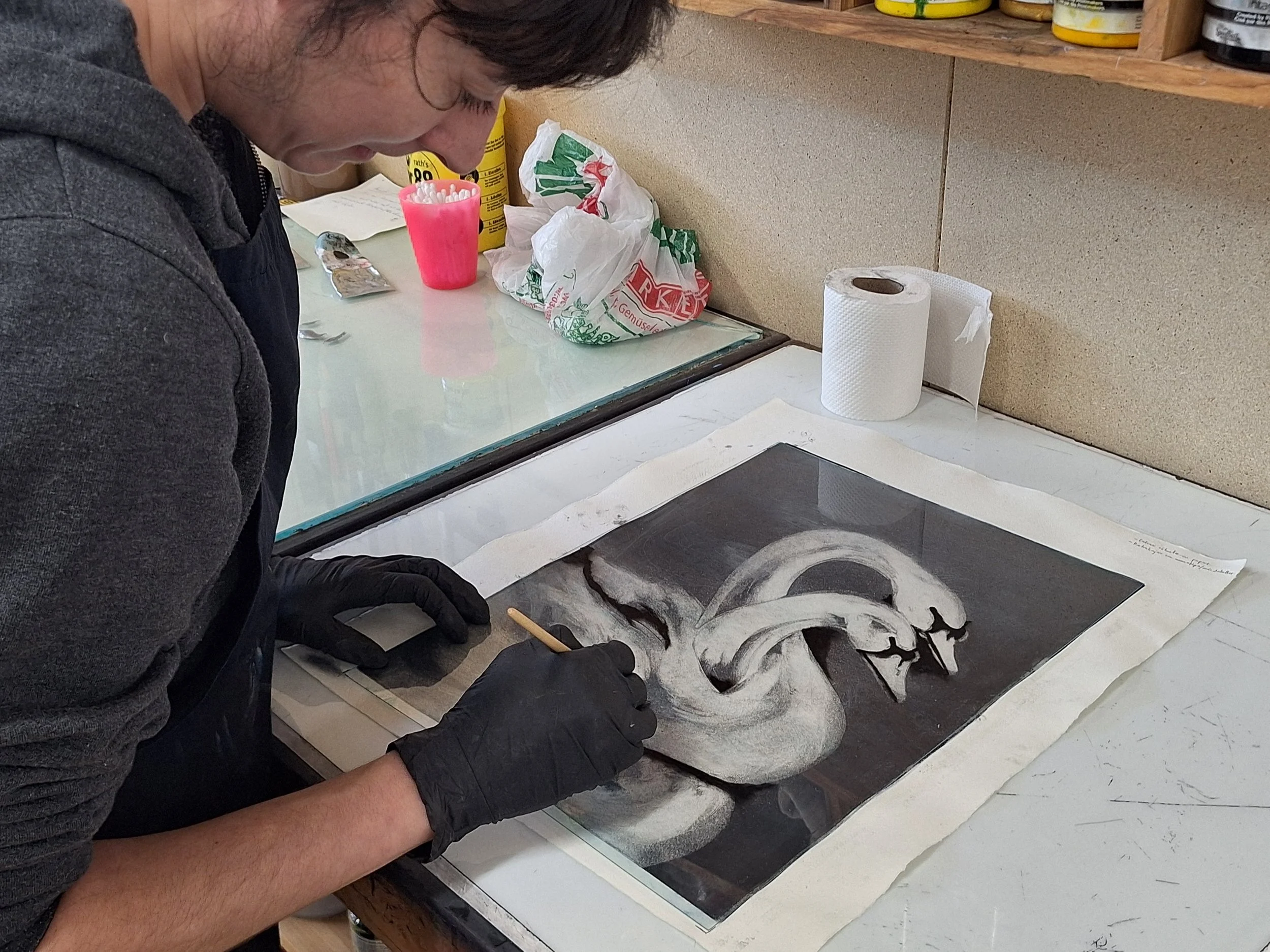
Alejandra working on a series of monotypes
While sketching, photographing and researching, I have been thinking a lot about how to incorporate this residency experience into my artistic practice. While we are not required to make work that directly echo Iceland or Seyðisfjörður, I feel it is inevitable not to be influenced by your surroundings in some ways, and to begin viewing your art through a different lens than you would at home.
Coming to Seyðisfjörður, a small remote town in the vicinity of the Arctic circle, I have been drawing many parallels to life in Longyearbyen in Svalbard, where I did a three month artist residency with Artica in 2024. In fact, it was through Artica that I was invited to Skaftfell Art Centre, and in some ways I view this residency as an extension of Svalbard. These are both places where climate change and the powerful presence of nature are felt viscerally, and human settlements appear small and vulnerable within the barren vastness of the endless mountains. At the same time, there are noticeable differences between Longyearbyen and Seyðisfjörður to address.
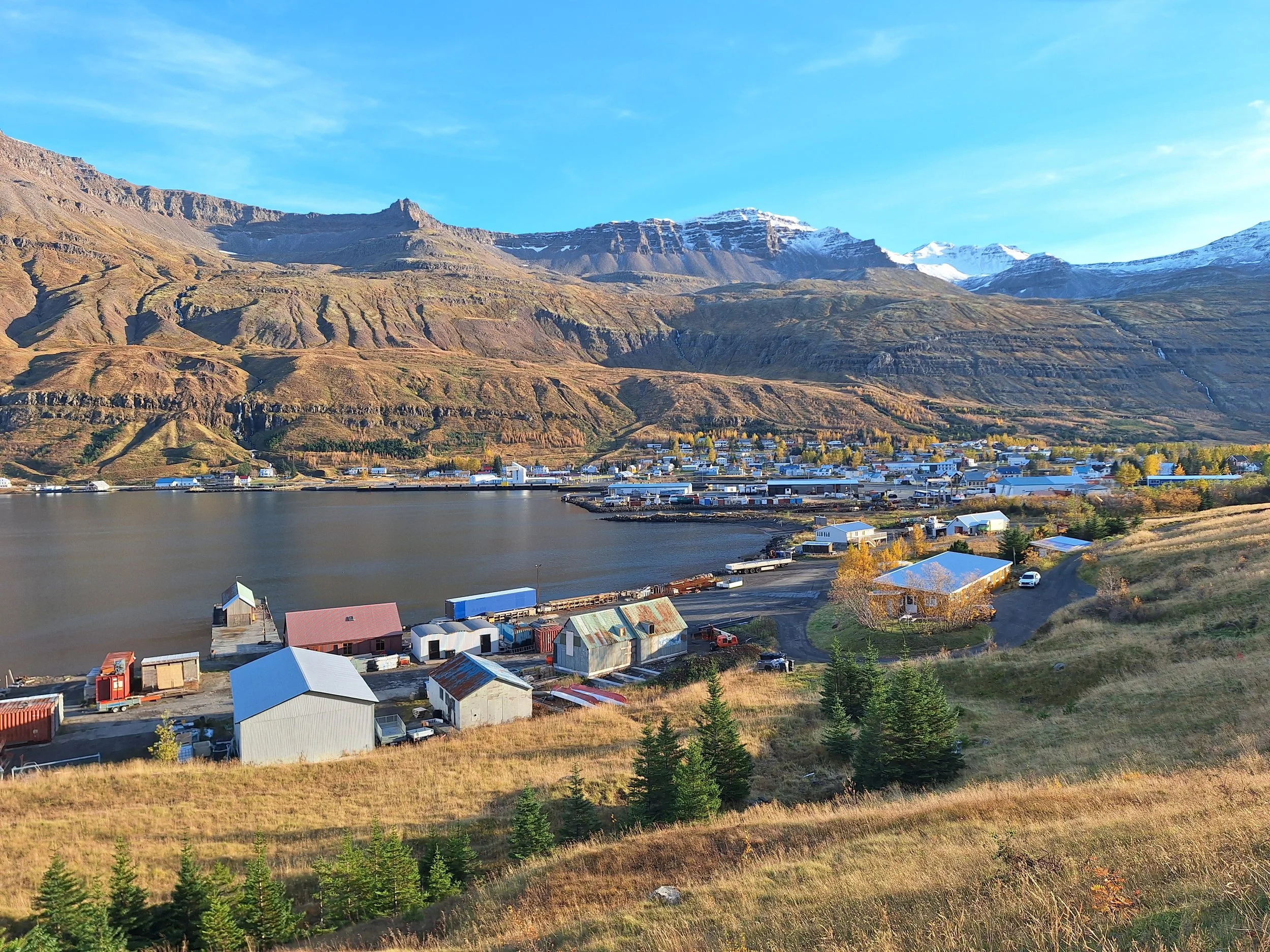
Seyðisfjörður
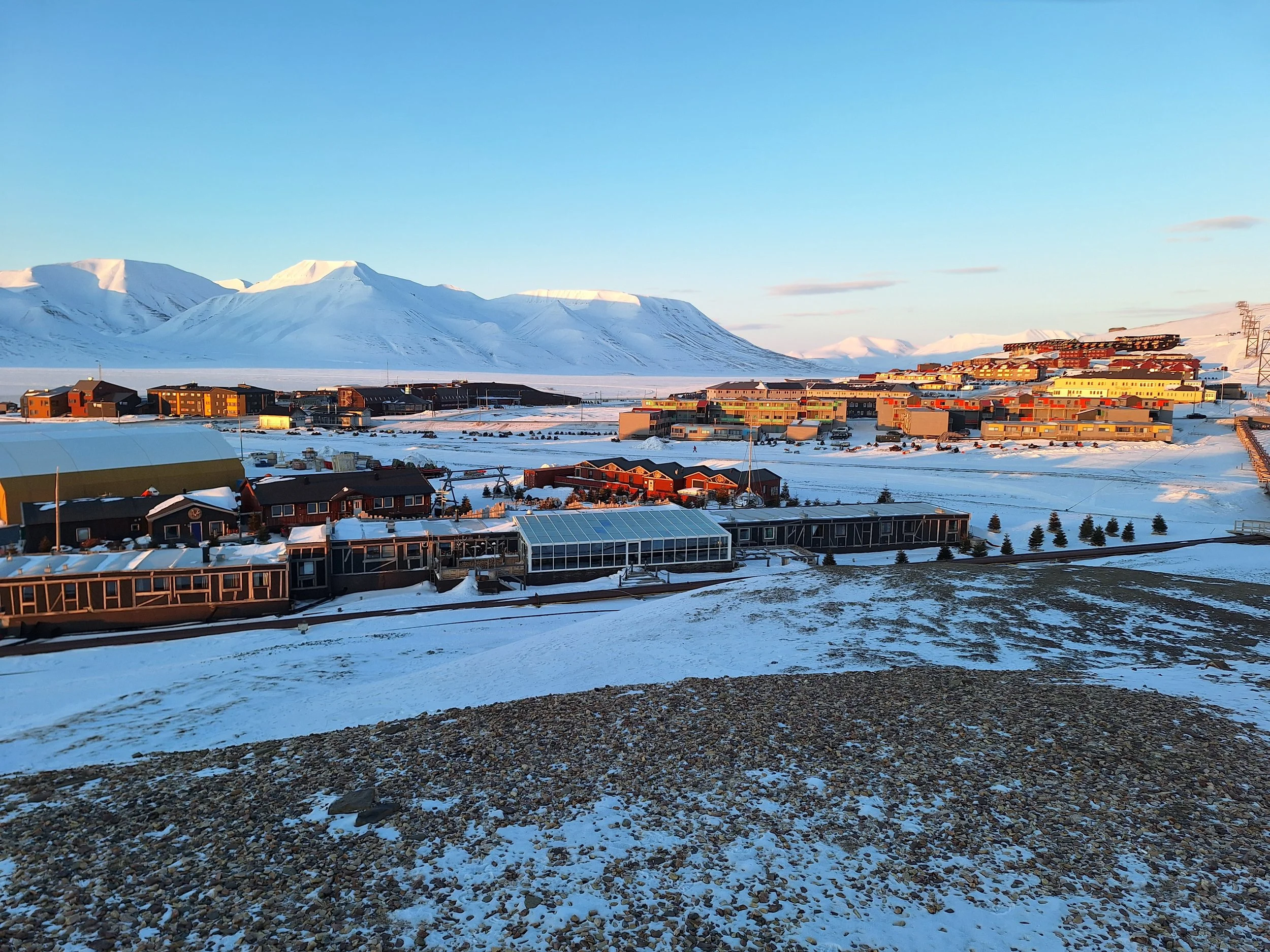
Longyearbyen
Firstly, creating work related to Svalbard, whether it pertained to geopolitics, biology or climate change, felt easy and unproblematic, because Svalbard does not belong to anyone - everyone is merely a visitor that comes with their own perceptions and interpretations. It is a place where time feels disjointed, inflicted with short-term memory, because there is such a high turn-over of residents. Old buildings might prevail, but the people who once inhabited them are long gone, and so are the ones to tell their stories. There are no generational overlaps, because Svalbard is a place where people can neither be born nor laid to rest.
Seyðisfjörður on the other hand, very much belongs to someone. Even though there is a constant turn-over of tourists and visiting artists, this is also a place of history and tradition that is being actively passed on and remembered from generation to generation. Therefore, I feel a lot more mindful when seeking to incorporate the experience of this place into my own artistic practice, because Seyðisfjörður is not necessarily “mine” to interpret the way Svalbard is.
For example - one thing that Iceland has, that Svalbard does not, is a strong sense of folklore. One such instance in Seyðisfjörður is the lore attached to Dvergasteinn (“Dwarf’s Rock”) - a very special boulder standing near the northern waterfront about a two hour walk from town, which Alejandra and I visited this week.
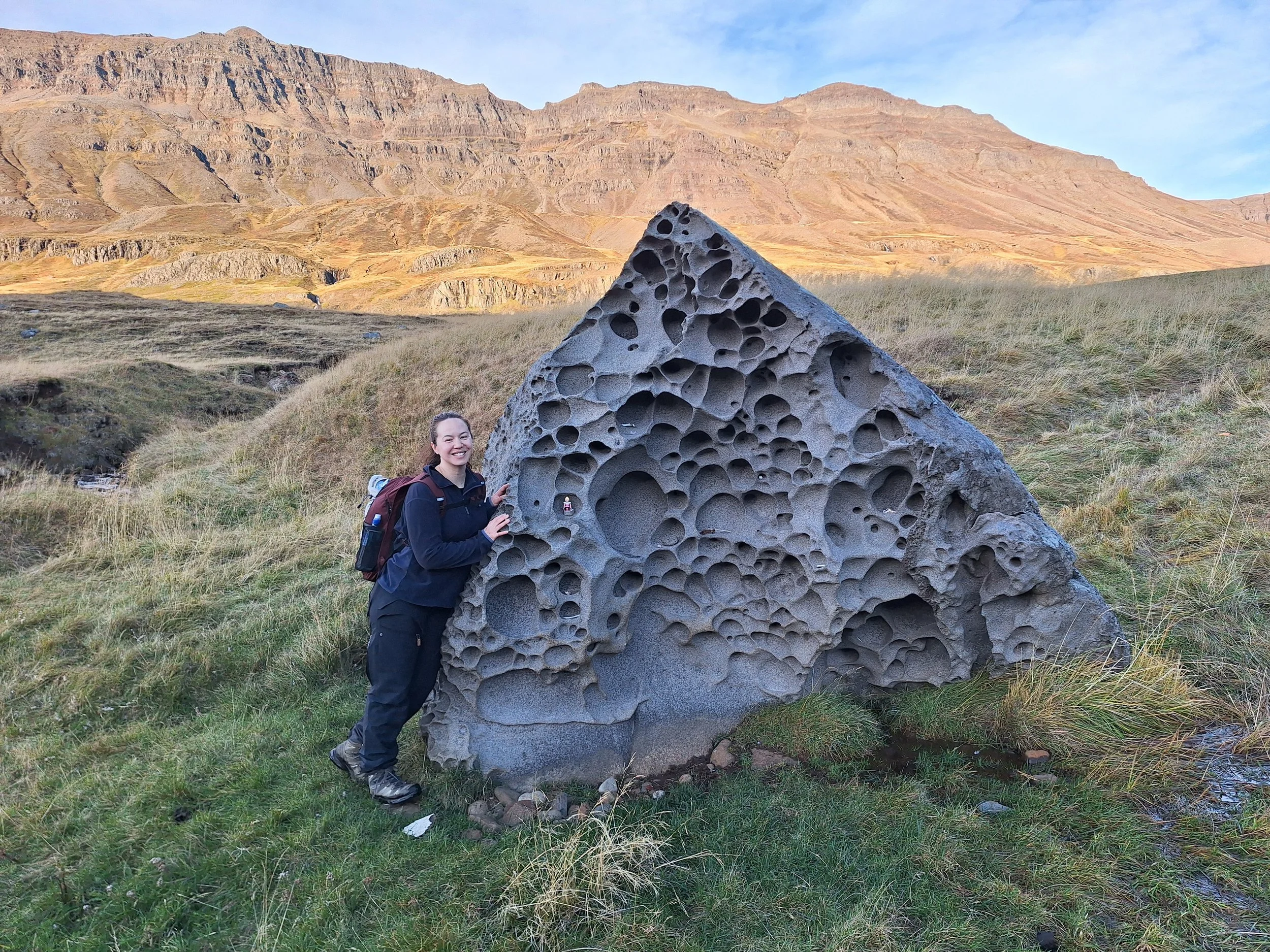
Me looking small compared to Dvergasteinn!
According to folklore, the boulder once stood on the south side of the fjord, next to the local parish church and vicarage. It was widely believed to be home to a family of dwarves. Eventually, the local community decided to rebuild the church directly across the water on the northern shore. This upset the dwarves, and Dvergasteinn sailed across the sea on its own accord in order to once again be near the church. In memory of this event, the vicarage itself was officially named Dvergasteinn. When the church moved to its current location in the centre of Seyðisfjörður in 1920, a miniature version of Dvergasteinn was placed next to it, so that the dwarves would always be a part of their beloved parish.
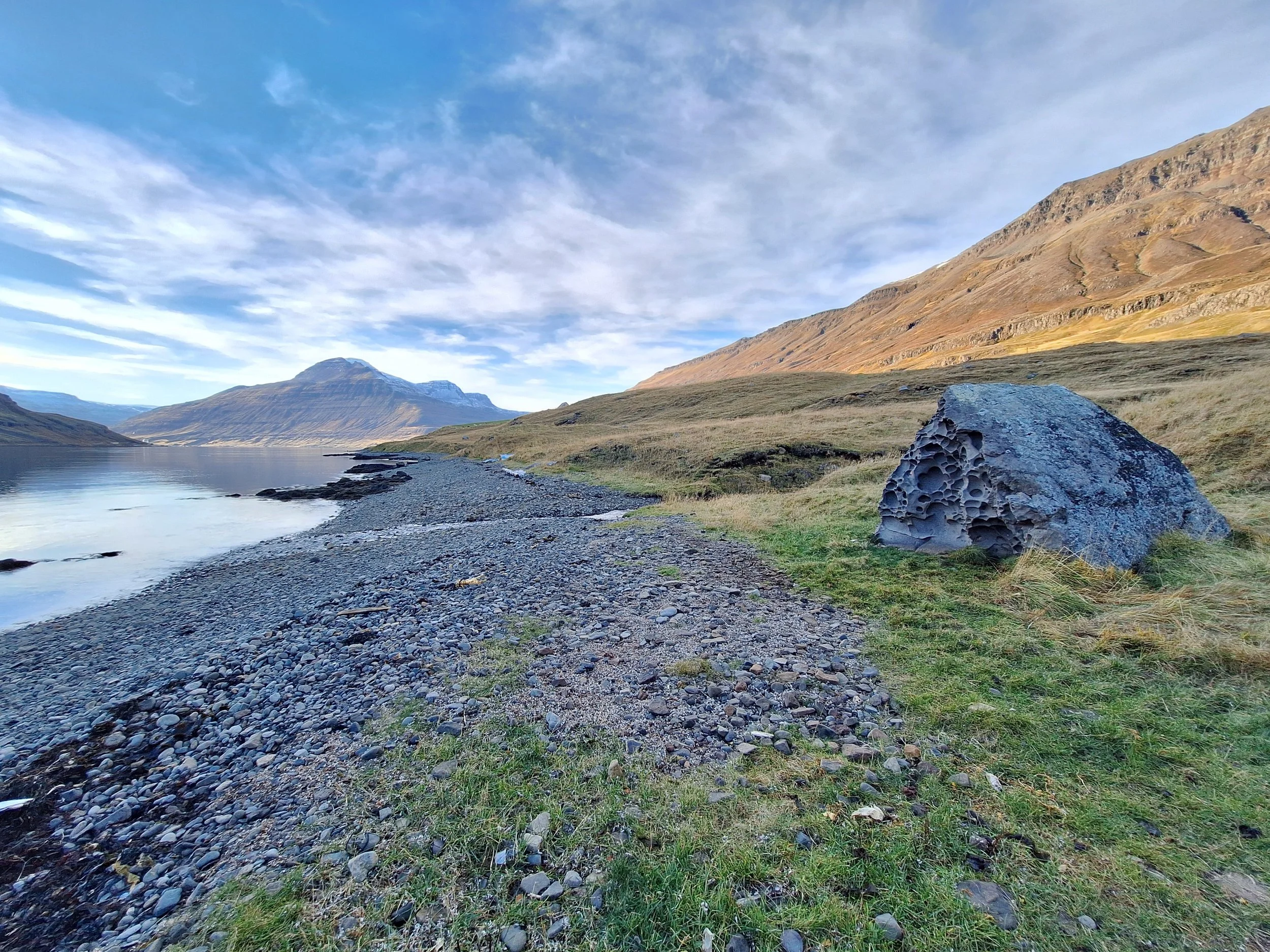
Dvergasteinn is beautifully situated along the shoreline.
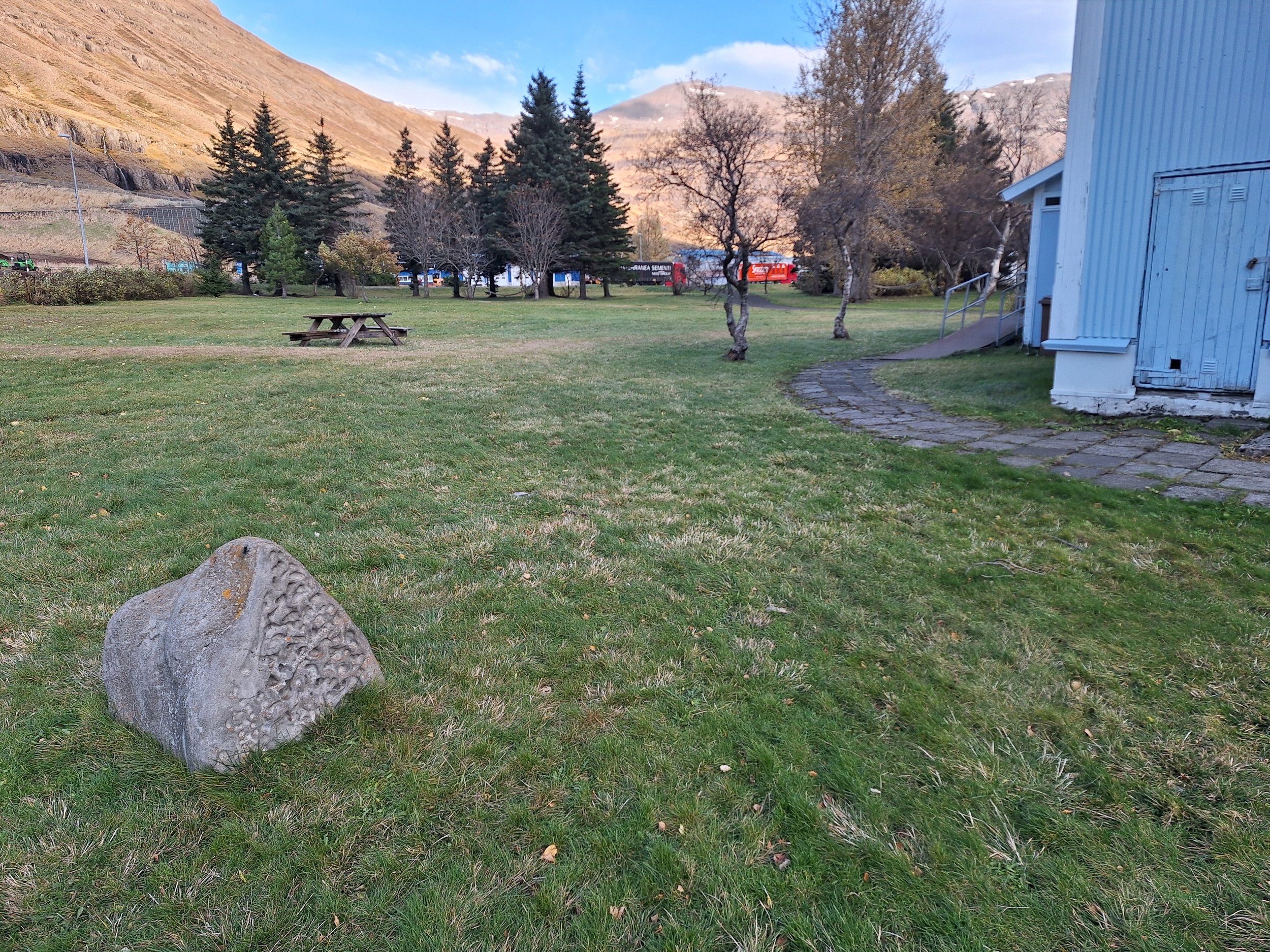
The miniature Dvergasteinn, next to the blue church in Seyðisfjörður’s town centre.
Although Seyðisfjörður is very much an Icelandic town in our day and age, it carries a certain “ghost” of Norway and Norwegian presence - just like Longyearbyen. For the past five years, I have been interested in the concept of "hauntology" in my artistic practice. “Hauntology” was coined by Jacques Derrida and Mark Fisher, as the idea of how the past persists, haunts, and intrudes upon the present—often through a melancholic longing for lost or unfulfilled futures. This concept I mainly explore through the lens of my family’s migration and diaspora, but it is also a sensation I am feeling strongly in these small, arctic communities.
Svalbard is one of the most vivid real-world manifestations of "hauntology." Here, abandoned Norwegian and Soviet mining settlements remain preserved like anachronisms within the permafrost. The physical artifacts outlive the ideologies that created them, and awaken eerie sensations as they stand in the empty and abandoned landscape.
Seyðisfjörður possesses a type of hauntology of its own. First of all, its Norwegian origins are still strongly and physically manifested in the Norwegian wooden catalogue houses that were imported in the late 19th and early 20th centuries by Norwegian fishermen. While it is a beautiful town, I, as a Norwegian, also feel a strange, almost thrilling, sense of dissonance as I walk around the streets. The houses remind me of something nostalgic from my childhood, but in a slightly indecipherable way, something also feels off. Whether it is the houses’ colour or décor, or the fact that they are situated in a vastly different landscape, with many being clad in corrugated weather-protective metal. In a way, these houses have migrated and removed themselves from their Norwegian origins, taking on a distinct Icelandic identity - to the extent that a proud sense of local ownership and nostalgia is now being attached to them.
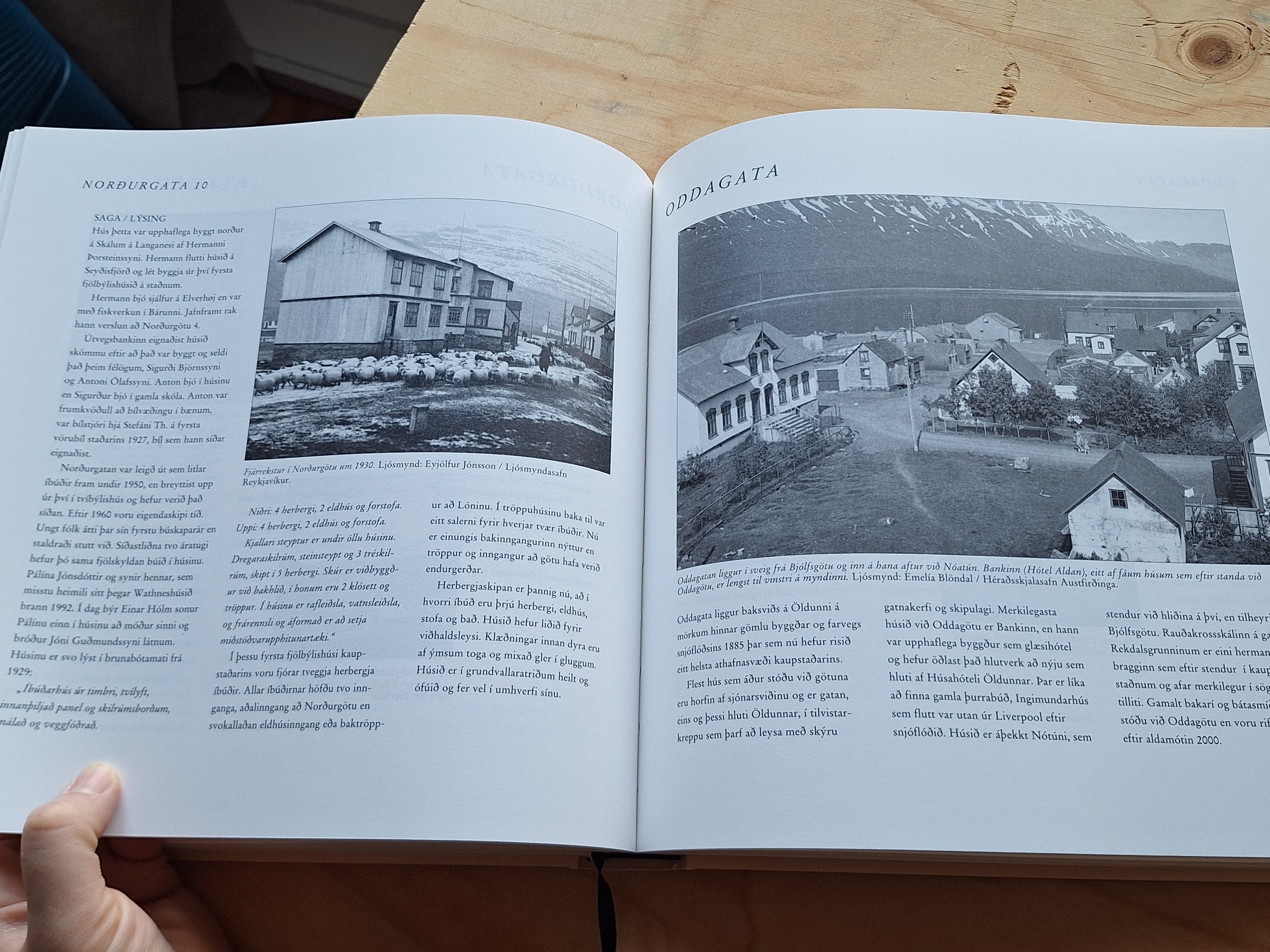
Húsasaga Seyðisfjarðarkaupstaðar by Þóra Guðmundsdóttir. This book documents the history of the town and a great number of the houses dating as far back as 1870.
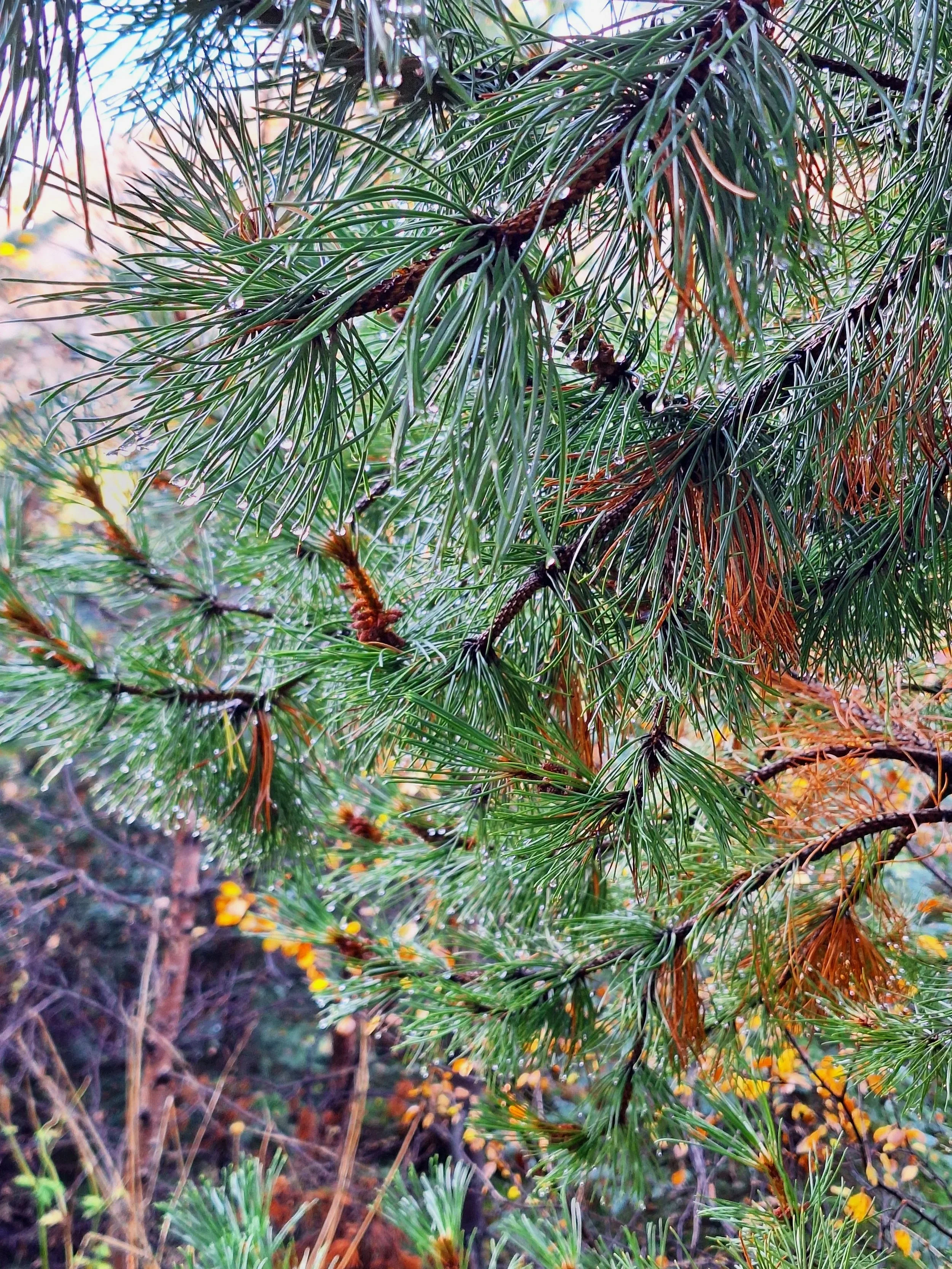
There is also a sad, and slightly ironic backdrop to these imported wooden catalogue houses from Norway. They were imported not only for efficiency, but also due to the fact that wood is scarce in Iceland. When the early Viking settlers arrived from Norway in the late 9th century, they destroyed much of Iceland’s own forests to make space for agricultural land. Forests covered roughly 25% to 40% of the island, and Iceland has spent over a century working to reverse the damage. Today, through native birch restoration and the import of resilient imported species that can tolerate harsh climate and acidic volcanic soils, forest and shrub now cover roughly 2% of the country's land area.
It is strange to think that as a result of a deforestation that happened over a thousand years ago, Iceland now faces the challenge of widespread soil erosion. So in many ways, you could claim that there is a sense of hauntology taking place here, inflicted by Norway in both older and more recent times.
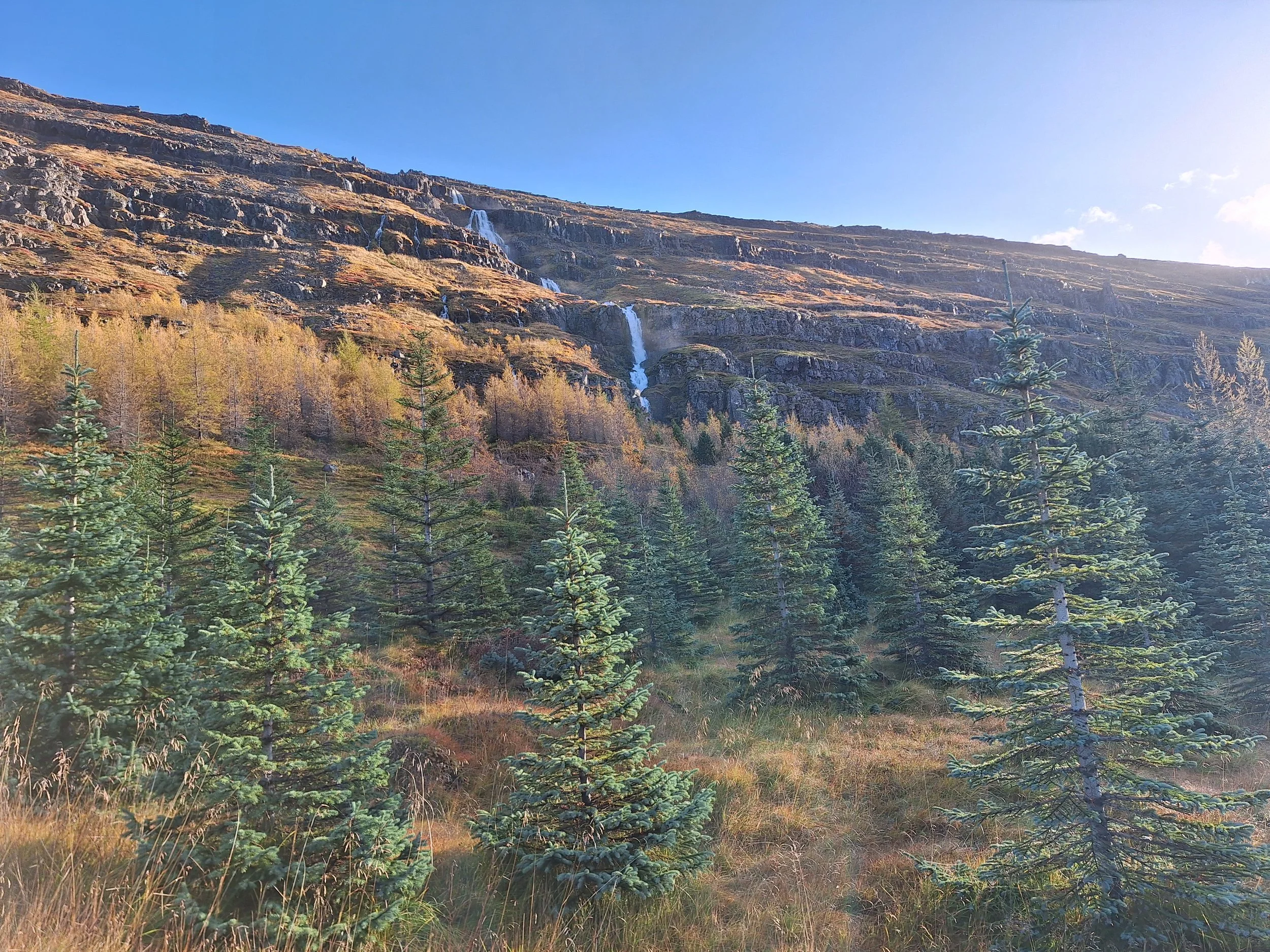
The cultivated forest behind Seyðisfjörður.
In this coming week, I am excited to pursue this path of hauntology further, and to share some sketches I made back in 2024 when I was in Longyearbyen, and which I have for some reason found myself returning to and developing here in Seyðisfjörður.