Together with my dear printmaking colleague Alejandra Aguilar Caballero, I have had the pleasure of being invited to Seyðisfjörður in Iceland for a four week residency with Skaftfell Art Center - generously supported by Arts Council Norway (Kulturrådet). Skaftfell provides artists with the opportunity to immerse themselves in their work in peaceful surroundings, while also sharing their practice with the local community through creative workshops, exhibitions and open studio presentations. We arrived on Monday 5 October, and will be living and working here until the end of the month.
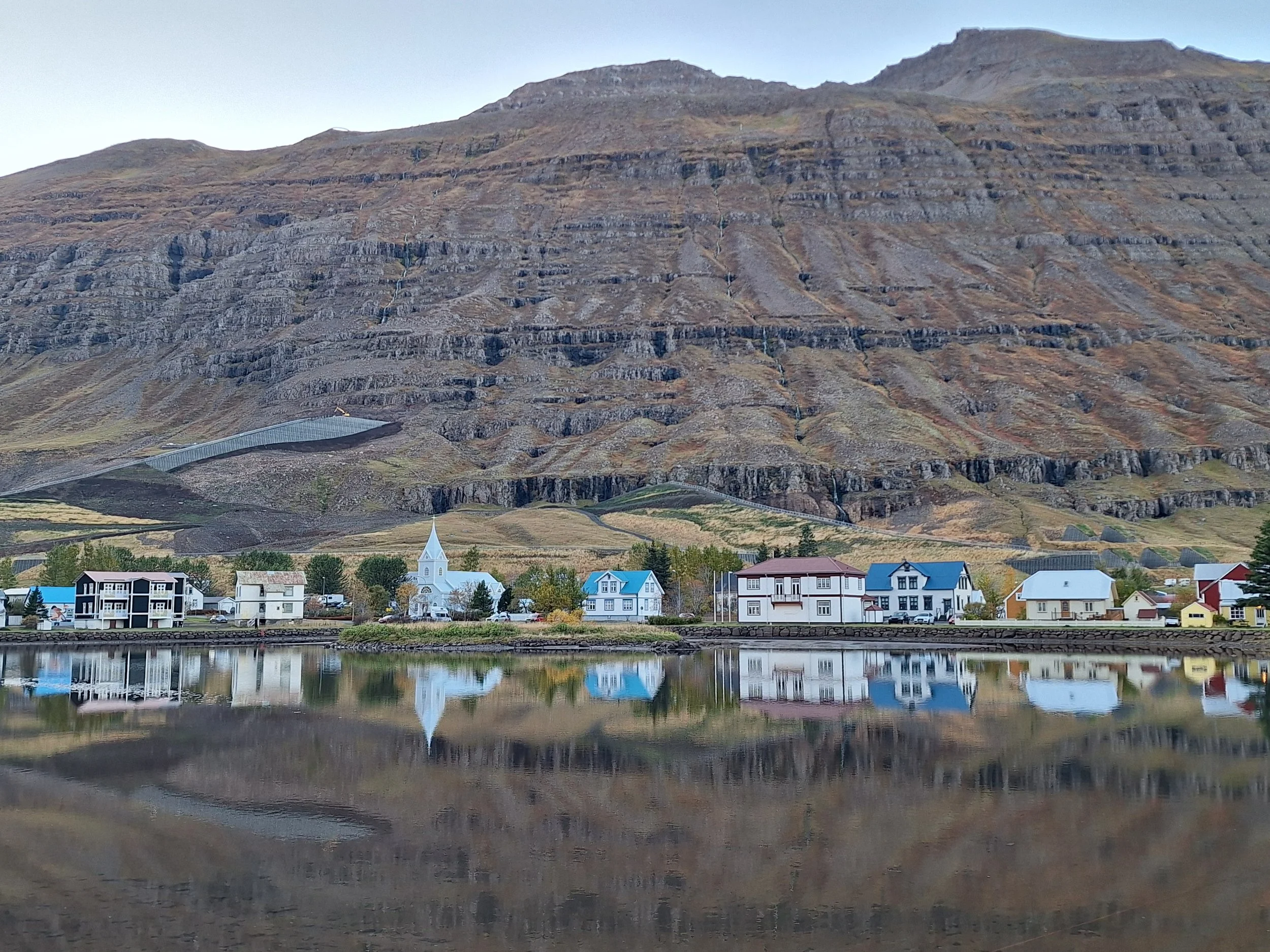
Seyðisfjörður
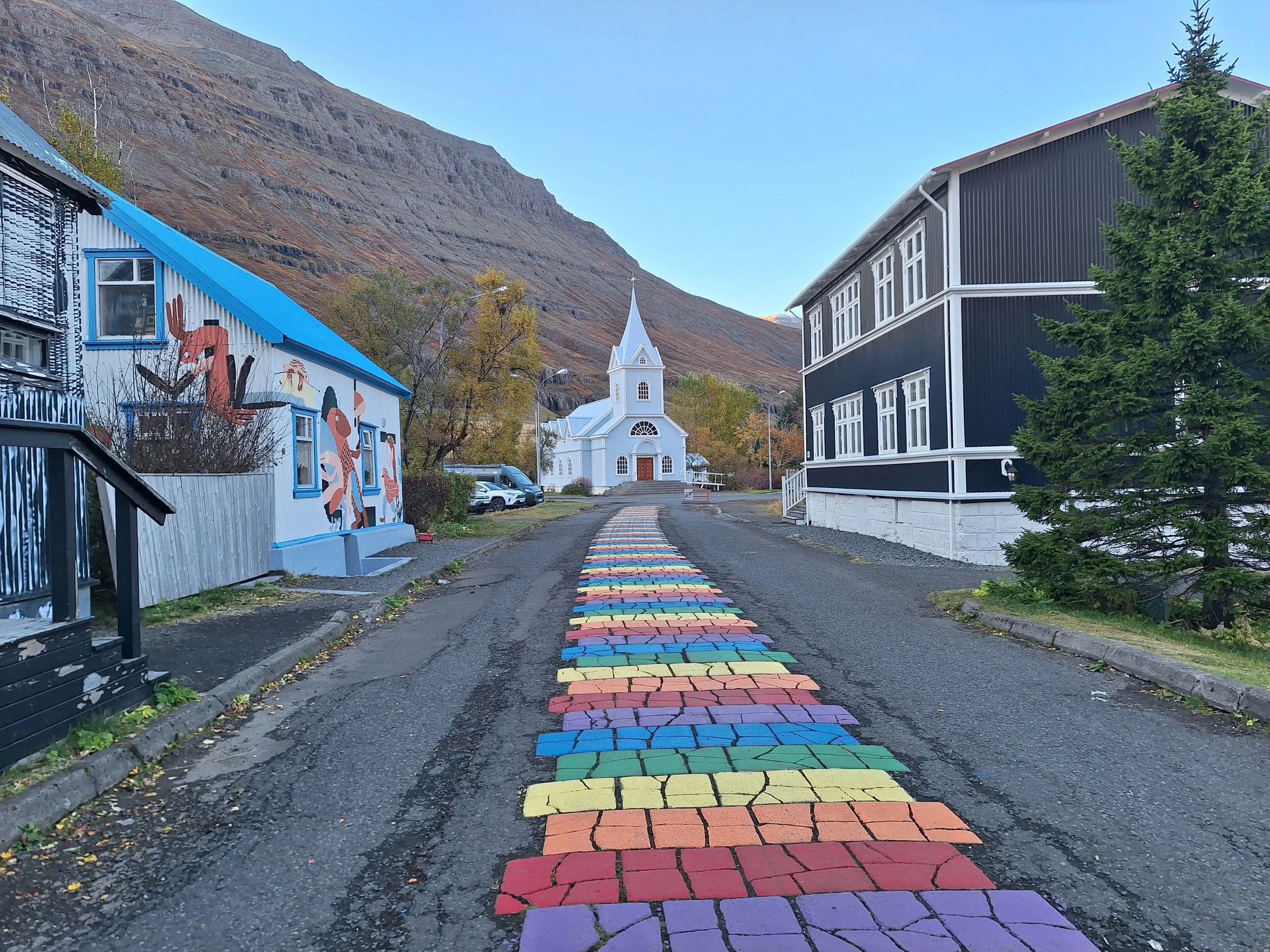
The much photographed rainbow path leading up to the iconic blue church.
Seyðisfjörður is a small, remote town located in the very eastern part of Iceland, with a population of around 650 people. The mountain pass connecting the town to the main ring road can be periodically inaccessible during winter, but because Seyðisfjörður harbours the only ferry connection to mainland Europe, it also feels surprisingly connected - becoming a buzzing tourist destination throughout the summer season. Seyðisfjörður is also a destination for international artists, through residency initiatives such as Skaftfell, which was founded in 1998 in the spirit of Swiss-German artist Dieter Roth (1930-1998), who frequently lived and worked here during the final ten years of his life. The autumn season also marks the beginning of several cultural activities around town, such as the semester start of the artist-run folk school LungA, and the six-week Queer Residency at the artist collective Heima.
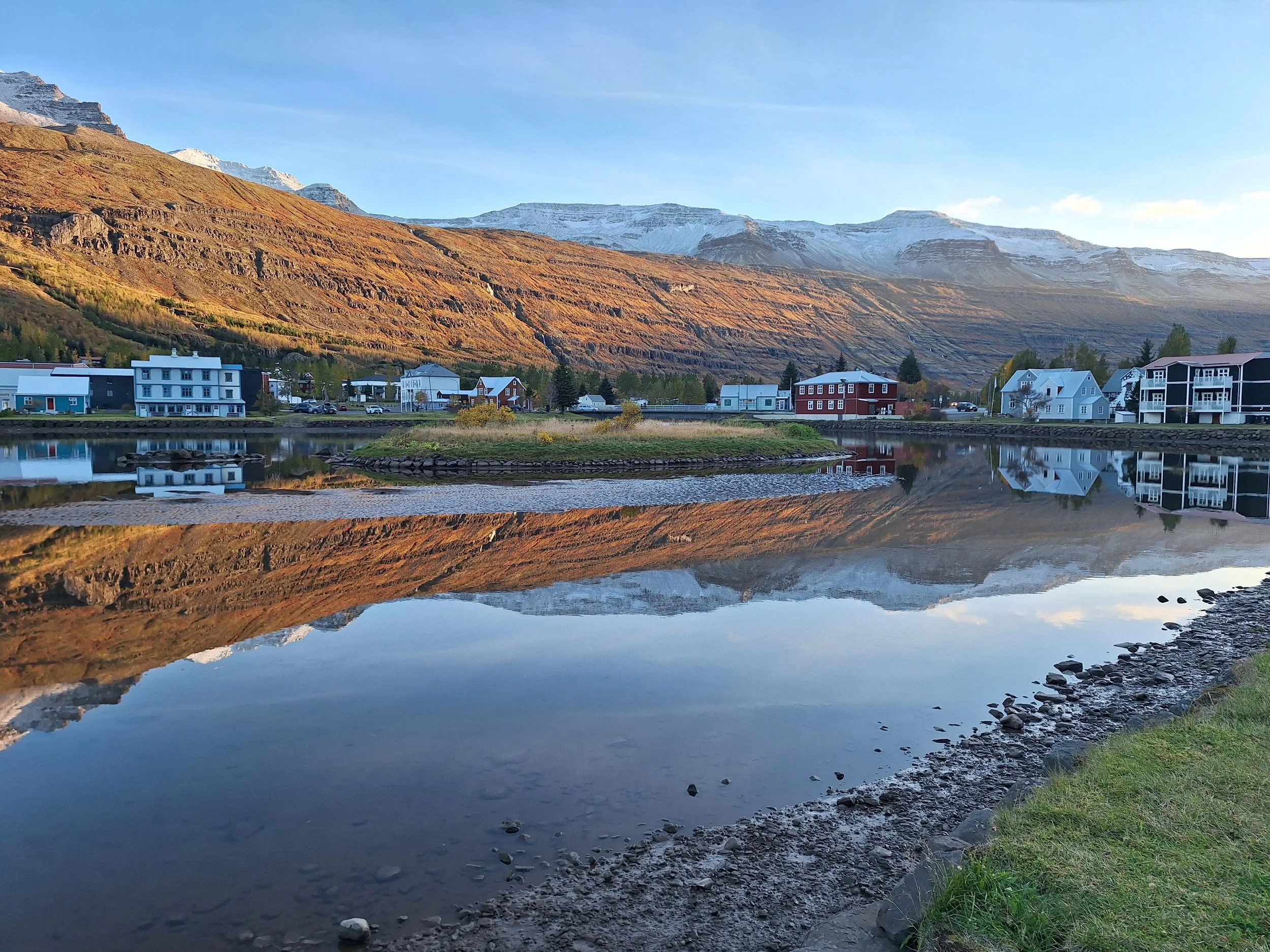
The town of Seyðisfjörður was founded in 1848, when it was settled by Norwegian fishermen. Its location, nestled by a long protective fjord, was ideal for herring fishing, and Seyðisfjörður quickly grew into one of the most prosperous towns in the area. The most striking feature of Seyðisfjörður is its many colourful wooden houses. In fact, many of these are kit form buildings that were imported directly from Norway in the early 20th century - and this is the reason why the town has such a distinct Scandinavian feel. One example is the primary school building from 1907, which is still in use - although it does not meet modern requirements of accessibility and comfort. Many of the wooden houses have also been given additional weather protection in the form of corrugated steel, as the harsh Icelandic weather caused many of the wooden houses to rot. In 1906, Seyðisfjörður became the land side of the first undersea cable connecting Iceland to Europe, and was also a base for Allied forces during the Second World War. In fact, the British oil tanker El Grillo was sunk in this fjord by German fighters stationed in Norway. It now rests at the bottom of the fjord, still leaking oil, and is a popular site for divers. In 2015, Seyðisfjörður became known to international audiences through the series "Trapped" (Ofaerd), which aired on the BBC.
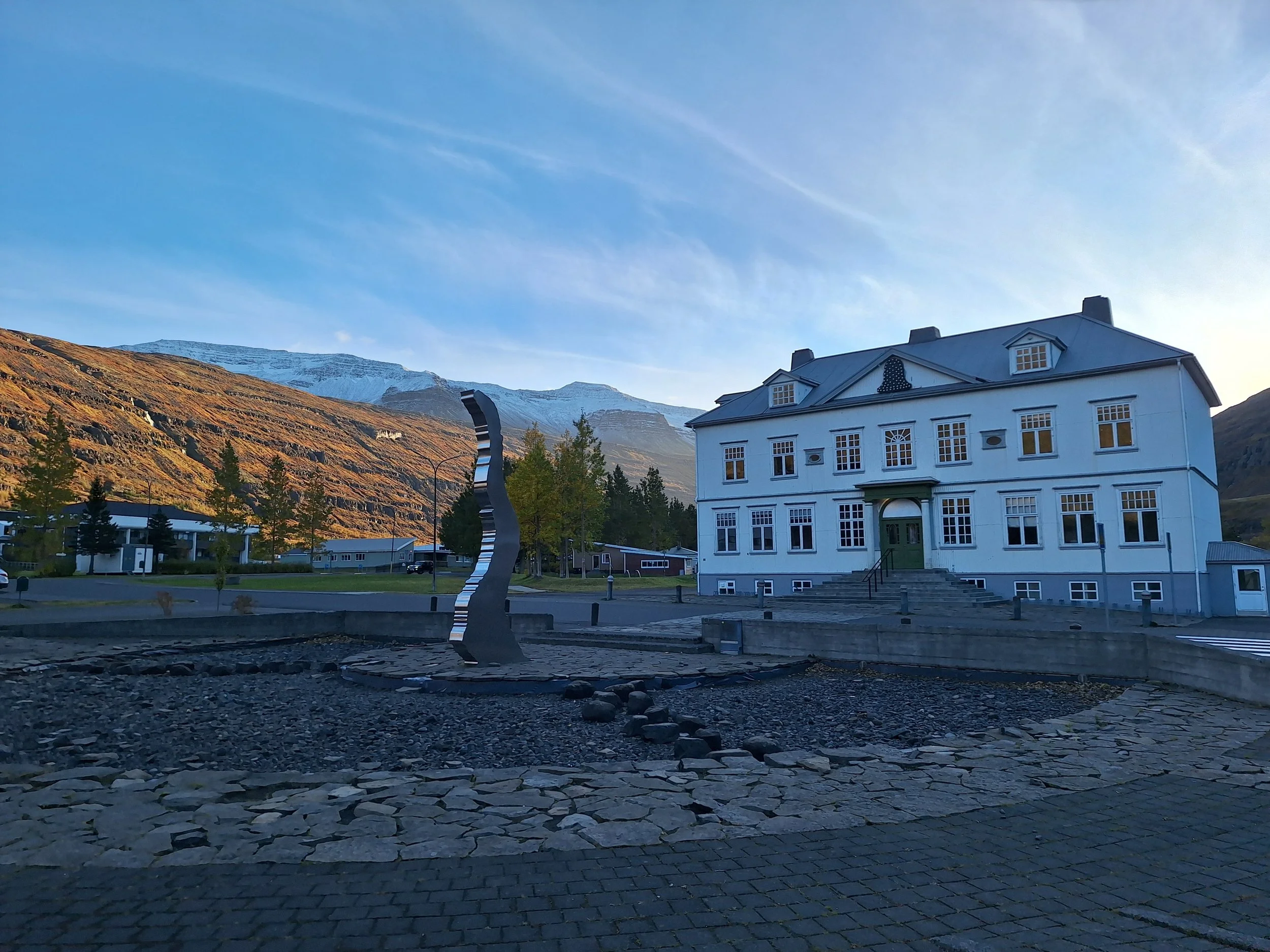
The Norwegian elementary school building from 1907 - still in use!
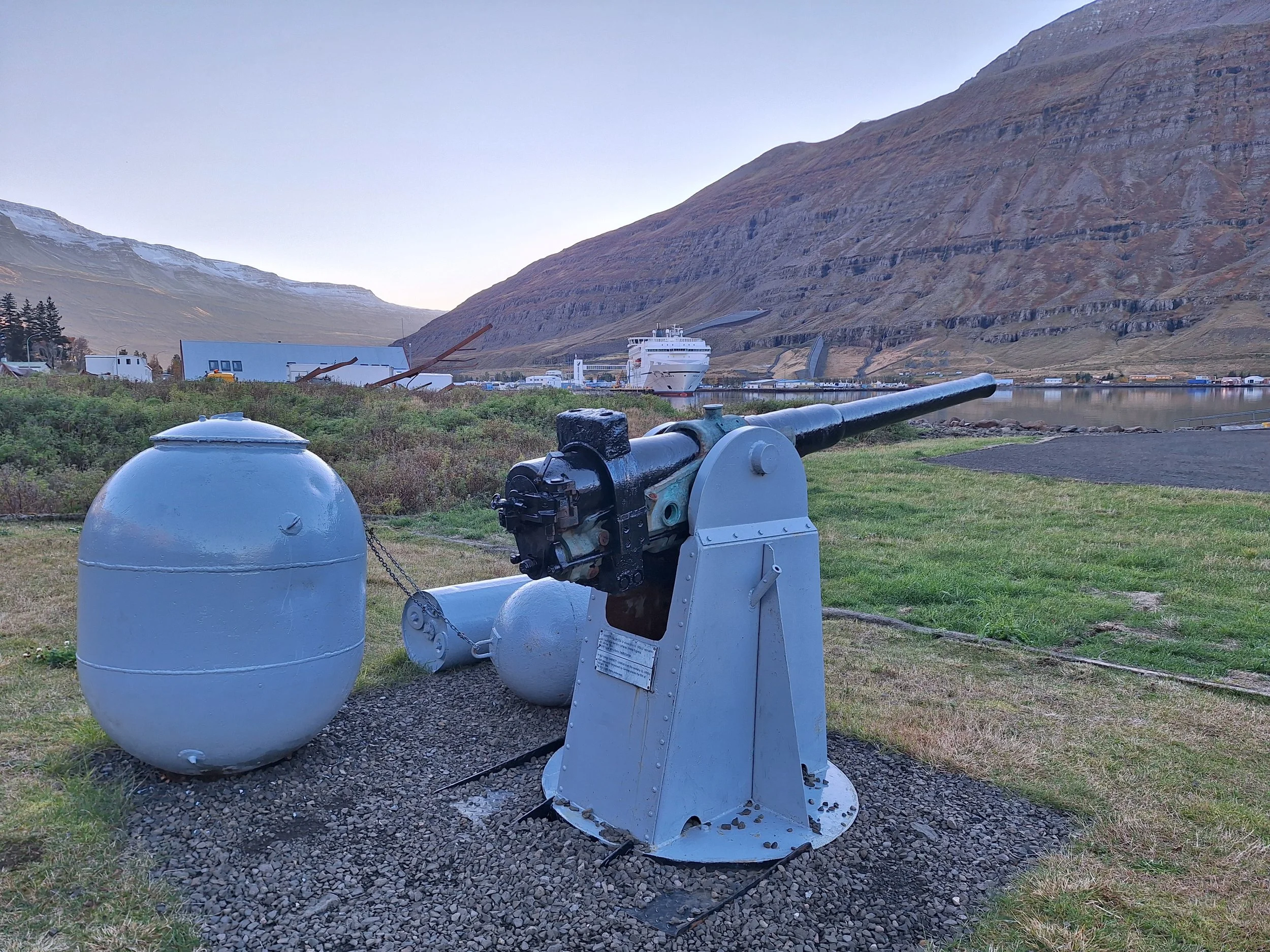
A salvaged part of El Grillo, looking out over the fjord.
This first week we have been busy settling in, exploring the town and making use of a brief spell of sunshine. It seems like every path you take will lead you to a beautiful mountain scape or a scenic waterfall, and if you follow the trail up the mountainside beyond Skaftfell Art Center, you will encounter the unexpected gem Tvísöngur, a sound sculpture by German artist Lukas Kühne. The sculpture is a grouping of five hollow concrete domes, each designed to resonate at different harmonies as the visitors sing and make sounds within. The five chambers represent the Icelandic quintal harmony, with each dome corresponding to a tone in the tradition. The round concrete structure looks like something that has been dropped from the sky in an apocalyptic science-fiction movie, but its smoothness also feels striking and almost beautiful against the rugged mountains.
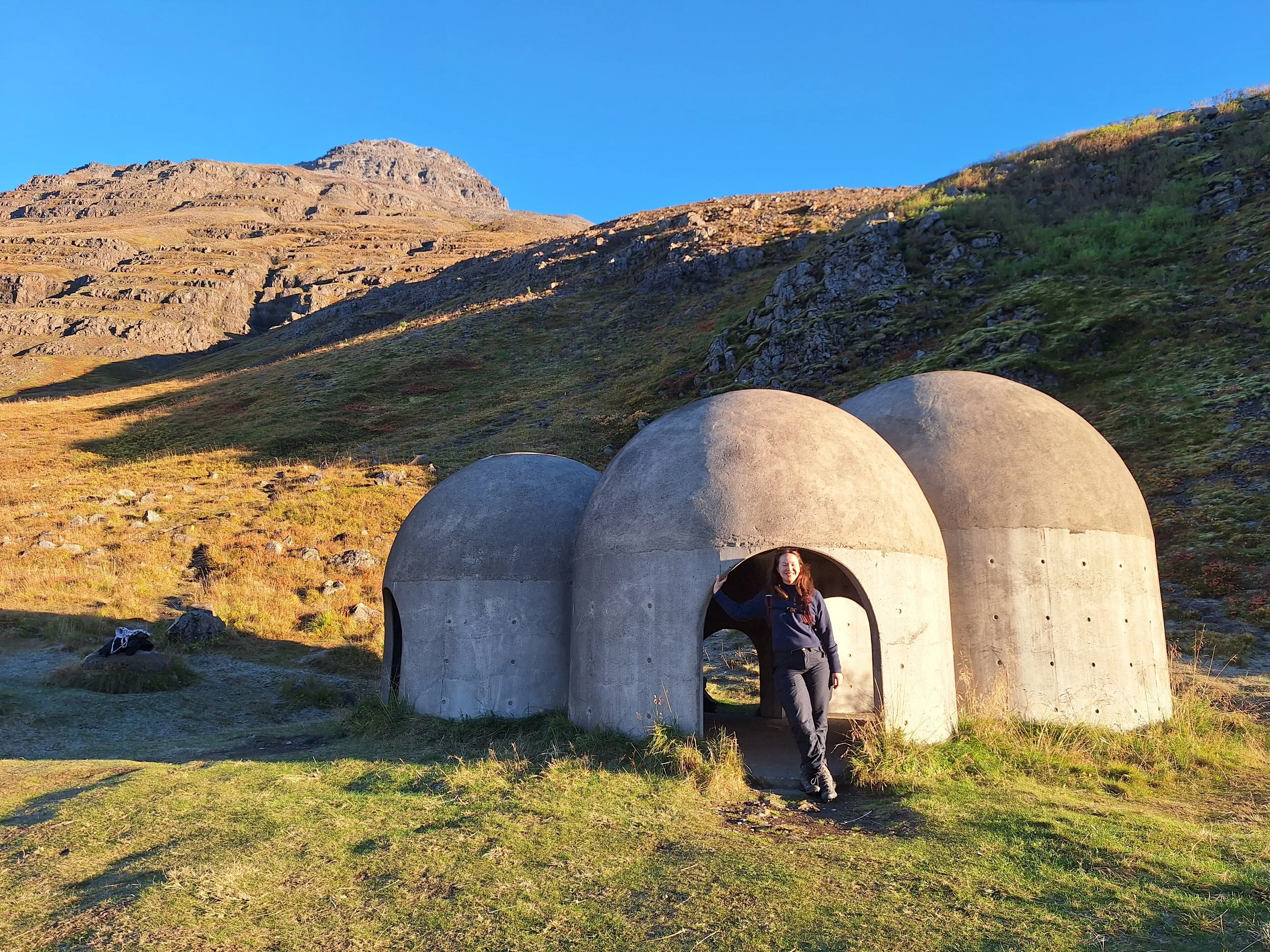
Me happily posing in front of Tvísöngur
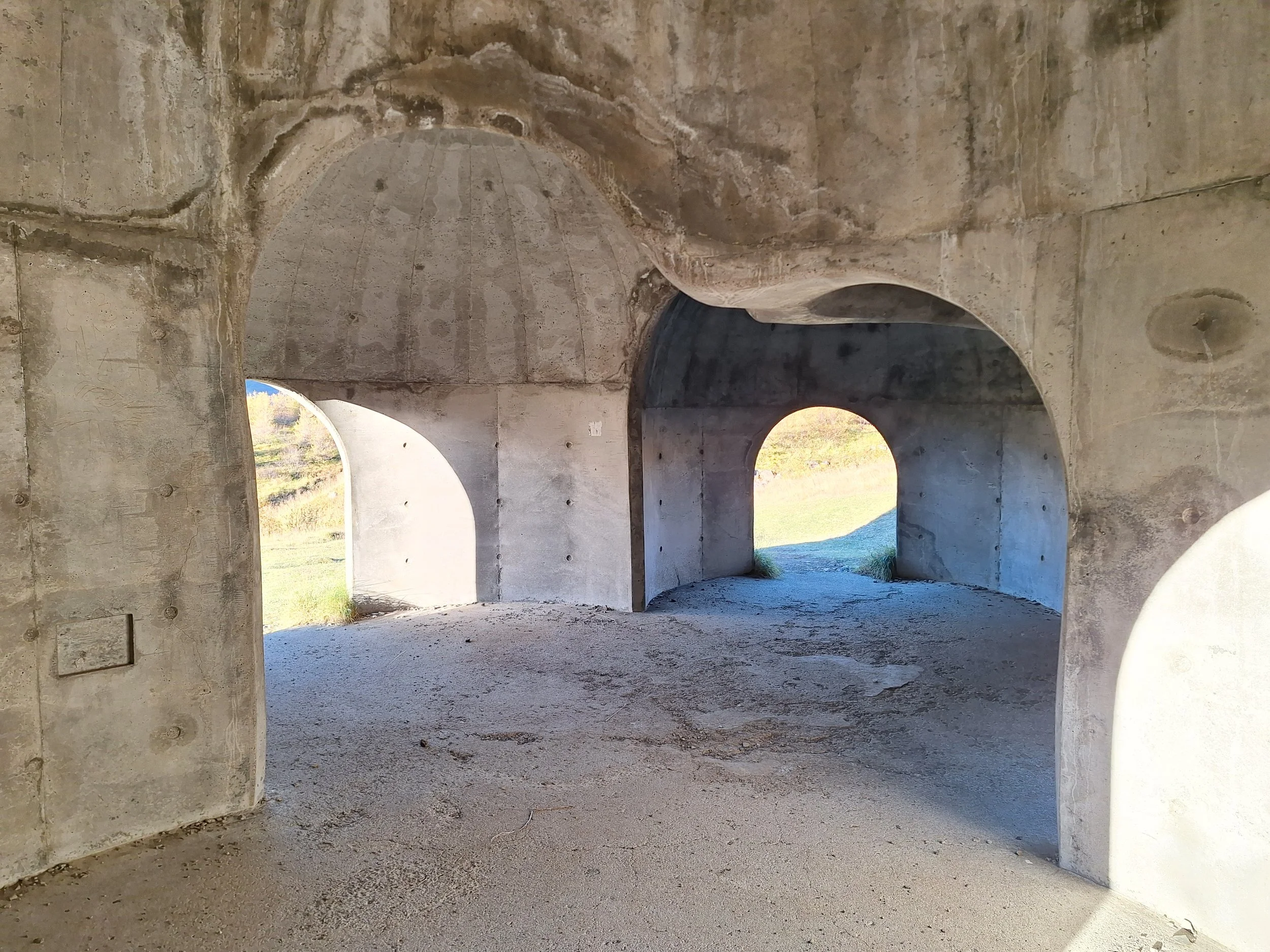
Inside Tvísöngur
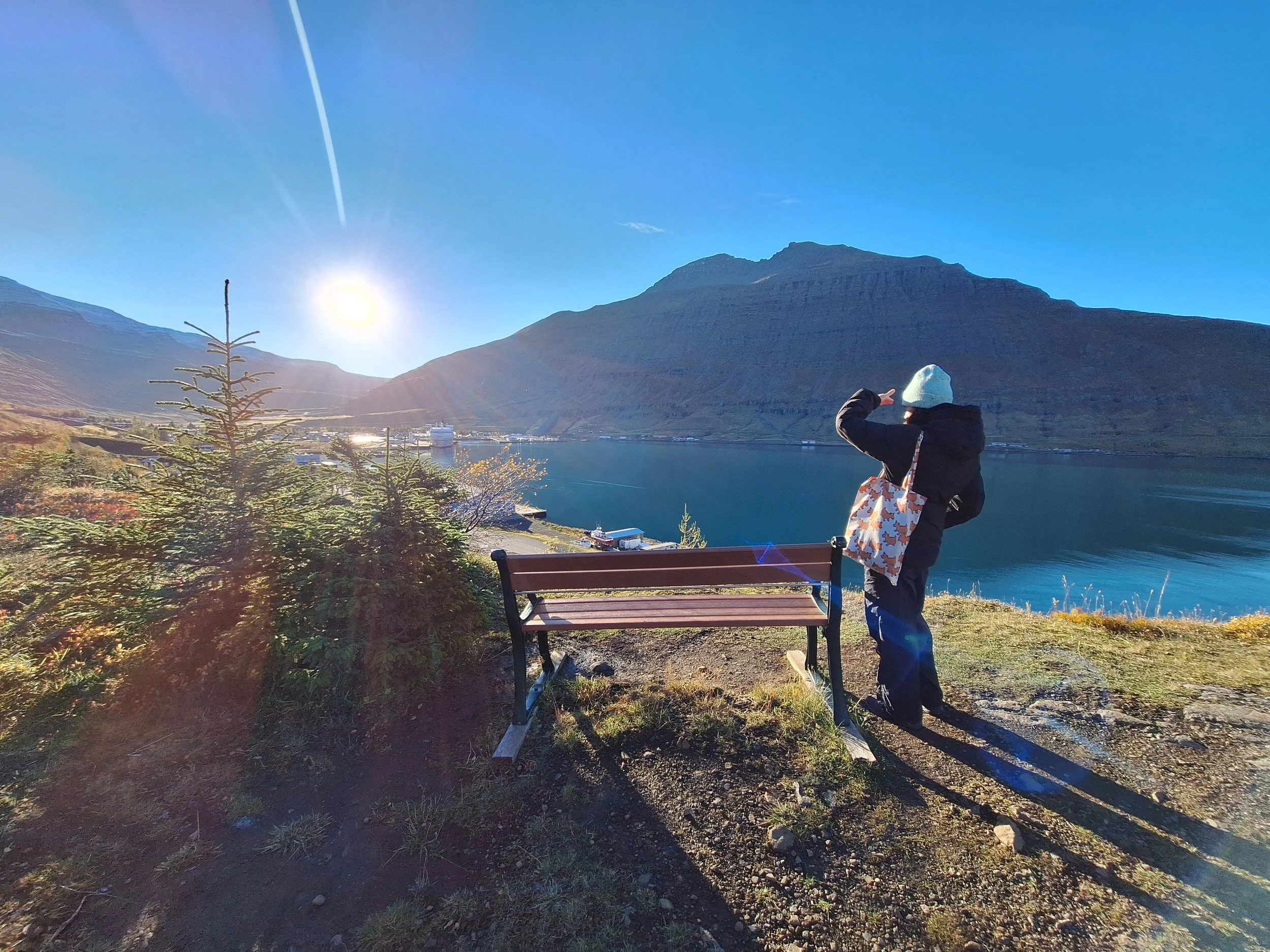
Alejandra looking out over Seyðisfjörður
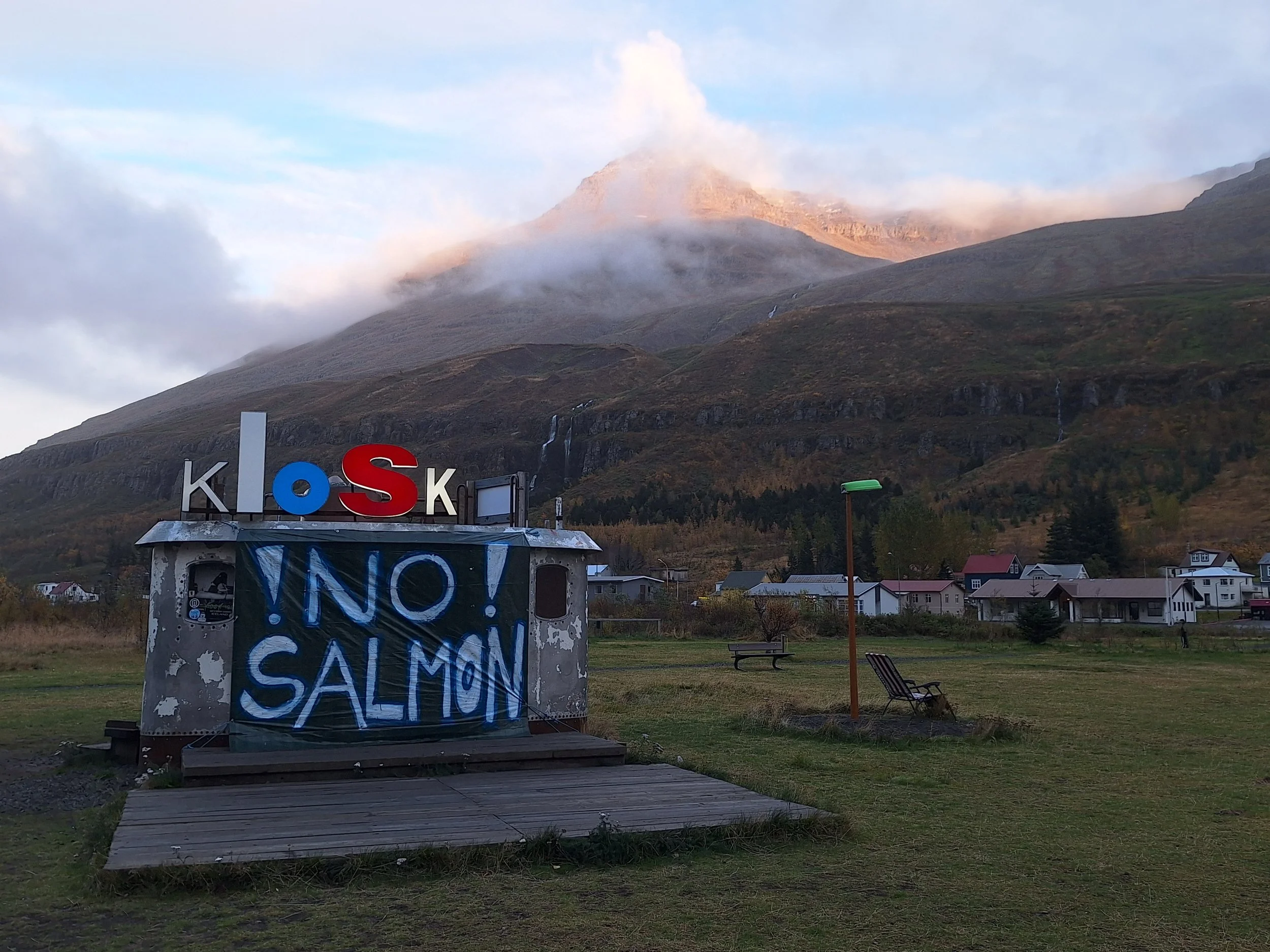
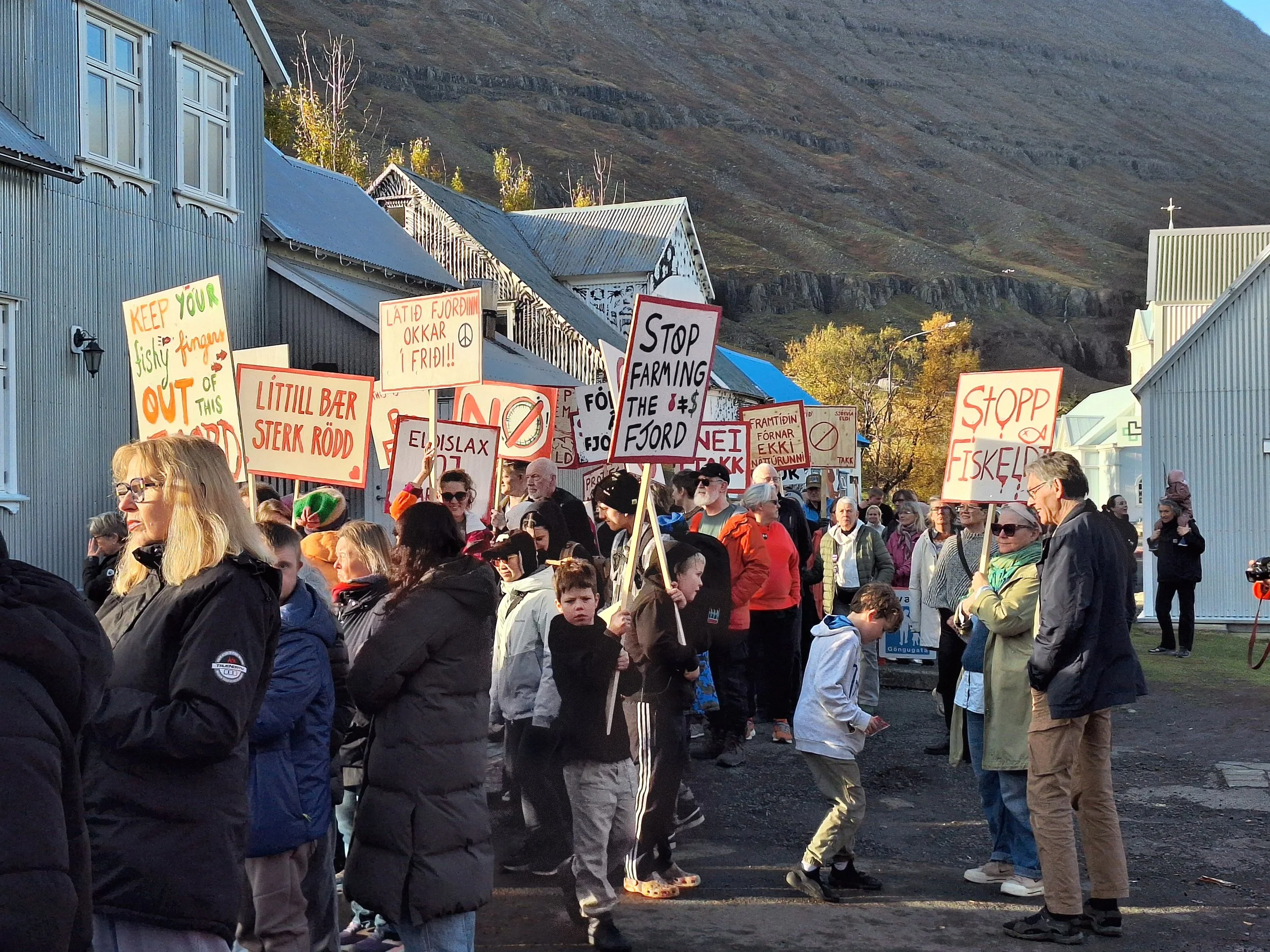
We also got to learn about many of the current debates taking place in Iceland, as Seyðisfjörður is currently fighting a sole fight against Norwegian companies freely establishing salmon farming facilities in Icelandic fjords. Salmon farms are to be found in nearly every single fjord, and the big companies have encountered very little push-back from both local communities and the Icelandic government. However, the fjord of Seyðisfjörður is already saturated with ship activity (as well as an oil leaking ship wreck), and the general consensus here is that not only is there no space left in the fjord - it is also the Norwegian companies that profit from salmon farming, and not the Icelandic people. On top of this, there are of course a long list of environmental and ethical concerns that follow. This Sunday there was a big protest in town, and also one simultaneously taking place in front of the parliament in Reykjavik.
In addition to familiarising ourselves with our new surroundings and all of the current issues taking place in Iceland, Alejandra and I have been busy giving workshops for children and adults, which is a central part of our residency. We are staying in apartments just above the printmaking workshop Prentverk Seyðisfjörður. The current workshop is in the process of being re-established, after the original workshop was destroyed in the December 2020 landslides, which swept away several buildings, including parts of the Technical Museum which housed the print studio. Fortunately, nobody was killed, but it definitely left a physical and emotional scar on the town. The new workshop space is coming along nicely, although it is still a work in progress, with presses being added, removed and re-arranged. The space is also open for members who can pay a fee and take introduction classes in order to gain open access to the workshop.
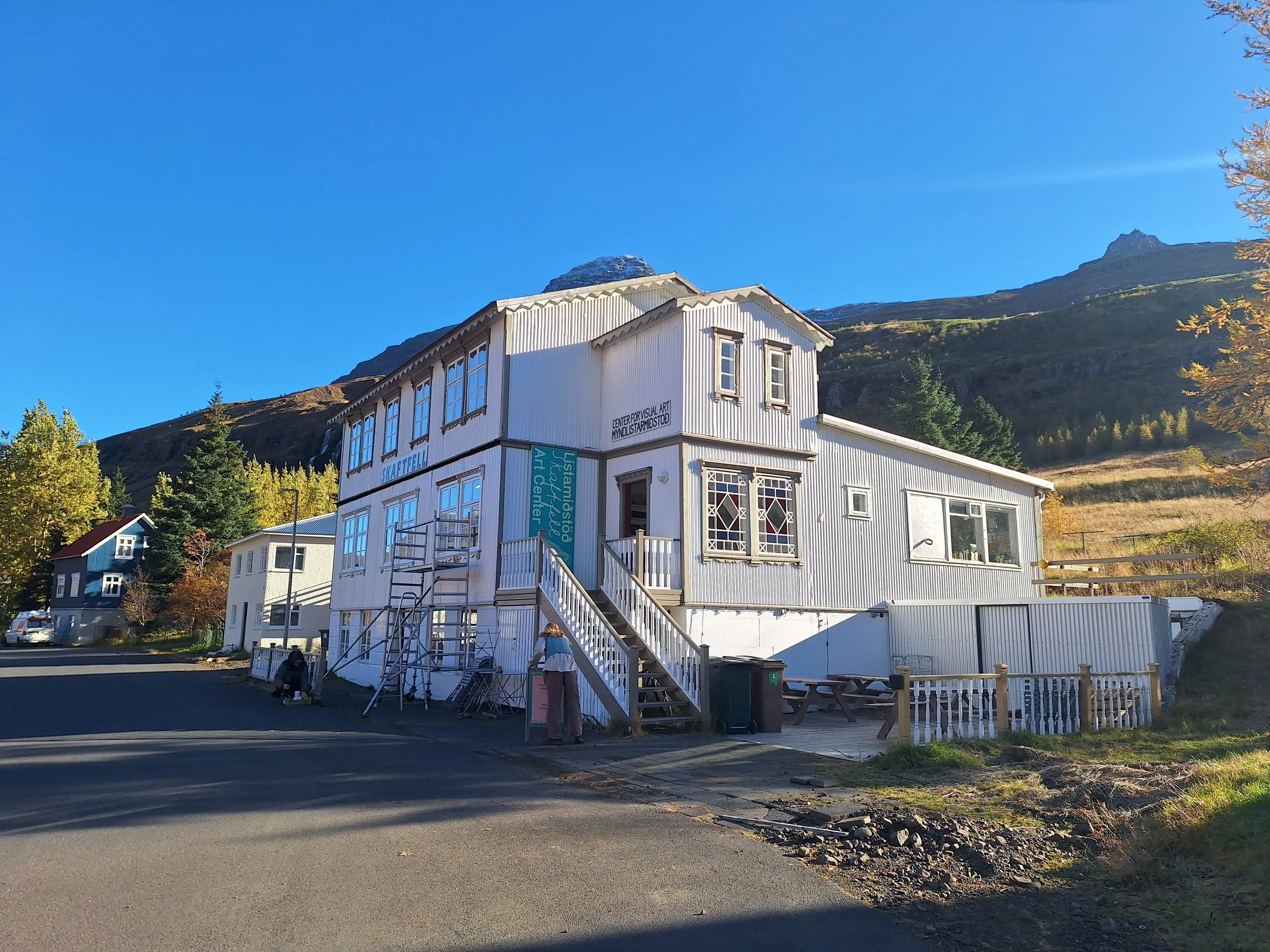
Skaftfell Art Center
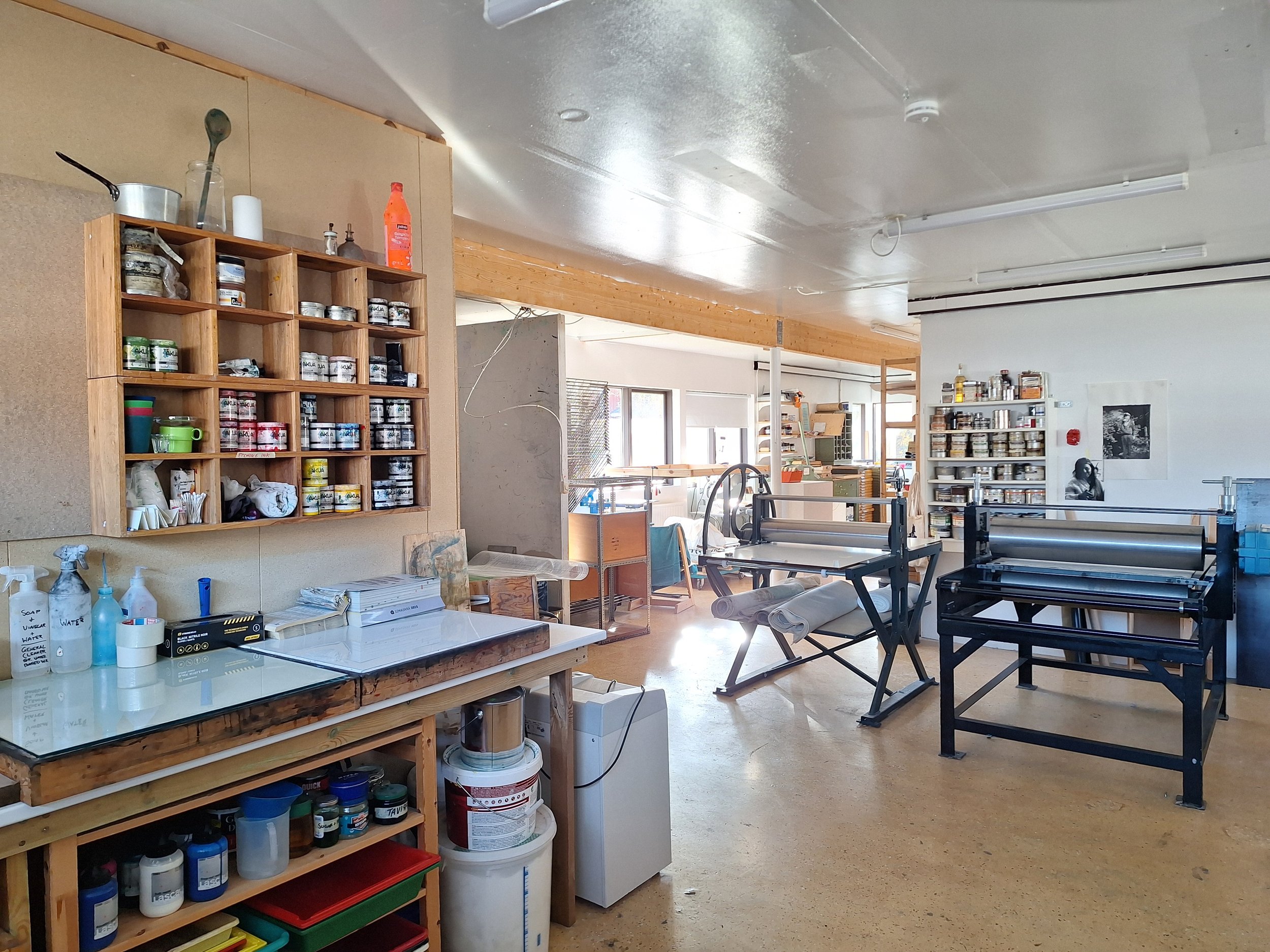
Prentverk Seyðisfjörður.
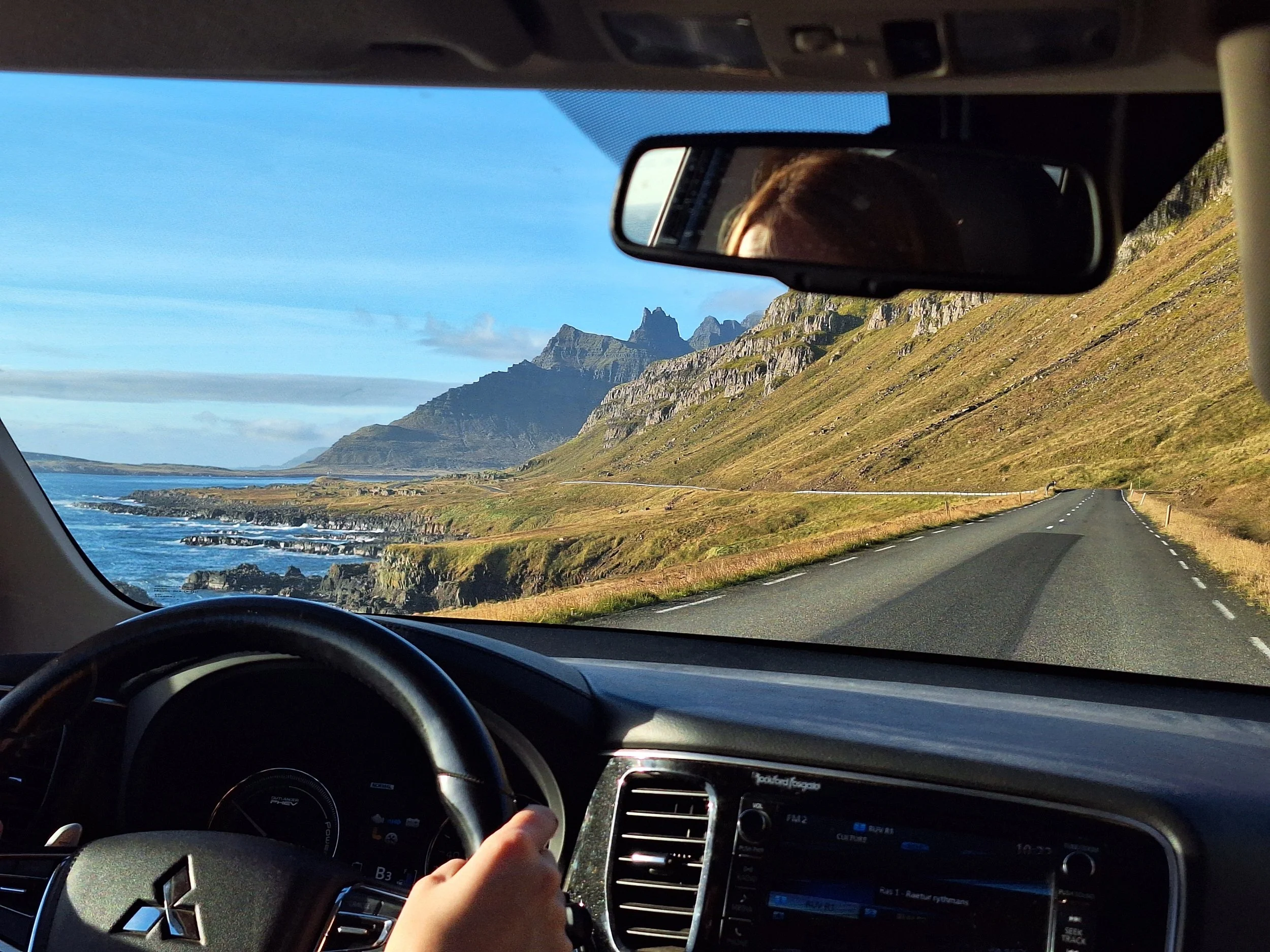
One of the focuses of this residency is non-toxic printmaking, meaning we will only be using water-based inks and non-toxic etching solutions. (This is a challenge for me, as I am only used to oil-based inks and traditional etching methods!). On Saturday we hosted a linocut workshop for seven local kids, and the day after we were taken to the Fish Factory Creative Center in the tiny town of Stöðvarfjörður about 1.5 hours drive away, to host a monotype workshop. Unfortunately no kids turned up for the latter, but we had an amazing road trip to and amazing art center! Being a Norwegian who is very spoiled when it comes to beautiful scenery, Iceland still manages to impress!
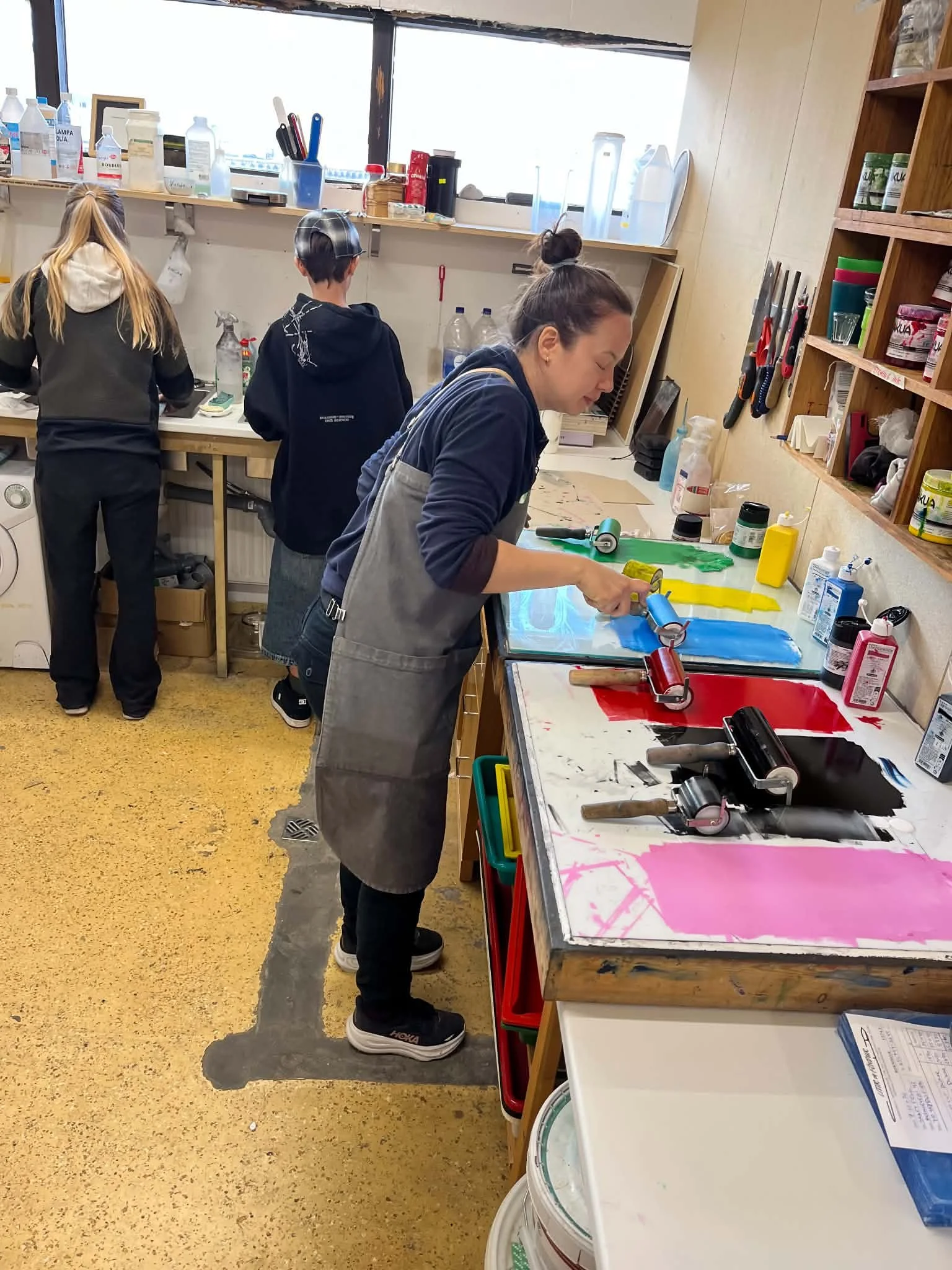
Linocut workshop for local kids!
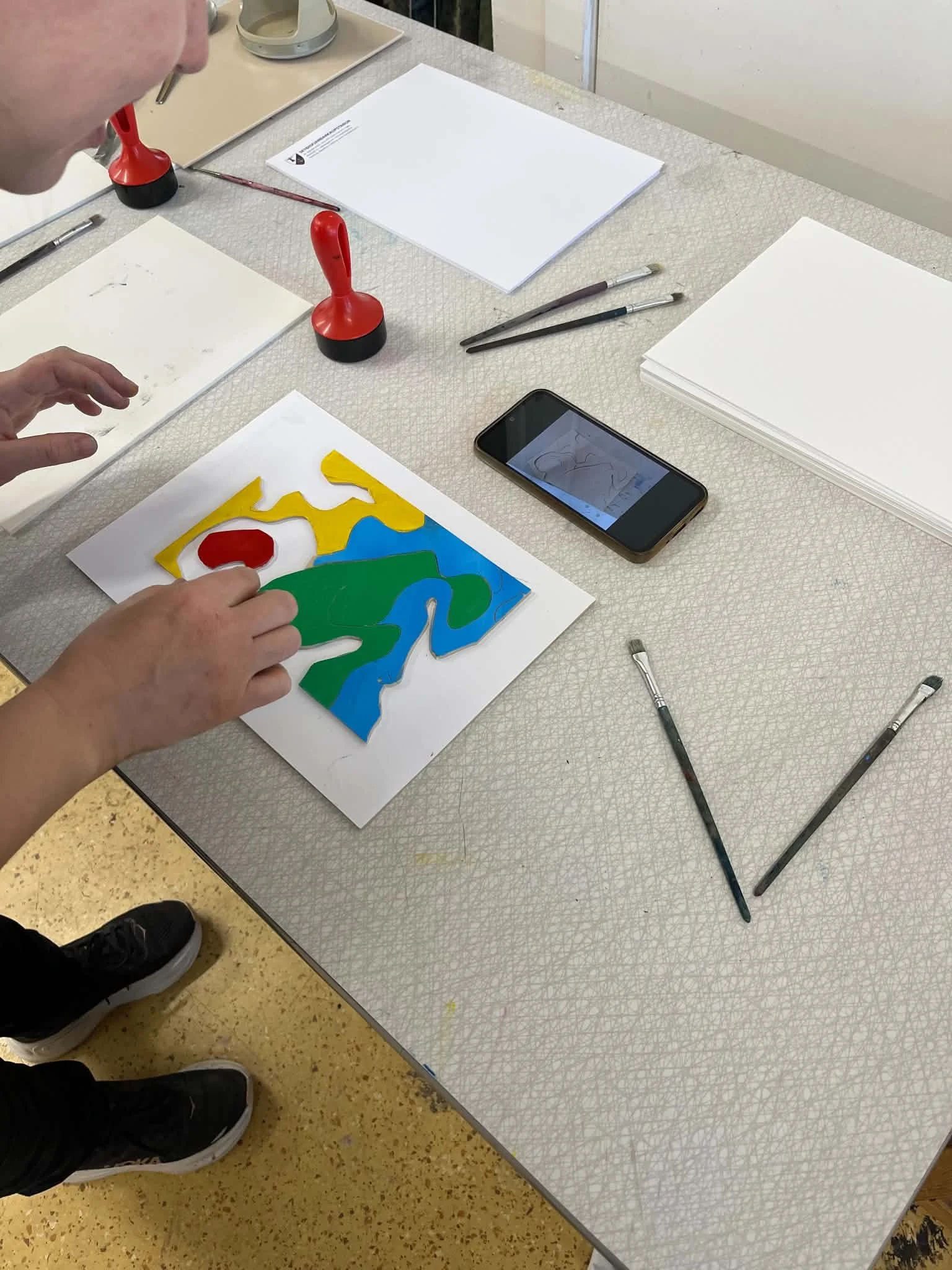
Using Edvard Munch’s jigsaw technique.
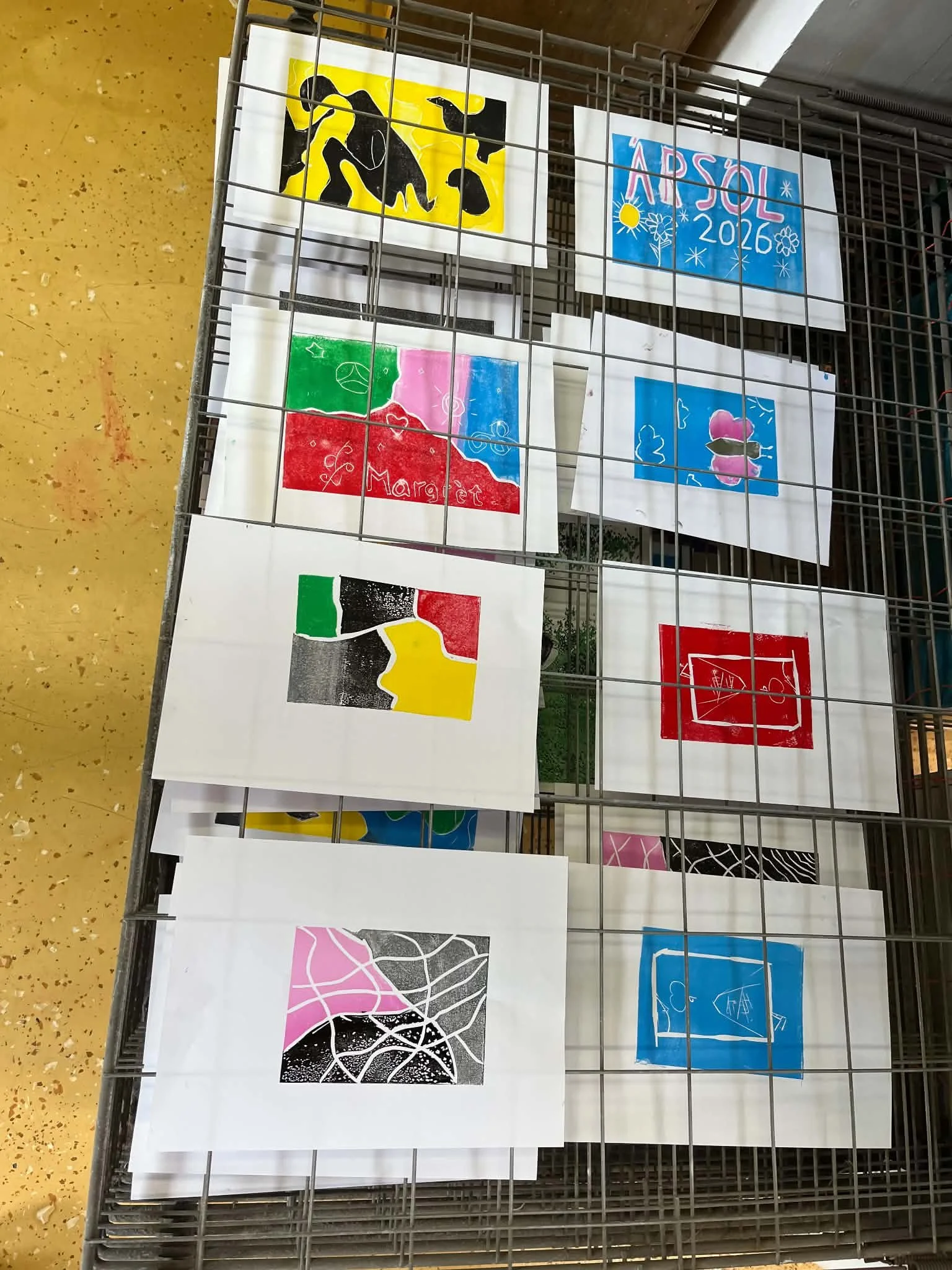
Some of the finished prints!
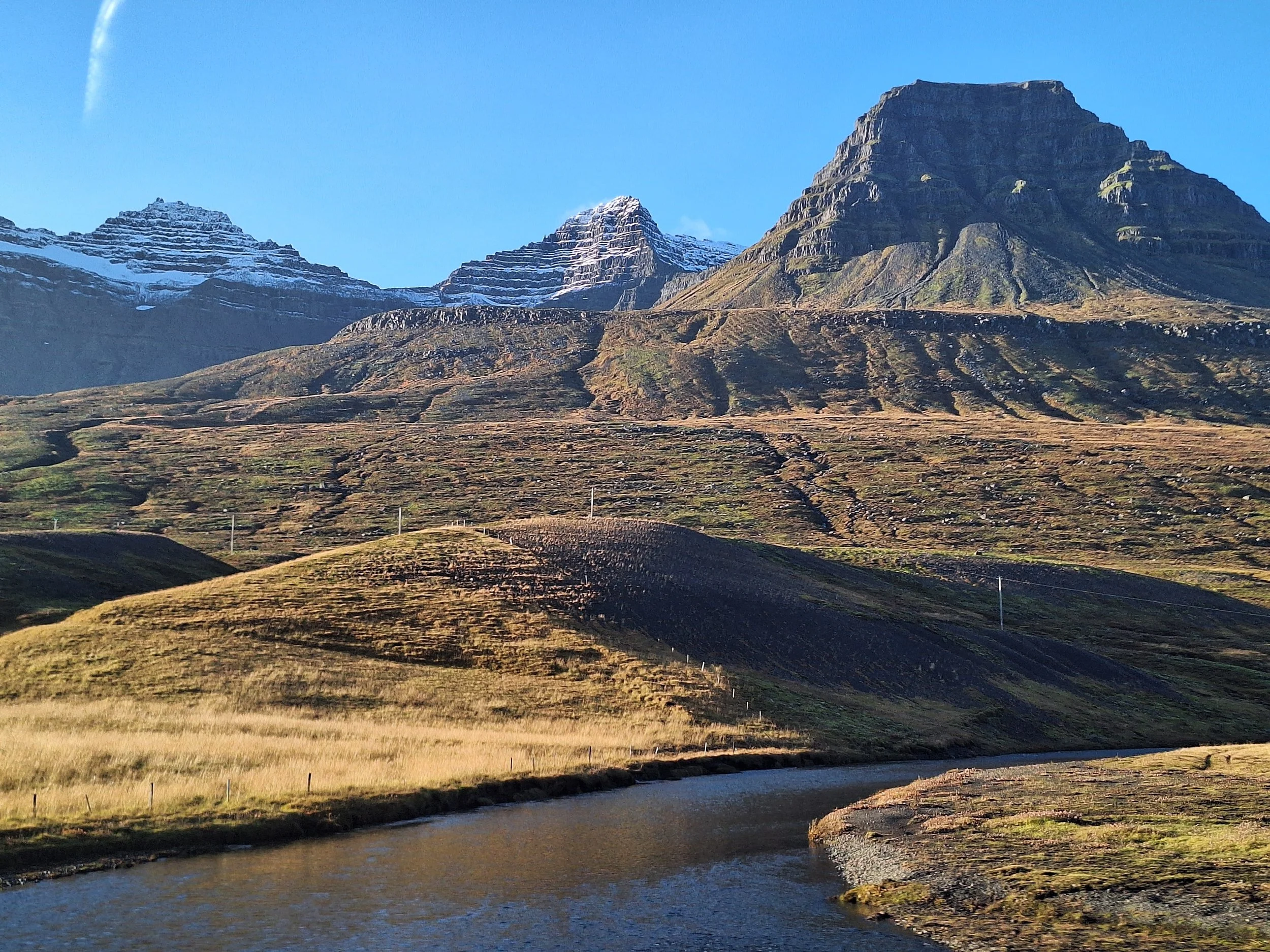
Just some of the landscape we encountered on the road to Stöðvarfjörður…
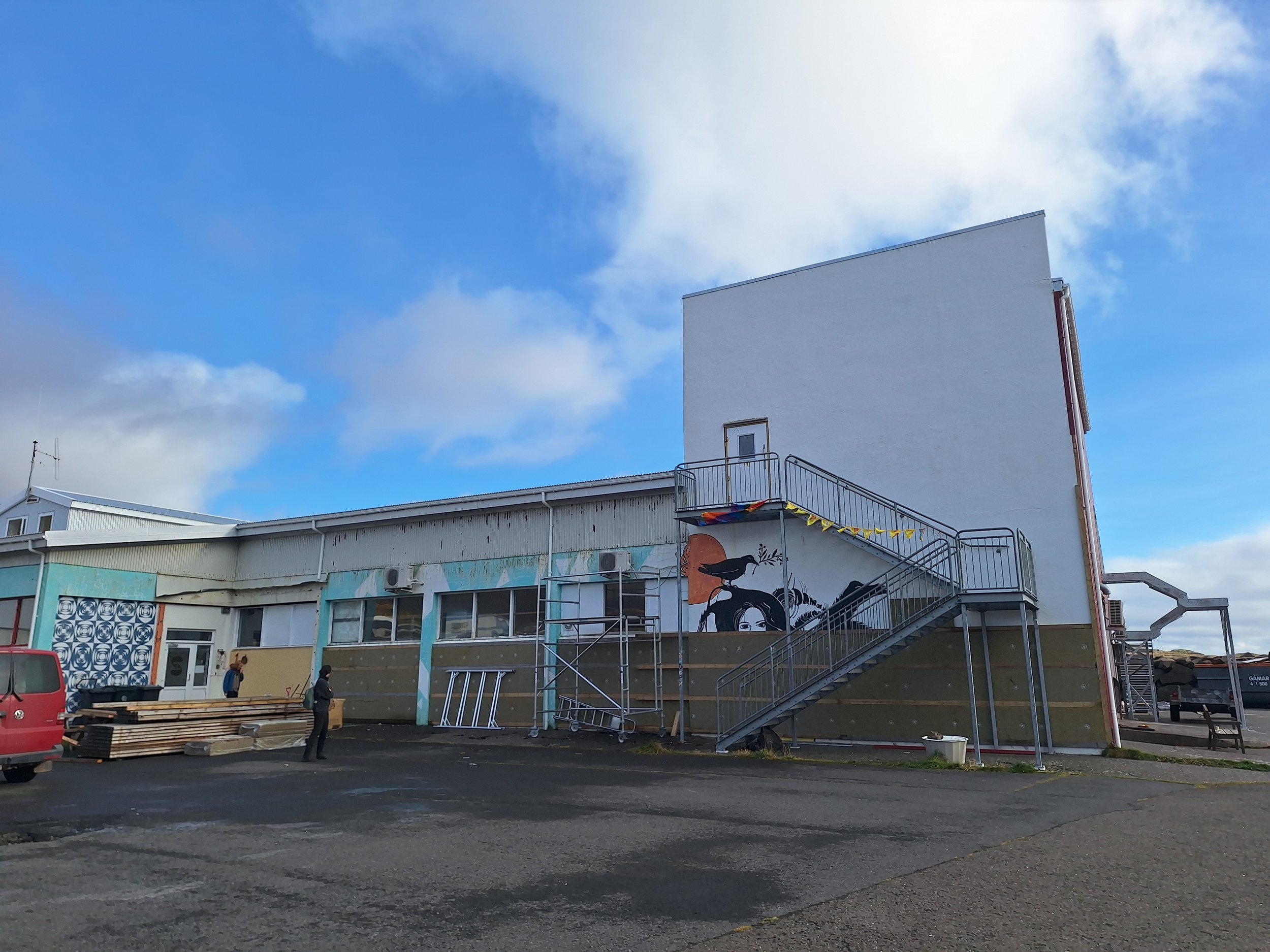
Fish Factory Creative Center in Stöðvarfjörður
It has been a wonderful, but intense first seven days here in Iceland, and next week I am excited to be falling into place a little bit and focusing on producing some work for my upcoming exhibitions!